
Korea’s Living Traditional Village
Have you ever wanted to experience authentic traditional Korean village life where people still live in 600-year-old houses following customs passed down through generations? Where UNESCO recognizes not just architectural heritage but the living culture of a community maintaining traditional ways despite modern Korea’s rapid transformation? Where you can witness the famous Hahoe Mask Dance, sleep in a traditional yangban aristocrat’s house, and walk the same paths that Joseon Dynasty scholars walked centuries ago? Where Korea’s most complete traditional clan village preserves social structures, architectural forms, and cultural practices that have disappeared almost everywhere else? Hahoe Village offers exactly this experience – but only if you understand what makes clan villages special in Korean culture, appreciate the sophisticated social and spatial organization underlying what appears to be simple rural settlement, know how to experience the village respectfully as active community rather than just tourist attraction, and grasp why preserving living traditional culture matters more than creating museum reconstructions of dead past.
Most visitors approach Hahoe Village expecting picturesque traditional houses and leave with mixed impressions. They’re charmed by the beautiful thatched-roof homes and elegant yangban mansions but confused about what they’re actually seeing and why it matters. They photograph scenic river views and traditional architecture without understanding the clan system, social hierarchies, and Confucian principles that shaped every aspect of village organization. They watch the mask dance performance without knowing its origins in peasant resistance against aristocratic oppression or its designation as UNESCO Intangible Cultural Heritage. They walk through the village taking selfies without realizing they’re essentially touring people’s actual homes and private property, raising questions about the ethics and sustainability of heritage tourism in living communities.
I understand that superficial engagement completely. My first Hahoe Village visit was quick afternoon stop during Andong touring, photographing pretty houses, watching brief mask dance excerpt, then leaving after two hours without meaningful understanding or emotional connection. The village seemed pleasant but I couldn’t articulate what made it special compared to other Korean traditional villages or why UNESCO designated it World Heritage.
That’s why this comprehensive guide exists. I’m going to share everything you need to transform Hahoe Village from pleasant photo opportunity into meaningful encounter with Korean traditional culture, social systems, and the challenges of preserving living heritage in modern world. You’ll learn the full story of how one aristocratic clan created and maintained this village for 600 years, the Confucian principles organizing social and physical space, and the contemporary challenges of tourism in active residential community. You’ll understand what makes the Hahoe Mask Dance significant beyond entertaining tourist performance. You’ll discover how to visit respectfully, which houses you can enter, and how to experience the village at times when tourism pressure lightens and authentic village life becomes visible. You’ll gain insight into why preserving living traditional culture is far more complex and valuable than creating sanitized museum villages.
By the end of this guide, you’ll know how to visit Hahoe Village with understanding that transforms traditional houses into evidence of sophisticated social systems, beautiful landscapes into deliberately planned cultural geography, and tourism attractions into ethical questions about preserving living heritage. You’ll appreciate why UNESCO designated this village rather than larger or more architecturally elaborate traditional settlements. You’ll understand what makes Hahoe unique as Korea’s most complete remaining clan village. Most importantly, you’ll grasp why the villagers who still live here, maintaining traditions while accommodating thousands of tourists, deserve recognition as cultural heroes preserving irreplaceable heritage through their daily lives.
Understanding Hahoe Village: History and Cultural Significance
The Clan Village System in Korean Culture
To understand Hahoe Village, you must first understand the clan village (dongseong maol/동성마을) system that dominated rural Korea during the Joseon Dynasty. Unlike Western villages where unrelated families lived together, Korean clan villages consisted almost entirely of families sharing the same surname and patrilineal descent from a common ancestor. These communities maintained complex genealogical records, practiced ancestor worship collectively, and organized social, economic, and political life around kinship relationships.
Hahoe Village was founded by the Pungsan Ryu clan (풍산 류씨) in the early Joseon Dynasty (approximately 16th century, though the clan claims earlier origins). The Ryu family established the village following Korean geomantic principles (pungsu/풍수) selecting a location where the Nakdong River makes a dramatic S-shaped bend creating natural protection and auspicious energy flow. The river wrapping around the village on three sides created both practical defense and symbolic embrace suggesting prosperity and protection.
The village name “Hahoe” (河回) literally means “river turning” or “river回(bending),” directly describing the geographical feature that made this location desirable and distinctive. This naming reflects Korean practice of using geographical features rather than arbitrary names, creating linguistic connection between place and landscape.
Over six centuries, the Pungsan Ryu clan developed Hahoe into one of Korea’s most prominent aristocratic clan villages, producing numerous scholars, government officials, and cultural figures who enhanced the family’s prestige and the village’s importance. The most famous resident was Ryu Seong-ryong (류성룡/柳成龍, 1542-1607), a prime minister during the Japanese invasions (1592-1598) who wrote the important historical account “Jingbirok” (징비록/懲毖錄) documenting the war and advocating military reform.
Social Hierarchy and Village Spatial Organization
Hahoe Village’s physical layout reflects Confucian social hierarchies with remarkable precision. The village wasn’t randomly organized but carefully planned according to principles that made social status visible through spatial positioning and architectural forms. Understanding this organization transforms wandering through picturesque village into reading sophisticated social geography.
The yangban aristocratic families lived in large tile-roofed houses (giwa jip/기와집) located in the village’s upper (northern) areas near the clan shrine and ancestral halls. These elevated positions provided both practical advantages (better drainage, cleaner air) and symbolic superiority (higher social status literally placed higher spatially). The yangban houses featured sophisticated architecture with separate quarters for men (sarangchae) and women (anchae), elaborate gardens, and refined decorative details demonstrating wealth and cultural sophistication.
The commoner families, including farmers, craftsmen, and servants, lived in smaller thatched-roof houses (chogajip/초가집) in lower village areas closer to agricultural fields and the river. These simpler structures served practical needs without the architectural elaboration that yangban houses displayed. The thatched roofs required annual replacement (versus tile roofs lasting decades), the houses lacked separate quarters, and the overall construction was more modest.
This spatial separation wasn’t merely practical but reinforced Confucian social order making hierarchy visible in daily life. Children grew up physically understanding their social position through where they lived relative to yangban families. The village layout taught social structure more effectively than any verbal instruction could.
Confucian Principles and Village Life
Hahoe Village embodied Confucian principles governing Joseon Dynasty society – respect for hierarchy, veneration of ancestors, proper ritual observance, cultivation of moral character through education, and maintenance of social harmony through everyone knowing and accepting their role. Every aspect of village life reflected these values.
The village maintained elaborate ancestral worship practices at the clan shrine and individual family shrines, conducting regular ceremonies honoring deceased clan members according to Confucian ritual protocols. These practices weren’t mere tradition but active affirmation of family identity, social continuity, and proper ethical behavior. Neglecting ancestral rites meant failing fundamental moral duties.
Education was highly valued with yangban families maintaining private academies (seodang/서당) where male children learned Confucian classics, Chinese characters, calligraphy, and proper ritual behavior. The village produced numerous scholars and officials who brought prestige to the entire clan. Even commoner families valued basic education, though they typically couldn’t afford the extensive classical education yangban sons received.
The village maintained strict gender separation following Confucian propriety codes. Women rarely left the anchae (women’s quarters) during daytime when male visitors might see them. The village’s architectural design facilitated this separation with walls, gates, and spatial arrangements allowing women to move within their designated areas without encountering unrelated men.
Why Hahoe Became UNESCO World Heritage
UNESCO designated Hahoe Village (along with Yangdong Village) as World Heritage Site in 2010, recognizing it as “outstanding example of Joseon Dynasty clan village” and praising how “the villages have protected the traditional culture and architecture of the Joseon Dynasty for over 500 years.” The designation emphasized that Hahoe represents not just architectural heritage but living cultural practices maintained by resident families.
The UNESCO citation specifically noted Hahoe’s exceptional completeness – preserving not just houses but the entire social and spatial organization of traditional clan villages including ancestral halls, Confucian academies, residential areas organized by class, and continuing traditional practices. While other Korean villages preserve individual traditional houses, Hahoe maintains the complete village system as functioning community.
The designation also recognized the challenge of preserving living heritage where real people continue residing in traditional houses while accommodating tourism pressures. Hahoe’s inhabitants maintain traditional culture not as performance for tourists but as continuing way of life, making the village far more valuable culturally than reconstructed museum villages where actors merely simulate traditional life.
The Contemporary Challenge: Living Heritage vs Tourism
Hahoe Village faces profound challenges balancing preservation of living traditional culture against tourism pressures that bring economic benefits but threaten the very authenticity that makes the village valuable. Approximately 240 people still live in Hahoe, maintaining traditional houses and practicing customs that tourism simultaneously supports and disrupts.
The residents earn income through tourism – selling admission tickets, renting rooms in traditional houses (minbak/민박), operating restaurants and shops, and performing cultural shows. This tourism provides economic sustainability allowing families to maintain expensive traditional architecture that would otherwise become financial burdens forcing abandonment.
However, tourism also creates problems. Thousands of visitors daily walking through residential areas taking photographs invade privacy and disrupt normal life. Some tourists behave disrespectfully treating the village as theme park rather than real community. The economic pressures encourage commercialization that risks transforming authentic village life into performed tradition for tourist consumption.
The village grapples with questions that all living heritage sites face: How do you preserve traditional culture while adapting to contemporary needs? How do you welcome tourists while protecting residents’ quality of life? How do you maintain authenticity while providing tourist facilities and entertainment? How do you ensure younger generations want to continue traditional ways rather than leaving for modern urban opportunities?
These questions have no easy answers, but Hahoe’s continuing success at maintaining both traditional culture and resident population while managing heavy tourism demonstrates remarkable adaptability and cultural commitment deserving respect and support.
Personal Story: Understanding Through Quiet Observation
During my second Hahoe visit, I arrived very early morning before tour buses and most tourists. Walking through the quiet village, I saw residents beginning their day – elderly women sweeping courtyards, men checking on gardens, smoke rising from traditional ondol heating systems. These mundane activities suddenly made clear that this wasn’t museum but actual home where people lived real lives.
I sat on a stone wall observing an elderly yangban descendant carefully tending flowers in his traditional house garden. When he noticed me watching, he gestured welcome and began explaining (in limited English supplemented with gestures) how his family had lived in this house for nine generations, how he maintains traditions his ancestors practiced, and why preserving this heritage matters despite difficulties.
He said: “Tourism brings money but also brings problems. Too many people, too much noise, no privacy. But tourism also brings respect for our culture and money to repair expensive traditional houses. My children live in Seoul – modern jobs, modern apartments. But they visit, they remember their roots, they teach their children about our family history. This village is not museum. It is my home, my ancestors’ home, my children’s heritage. We share it with visitors, but it is still our home.”
His words captured the complexity – pride in heritage mixed with frustration about tourism, economic necessity conflicting with desire for privacy, hope that sharing the culture preserves it mixed with fear that tourism might destroy it. Understanding Hahoe requires grasping this complexity rather than seeing just pretty houses.
Pros of Understanding Hahoe’s Significance
- Cultural Depth: Understanding the clan system, social hierarchies, and Confucian principles transforms village visiting from pleasant sightseeing into profound education about Korean traditional society.
- Social Geography: Learning to read spatial organization and architectural forms as expressions of social structure adds intellectual dimension to what appears to be simple wandering through traditional village.
- Contemporary Relevance: The challenges of preserving living heritage while managing tourism raise important questions about cultural preservation, sustainable tourism, and community rights relevant far beyond just Hahoe.
- UNESCO Validation: World Heritage designation confirms Hahoe’s global significance as representing traditional Korean clan village systems that have largely disappeared elsewhere.
- Living Culture: Experiencing actual traditional practices maintained by resident families provides authenticity impossible in museum reconstructions or historic villages without current residents.
Cons of Heritage Tourism Complexity
- Ethical Ambiguity: Touring people’s actual homes and photographing their private spaces raises ethical questions about privacy, respect, and the power dynamics of heritage tourism.
- Authenticity Questions: The presence of thousands of daily tourists, commercial facilities, and performance aspects inevitably changes the “authentic” traditional culture that attracted UNESCO designation.
- Complex Understanding Required: Appreciating Hahoe’s significance requires substantial background knowledge about Korean history, Confucian society, clan systems, and traditional architecture that casual visitors often lack.
- Commercialization Tensions: The economic pressures driving some aspects of tourism (shops, restaurants, accommodation) conflict with preservation of traditional character and authentic village life.
STELLA’S LOCAL SECRET
The “Early Morning Authentic Experience”
Visit Hahoe Village at opening time (9:00 AM in summer, later in winter) arriving before tour buses and most tourists. The early morning provides brief window (approximately 9:00-11:00 AM) when you can observe authentic village life – residents conducting morning activities, fewer tourists creating quieter atmosphere, better lighting for photography, and opportunity to interact with villagers before they become overwhelmed by tourist crowds.
Why this works: Tour buses typically arrive 11:00 AM-3:00 PM creating peak crowds. Early independent travelers experience completely different village – peaceful, authentic, and allowing genuine observation of traditional life rather than competing with crowds for photographs and access.
Respectful approach: When observing residents during morning activities, maintain respectful distance, avoid photographing people without permission, and remember these are real people conducting private activities, not performers entertaining tourists. Your discretion and respect may earn friendly interactions that crowded peak-time visiting never allows.
Photography advantage: Morning light is optimal for traditional architecture and natural landscapes. The low sun angle creates long shadows emphasizing architectural details and textures. The quiet atmosphere allows patience for composition rather than rushed shooting between tourist groups.
Hahoe Mask Dance: UNESCO Intangible Heritage
Understanding the Mask Dance Origins and Significance
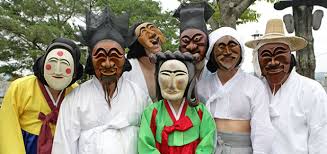
The Hahoe Byeolsingut Talnori (하회별신굿탈놀이), commonly known as Hahoe Mask Dance, represents one of Korea’s most important traditional performing arts, designated as UNESCO Intangible Cultural Heritage of Humanity. The performance combines dance, theater, music, and social satire in ritual entertainment that historically occurred during village festivals honoring guardian spirits and celebrating community solidarity.
The mask dance emerged during the Joseon Dynasty as popular entertainment and, significantly, as veiled social criticism. Through masked performance, commoner performers could mock yangban aristocrats, criticize corrupt officials, satirize hypocritical monks, and parody oppressive social hierarchies in ways that would have been dangerous or impossible in direct unmasked speech. The masks provided safety – the performer could claim the offensive content came from the character, not themselves.
The Hahoe masks themselves are extraordinary artistic achievements and designated Korean National Treasures (No. 121). These wooden masks, carved from alder wood, display remarkably expressive faces capturing distinct character types – the yangban nobleman, the scholar, the bride, the old woman, the butcher, the monk, and others. Unlike masks from many cultures that depict static expressions, Hahoe masks show subtle expressions that appear to change with viewing angle and lighting, creating uncanny sense of living character.
The original Hahoe masks, over 500 years old, are too precious for performance use and are preserved in museum. Contemporary performances use carefully crafted replicas maintaining the traditional forms and expressive qualities while protecting the priceless originals from damage.
The Performance Structure and Social Satire
Traditional Hahoe Mask Dance performances consist of multiple scenes or episodes (madang/마당), each focusing on different characters and social relationships. While specific scenes and their order could vary historically, typical performances include:
Scene 1 – The Young Scholar: A young yangban scholar prances around displaying his arrogance and self-importance, establishing aristocratic pretension that later scenes will satirize and deflate.
Scene 2 – The Old Woman and Young Bride: An elderly widow seeks to remarry a young man, creating comedic situations around age, desire, and social propriety. This scene satirizes both arranged marriages and social conventions around aging and sexuality.
Scene 3 – The Yangban and Servant: A pompous yangban orders his servant around while the servant mocks him behind his back and eventually directly, demonstrating class tensions and criticizing aristocratic privilege.
Scene 4 – The Monks: Supposedly celibate Buddhist monks are revealed as hypocrites pursuing women and earthly pleasures, satirizing religious corruption and the gap between proclaimed virtue and actual behavior.
Scene 5 – The Butcher and Nobleman: A butcher (lowest social class working with dead animals) somehow gets the better of aristocrats, inverting normal social hierarchies and suggesting that practical skill and honest work merit more respect than inherited status.
The performances included crude humor, bawdy jokes, slapstick comedy, and explicit social criticism that would have been shocking in normal Confucian society but was permitted within the special ritual context of masked festival performance. This licensed transgression allowed safe expression of social tensions and gave commoners temporary release from rigid hierarchical constraints.
Contemporary Performance for Tourism
Modern Hahoe Mask Dance performances occur daily during tourist season (typically March-November) at the village’s dedicated performance venue. These shows last approximately 50-60 minutes and present condensed versions of traditional performances adapted for contemporary tourist audiences who may not fully understand the historical context or Korean language humor.
The contemporary performances maintain traditional masks, costumes, music, and basic scene structures but modify content for modern sensibilities and tourist comprehension. Some crude elements are softened, explanations are provided in Korean and basic English, and performances emphasize visual spectacle and broad physical comedy accessible across language barriers.
While purists might criticize these adaptations as commercialization corrupting authentic tradition, the performances serve crucial functions: they provide employment for performers maintaining traditional skills, they introduce traditional culture to domestic and international audiences who might otherwise never encounter it, and they generate economic support for tradition preservation in an age when few people would pay to maintain traditional arts without tourism revenue.
The Masks: Artistic Masterpieces
The Hahoe masks deserve recognition as artistic masterpieces beyond their performance function. The carvers achieved extraordinary expressive power with minimal detail, capturing essential character through subtle modeling of eyes, mouth, and facial structure. Each mask type conveys distinct personality, social status, and emotional state through refined sculptural form.
The yangban (nobleman) mask displays haughty dignity with raised eyebrows and small mouth suggesting aristocratic refinement and suppressed emotion. The imae (young scholar) mask shows youthful arrogance and masculine beauty. The gakshi (bride) mask captures demure femininity with downcast eyes and small smile. The bune (old woman) mask emphasizes wrinkles and weathering suggesting experience and worldliness.
The masks’ most remarkable quality is their expressiveness despite static form. Viewed from different angles or under different lighting, the same mask appears to show varying emotions – laughing, crying, angry, peaceful – creating illusion of living face rather than carved wood. This quality results from sophisticated understanding of how light and shadow create facial expression and how subtle asymmetries suggest movement and life.
Modern visitors can view replica masks up close at village museums and purchase smaller decorative versions as souvenirs. However, seeing masks in actual performance context, animated by movement and lighting, reveals their full expressive power that static museum display cannot capture.
Pros of Experiencing the Mask Dance
- Cultural Immersion: The performance provides accessible introduction to Korean traditional performing arts combining visual spectacle with cultural content.
- UNESCO Recognition: The dance’s Intangible Heritage status validates its global cultural significance beyond just Korean national importance.
- Social Commentary: Understanding the satirical content reveals how traditional Korean culture included mechanisms for social criticism and hierarchical inversion despite rigid Confucian order.
- Artistic Excellence: The masks represent extraordinary sculptural achievement demonstrating traditional Korean artistic sophistication.
- Living Tradition: Seeing performances by practitioners maintaining traditional skills provides encounter with living culture rather than just historical reconstruction.
Cons of Contemporary Performances
- Tourist Adaptation: Modern performances are adapted for tourist consumption, modifying traditional content in ways that some view as commercialization corrupting authentic tradition.
- Limited Understanding: International visitors without Korean language or cultural background miss much of the verbal humor and social satire that give the performance its traditional meaning.
- Brief Format: The 50-60 minute tourist performances compress tradition that historically lasted hours or even days, necessarily simplifying complex traditional form.
- Performance vs Ritual: Traditional mask dances occurred within ritual festivals serving community religious and social functions. Contemporary tourist performances extract theatrical elements from their original ritual context.
- Commercialization Questions: The economic pressures driving regular performances and souvenir mask sales raise questions about whether traditions are being preserved or exploited for profit.
STELLA’S LOCAL SECRET
The “Performance Context Research”
Before watching the mask dance performance, spend 20-30 minutes at the village museum learning about mask types, traditional scenes, and social satire context. This preparation transforms the performance from entertaining but mysterious theatrical show into comprehensible social commentary and artistic achievement.
Focus areas: Learn specifically about the yangban-servant relationship, Buddhist monk satire, and how masks enabled criticism of power structures. Understanding these social contexts makes the performance’s humor and significance accessible even without Korean language fluency.
Cultural appreciation: After the performance, examine the replica masks displayed at various village locations, now recognizing each character from the show. You’ll see how performers use minimal movement and mask positioning to create different expressions, revealing the masks’ sophisticated design.
Photography strategy: Photograph the masks during performance when movement and lighting reveal their expressive power, but also photograph static mask displays at museums to document artistic details invisible during dynamic performance. The combination creates comprehensive visual documentation of both artistic form and performance function.

Traditional Houses and Architecture
Yangban Houses: Elite Architecture and Social Display
The yangban aristocratic houses at Hahoe Village demonstrate sophisticated traditional Korean residential architecture combining Confucian spatial principles with aesthetic refinement and practical functionality. These large tile-roofed structures (giwa jip/기와집) differ dramatically from commoner thatched houses in scale, materials, spatial organization, and architectural detail.
The most important yangban house is Yangodaek (양오댁), also called Chunghyodang (충효당), which served as Ryu Seong-ryong’s family residence. This large mansion demonstrates ideal yangban house organization with separate quarters for men (sarangchae/사랑채) and women (anchae/안채), elaborate gates controlling access, substantial outer wall creating privacy, and refined architectural details throughout.
The sarangchae (men’s quarters) provided space for the male household head to receive guests, conduct literary pursuits, and manage family affairs. This building typically featured elevated floor, exposed wooden beams creating spacious feeling, windows providing views of garden, and minimal furniture reflecting Confucian aesthetic values emphasizing restraint over ostentation. Male guests could visit sarangchae without entering women’s areas, maintaining proper gender separation.
The anchae (women’s quarters) housed female family members and young children in more enclosed private space. This building connected to kitchen areas, had storage for household goods, and provided intimate family space contrasting with sarangchae’s public function. The architectural design prevented outsiders from viewing into anchae, protecting women’s privacy and maintaining Confucian propriety.
Between sarangchae and anchae, an intermediate building (haengnangchae/행랑채) housed servants and provided practical work spaces like kitchen and storage. This structure physically and socially mediated between the elite family spaces and the external world.
The houses featured ondol heating systems using underfloor hot air from kitchen fires, creating comfortable winter warmth. Summer cooling utilized cross-ventilation through adjustable doors and windows. The sophisticated environmental control achieved comfort without modern technology through intelligent design understanding airflow, solar orientation, and thermal mass.
Thatched-Roof Commoner Houses
The commoner houses (chogajip/초가집) demonstrate completely different architectural approach reflecting limited resources and practical peasant needs. These smaller single-story buildings used thatched roofs rather than expensive tiles, simpler wooden structures, minimal decoration, and integrated living-work spaces rather than elaborate separation by gender and function.
Thatched roofs required annual renewal as the rice straw or reed material deteriorated, versus tile roofs lasting decades. This maintenance burden represented significant labor and material cost for poor families, making thatched roofs both economic necessity and visible marker of lower social status.
The houses typically combined living space, kitchen, and storage in compact efficient layouts. Rather than separate quarters for different family members, everyone shared common spaces with minimal privacy. The simplicity reflected not just poverty but different family organization – commoner families needed all members working productively rather than maintaining elaborate propriety separating men and women in separate quarters.
Despite simpler construction, these houses demonstrate sophisticated vernacular architecture adapting to climate and local materials. The thick thatched roofs provided excellent insulation. The floor-level windows facilitated air circulation. The compact design minimized heating needs during cold winters. The commoner houses achieved functional success through different means than aristocratic architecture.
House Layout and Confucian Space
The yangban house spatial organization physically embodied Confucian principles about social relationships, gender roles, hierarchical order, and proper behavior. Understanding this organization reveals how architecture can shape and enforce cultural values.
The front-to-back progression from outer gate to sarangchae to anchae created graded privacy from public to private, with each threshold requiring greater social intimacy for access. Strangers could enter outer gate, male acquaintances could visit sarangchae, close male relatives could enter courtyard between buildings, but only the most intimate family members entered anchae. The architecture enforced social boundaries through physical barriers.
The left-right organization often placed sarangchae (men’s area) on one side and anchae (women’s area) on the other, with the separation visible even from outside the walls. This spatial gender segregation made Confucian propriety codes architectural fact rather than mere social expectation.
The elevated floors in sarangchae literally raised aristocratic men above ground level, while anchae remained closer to earth. This vertical differentiation suggested masculine association with elevated spiritual/intellectual pursuits versus feminine connection to practical earthly concerns. The architecture subtly but constantly reinforced gender ideologies.
Staying in Traditional Houses: Minbak Experience
Several Hahoe Village yangban and commoner houses operate as minbak (민박) – family-run traditional guesthouses offering overnight stays in authentic traditional architecture. This provides extraordinary cultural experience sleeping on ondol floors, using traditional toilets (upgraded for modern plumbing), eating traditional breakfasts, and experiencing village during quiet evening and early morning hours when day-trippers have departed.
The minbak experience requires accepting traditional living conditions substantially different from hotels. Sleeping on thin futon mattresses on hard ondol floors can be uncomfortable for those accustomed to soft beds. Shared bathroom facilities in some houses provide less privacy than modern hotels. The houses can be cold in winter (though ondol heating is remarkably effective) and hot in summer (limited air conditioning).
However, the cultural immersion value far exceeds physical comfort limitations. You’ll experience traditional architecture from the inside as living space rather than just exterior photography subject. You’ll interact with resident families maintaining traditions. You’ll experience village life during quiet hours inaccessible to day visitors. For culturally curious travelers prioritizing authentic experience over comfort, minbak staying is invaluable.
Reservations are essential during peak seasons (spring, autumn) as the limited number of minbak rooms fills quickly. Direct booking through Korean-language websites works best, though some international booking platforms now list Hahoe minbak options.
Pros of Architectural Exploration
- Social Understanding: The houses’ spatial organization and architectural differences teach Korean social structure, class hierarchies, and Confucian values more effectively than textbook explanations.
- Architectural Education: Experiencing traditional Korean residential architecture provides education about vernacular building, environmental adaptation, and pre-modern construction techniques.
- Aesthetic Appreciation: The refined yangban architecture demonstrates sophisticated aesthetic principles emphasizing harmony, restraint, natural materials, and integration with landscape.
- Living Heritage: Entering houses where people actually live rather than museum reconstructions provides authenticity and connection to continuing tradition.
- Minbak Opportunity: The chance to sleep in traditional houses offers cultural immersion experience rare in tourism globally.
Cons of House Tourism
- Privacy Invasion: Touring people’s actual homes and photographing private spaces raises ethical questions about resident privacy and the power dynamics of heritage tourism.
- Limited Access: Most houses can only be viewed from outside or courtyards, with interior access restricted to protect residents’ privacy and prevent damage to fragile traditional structures.
- Cultural Distance: International visitors without background in Korean architecture, Confucian society, or traditional living may struggle to appreciate what they’re seeing beyond generic “old houses.”
- Minbak Discomfort: Traditional house staying involves physical discomfort (hard floors, shared facilities, temperature extremes) that many tourists find unacceptable despite cultural value.
- Commercialization: The minbak industry, while providing cultural experience, also represents commercialization of heritage that some view as compromising authentic village life.
STELLA’S LOCAL SECRET
The “Architectural Detail Photography”
Rather than just photographing entire houses for generic postcard images, focus on architectural details – roof tile patterns, wooden beam joints, stone foundations, decorative window lattices, gate hardware, courtyard landscaping. These detail images document sophisticated traditional craftsmanship often invisible in wide shots.
Observation strategy: Examine how wooden beams connect without nails using complex joinery, how stone foundations distribute weight, how tile roofs create distinctive curves, how windows balance light/ventilation/privacy. Understanding these technical solutions reveals architectural intelligence and craftsmanship.
Respectful photography: When photographing yangban houses, shoot from public pathways and village streets without entering private courtyards unless invited. Even with permission, avoid photographing residents or their private family spaces. Your restraint shows cultural sensitivity distinguishing thoughtful visitor from intrusive tourist.
Comparative approach: Photograph both yangban tile-roof houses and commoner thatched houses to document the architectural differences reflecting class distinctions. Your photo series can illustrate Korean social stratification through built environment more effectively than words alone.
Practical Planning for Your Hahoe Village Visit
Getting to Hahoe Village from Major Cities
Hahoe Village sits approximately 25 kilometers west of Andong city in North Gyeongsang Province, requiring deliberate transportation planning from major cities.
From Seoul:
Take KTX or express train from Seoul to Andong (approximately 2.5-3 hours), then local bus from Andong Bus Terminal to Hahoe Village (40-50 minutes, buses run approximately every 1-2 hours). Total journey time approximately 4-4.5 hours.
From Busan:
Take express bus or train to Andong (approximately 2-3 hours), then local bus to Hahoe Village. Total journey approximately 3-4 hours.
From Daegu:
Take bus to Andong (approximately 1.5 hours), then local bus to Hahoe Village. Total journey approximately 2.5-3 hours.
Personal Vehicle:
Driving provides maximum flexibility for exploring broader Andong area beyond just Hahoe Village. From Seoul, driving takes approximately 3-3.5 hours via highway. Parking areas exist near village entrance.
Operating Hours and Admission
Hahoe Village is accessible 24 hours as it is a living residential community, though ticket offices operate 9:00 AM to 6:00 PM (7:00 PM in summer). Purchasing tickets during operating hours is required for village access.
Admission costs 5,000 won for adults, 2,500 won for teenagers, 1,500 won for children. This fee supports village preservation and provides modest income to residents accommodating tourism. The admission is remarkably reasonable given the extensive area and authentic heritage significance.
Mask Dance performances occur at 2:00 PM on weekdays and 2:00 PM and 4:00 PM on weekends during tourist season (March-November), with performances canceled during winter when visitor numbers decline. Performance admission is included in village entrance fee.
What to Bring and Wear
Respectful Clothing:
While no strict dress code is enforced, modest clothing shows respect for the conservative village culture and resident families. Shoulders covered and shorts/skirts reaching at least to knees represent appropriate respect.
Comfortable Walking Shoes:
The village covers substantial area with unpaved paths, stone walkways, slight elevation changes, and natural terrain. Comfortable walking shoes are essential for several hours of village exploration.
Sun Protection:
During spring and summer, sun protection (hat, sunscreen, sunglasses) is important as village pathways offer limited shade. The open rural setting means substantial sun exposure during extended walking.
Water:
Bring adequate water for several hours of outdoor walking, though small shops in village sell drinks. The rural setting and walking distances create dehydration risk during warm weather.
Best Times to Visit
Season:
Spring (April-May) brings cherry blossoms and comfortable temperatures. Autumn (October-November) offers spectacular foliage and pleasant weather making these seasons optimal for visiting. Summer is hot and humid. Winter is cold with limited tourism infrastructure operating.
Day of Week:
Weekdays see significantly fewer tourists than weekends, particularly Tuesday-Thursday. Weekend crowds, especially during autumn peak, can make the village feel congested and diminish the contemplative cultural experience.
Time of Day:
Early morning (9:00-11:00 AM) provides coolest temperatures during summer, best light for photography, and fewest tourists before tour buses arrive. Late afternoon (4:00-6:00 PM) offers good lighting and smaller crowds as day-trippers depart.
Combining Hahoe with Other Andong Attractions
Andong City:
The nearby city offers additional cultural attractions including Andong Folk Museum, Andong Soju Museum (traditional Korean liquor), and bustling Andong Market famous for local foods.
Dosanseowon Confucian Academy:
This beautiful traditional academy approximately 30 kilometers from Hahoe demonstrates Joseon Dynasty educational institutions and offers spectacular riverside setting.
Andong Dam and Woryeonggyo Bridge:
Korea’s longest wooden bridge offers beautiful lake views and connects to hiking trails providing natural scenery complementing cultural heritage.
Bongjeongsa Temple:
This ancient Buddhist temple features Korea’s oldest surviving wooden building (Geungnakjeon Hall from 1363), providing architectural education complementing Hahoe’s residential architecture.
Pros of Strategic Planning
- Accessibility: Multiple transportation options allow reaching Hahoe from major cities as day trip or with overnight stay in Andong.
- Combined Value: Affordable admission provides access to extensive village, traditional architecture, mask dance performance, and museums creating exceptional cultural value.
- Flexible Timing: The village’s extended accessibility (versus museums with limited hours) allows visiting during optimal times avoiding crowds and heat.
- Regional Touring: Andong area’s multiple cultural attractions enable comprehensive traditional culture tourism during multi-day regional visit.
Cons of Visit Planning
- Distance: 3-4 hours from Seoul means dedicating full day or overnight trip rather than casual half-day excursion.
- Transportation Complexity: The two-stage journey (train/bus to Andong, then local bus to village) creates logistical complexity and timing coordination challenges.
- Limited English: Transportation and village information primarily in Korean creates challenges for international visitors without Korean language skills.
- Peak Crowding: Popular spring and autumn seasons see substantial crowds that diminish the authentic village atmosphere and contemplative cultural experience.
STELLA’S LOCAL SECRET
The “Overnight Village Stay Strategy”
Book minbak accommodation in Hahoe Village for overnight stay, arriving late afternoon when day-trippers depart. Experience village during quiet evening, overnight, and early morning when authentic village life emerges without tourist crowds. This transforms brief tourist visit into immersive cultural experience revealing village rhythms invisible during crowded daytime hours.
Why this works: You’ll experience village during the 18-20 hours daily when tourists are absent, seeing residents conducting normal life, experiencing traditional house living, and enjoying peaceful morning before day-trippers arrive. The overnight stay provides time depth that day visiting cannot achieve.
Cultural benefit: Minbak hosts often share meals with guests, provide local knowledge, tell family stories, and offer cultural insights impossible during brief day visits. These personal interactions create understanding and emotional connections that transform heritage from abstract to personally meaningful.
Practical advantage: You can explore village extensively without time pressure, watch mask dance performance without rushing to catch return transportation, photograph during optimal evening and morning light, and experience village across different times revealing how light, activity, and atmosphere change throughout daily cycles.
Frequently Asked Questions
Q: How long should I allocate for visiting Hahoe Village?
Allocate 3-4 hours minimum for basic village exploration including mask dance performance. For thorough visiting including museums, all traditional houses, and Buyongdae viewpoint, allocate 5-6 hours. Overnight minbak staying requires 24-hour commitment.
Q: Can I enter the traditional houses or only view from outside?
Most houses can only be viewed from outside or courtyards to protect resident privacy. Some designated cultural property houses offer limited interior access with guide or during specific hours. Minbak houses provide interior access for overnight guests.
Q: Is Hahoe Village worth visiting if I’ve seen other Korean traditional villages?
Yes, if you’re interested in authentic living heritage and UNESCO-recognized clan village system. Hahoe’s completeness – preserving entire traditional social and spatial organization with continuing resident population – distinguishes it from reconstructed or partially preserved traditional villages.
Q: What’s the best way to reach Hahoe Village from Seoul?
KTX train to Andong (2.5-3 hours), then local bus to Hahoe Village (40-50 minutes). This public transportation combination provides reliable, economical access though it requires transfer coordination and total journey time of 4-4.5 hours.
Q: Can I stay overnight in Hahoe Village?
Yes, several traditional houses operate as minbak (family-run guesthouses) offering authentic traditional house accommodation. Advance reservation essential during peak seasons. Expect traditional living conditions (ondol floors, shared facilities) rather than hotel comfort.
Q: What makes the Hahoe Mask Dance special?
UNESCO Intangible Cultural Heritage designation recognizes it as exceptional example of Korean traditional performing art combining theater, dance, music, and social satire. The 500-year-old wooden masks are artistic masterpieces expressing character through subtle sculptural form.
Q: Is Hahoe Village suitable for children?
Older children interested in culture will find Hahoe educational. Young children may enjoy the mask dance performance and traditional houses but might find extended village walking boring. The open village setting allows running and playing more than museum environments.
Q: How crowded does Hahoe Village get?
Weekends during spring and autumn see substantial crowds. Weekdays and early morning/late afternoon provide more peaceful experience. The village’s large area means crowds concentrate at major houses and performance venue while other areas remain relatively quiet.
Q: Can I photograph inside the traditional houses?
Photography restrictions vary by house. Generally, exterior and courtyard photography from public areas is permitted. Interior photography may be prohibited to protect resident privacy and fragile historical features. Always ask permission before photographing private spaces or residents.
Q: What’s the cultural etiquette for visiting a living traditional village?
Remember Hahoe is real residential community, not theme park. Maintain quiet voices, respect private property, don’t enter houses without invitation, ask permission before photographing residents, and dispose of trash properly. Your respectful behavior shows appreciation for families sharing their heritage.
Experiencing Living Korean Heritage
You now have comprehensive knowledge to visit Hahoe Village with deep understanding of what makes this traditional community one of Korea’s most culturally significant heritage sites. You’ve learned how the Pungsan Ryu clan created and maintained this village for 600 years, how Confucian principles organized social and physical space, and why UNESCO recognizes Hahoe as exceptional example of Korean traditional clan village.
You understand what makes the Hahoe Mask Dance significant as UNESCO Intangible Heritage combining artistic excellence with social satire and cultural continuity. You know how to read yangban and commoner houses as expressions of social hierarchy and Confucian values. You’ve gained strategies for visiting respectfully during optimal times, experiencing authentic village life, and potentially staying overnight in traditional houses.
Most importantly, you understand that Hahoe Village is more than picturesque collection of old houses but living community where real people maintain traditional culture while accommodating tourism pressures. The villagers who continue living here, preserving architecture and customs while sharing their heritage with visitors, deserve recognition and respect for cultural contribution extending far beyond their private interests.
Hahoe Village awaits in the Andong countryside. The Nakdong River still makes its S-shaped bend embracing the village as it has for centuries. Traditional houses still shelter families descended from the original clan. The mask dance performers still wear 500-year-old character types bringing ancient satire to contemporary audiences. Your encounter with living Korean traditional heritage is about to begin.