
A Palace Reborn from Tragedy
Have you ever wanted to visit a Korean palace that tells not just stories of royal glory but also of cultural resilience and national recovery? Where spring nights transform ancient courtyards into dreamlike spaces illuminated by lanterns and cherry blossoms? Where you can witness Korea’s oldest surviving throne hall and a Victorian-era greenhouse existing side by side as monuments to different historical periods? Changgyeonggung Palace offers exactly this experience – but only if you understand its complex and often painful history, know how to access its famous night tours, and appreciate the symbolic significance of its restoration.
Most visitors approach Changgyeonggung with confusion and questions. They wonder why this palace seems less grand than Gyeongbokgung or Changdeokgung. They’re puzzled by the Victorian greenhouse that seems completely out of place in a Korean palace. They hear vague references to a dark period when the palace was degraded but don’t understand the full story. They visit during the day and miss the magical night tours that showcase the palace at its most beautiful. They walk past historically significant buildings without grasping why this palace’s very existence represents a victory over cultural erasure.
I understand that confusion completely. When I first visited Changgyeonggung, I expected another standard palace experience with impressive throne halls and formal gardens. What I encountered instead was a place that moved me emotionally in unexpected ways – not through overwhelming grandeur but through the story of degradation, survival, and ultimately restoration. The palace’s history taught me more about Korea’s relationship with its past, its experience of colonization, and its determination to recover cultural heritage than any other historical site in Seoul.
That’s why this comprehensive guide exists. I’m going to share everything you need to transform Changgyeonggung from a confusing side attraction into a meaningful cultural experience that might become your most emotionally resonant palace visit. You’ll learn the full story of what happened to this palace during Japanese occupation and why that matters. You’ll discover how to book the famous night tours that sell out weeks in advance. You’ll understand which buildings and features deserve close attention and what makes them historically significant. Most importantly, you’ll gain insight into how a palace can be both a monument to royal history and a symbol of cultural recovery.
By the end of this guide, you’ll know how to visit Changgyeonggung both day and night, what the tragic history reveals about Korean resilience, which architectural features matter most, how to time your visit for the spectacular spring cherry blossoms, and why this palace deserves more attention than it typically receives from international tourists focused on larger, flashier palaces.
The Tragic History That Makes Changgyeonggung Unique
Understanding Changgyeonggung’s Original Purpose
Changgyeonggung Palace was originally built in 1484 during the reign of King Seongjong as a residential palace for his grandmother, Queen Jeonghee, who had retired from active involvement in court affairs. Unlike the grand ceremonial palaces built to impress foreign envoys and demonstrate royal power, Changgyeonggung was designed as a comfortable residence for senior members of the royal family who had completed their official duties but deserved honored, peaceful retirement.
The palace’s name translates to “Palace of Bright Rejoicing,” reflecting its purpose as a place of contentment and joy for retired royalty. The original complex featured beautiful gardens, comfortable residential quarters, and the architectural refinement appropriate for housing respected elder royal family members. While smaller and less formal than primary palaces like Gyeongbokgung, Changgyeonggung was built with the same sophisticated craftsmanship and careful attention to harmony between architecture and natural landscape that characterized all Joseon Dynasty royal construction.
Throughout the Joseon Dynasty, Changgyeonggung served this residential function while also occasionally hosting important ceremonies and serving as temporary royal residence when other palaces underwent repairs or renovations. The palace witnessed births, deaths, family gatherings, and the quiet daily routines of royal life away from public ceremony. This residential character gave Changgyeonggung a more intimate, human scale compared to the imposing grandeur of ceremonial palaces.
The palace’s proximity to Changdeokgung Palace, located directly adjacent with shared walls and connected grounds, meant that Korean kings could move easily between the two complexes depending on whether they needed to conduct formal state business at Changdeokgung or retreat to the more private, comfortable spaces of Changgyeonggung. This functional relationship between the two palaces created an efficient residential and administrative complex that served Korean royalty for centuries.
The Japanese Colonial Period: Deliberate Degradation
The palace’s history took a dark turn during the Japanese colonial period from 1910 to 1945. Japanese colonial authorities deliberately degraded Changgyeonggung as part of a systematic campaign to undermine Korean cultural identity and historical pride. In 1909, even before formal annexation, Japanese authorities built a zoo and botanical garden within the palace grounds, fundamentally transforming a sacred royal space into a public amusement park.
This wasn’t simply repurposing empty buildings for new uses – it was a calculated cultural humiliation. The palace’s Korean name was changed to “Changgyeongwon,” replacing the suffix “gung” (palace) with “won” (garden), linguistically downgrading it from royal palace to mere park. Koreans were encouraged to visit the zoo and botanical garden, creating a situation where they would associate their own royal heritage site primarily with recreation and animals rather than with cultural significance and national history.
The Japanese authorities destroyed numerous palace buildings to make room for zoo facilities, animal enclosures, and visitor amenities. They built a large Victorian-style greenhouse, deliberately choosing Western architecture that clashed jarringly with traditional Korean buildings, further degrading the palace’s aesthetic and cultural coherence. They added amusement facilities, concession stands, and infrastructure appropriate for a public park but completely inappropriate for a royal palace.
This degradation served multiple purposes in the colonial project. It normalized Japanese control by making Koreans literally walk through their transformed royal palace as if it were any ordinary park. It associated Korean cultural heritage with zoo animals and entertainment rather than with sophisticated civilization and cultural achievement. It physically destroyed buildings and spaces that embodied Korean architectural and aesthetic principles. Most insidiously, it created a generation of Koreans whose primary memories of this palace involved visiting a zoo rather than honoring royal ancestors.
Post-Liberation: The Long Road to Restoration
After Korea’s liberation from Japanese colonial rule in 1945, Changgyeonggung remained a zoo and botanical garden for decades. The newly independent Korean government faced massive challenges including war, poverty, political instability, and basic survival needs. Restoring a degraded palace seemed like a luxury when people struggled with fundamental concerns about food, shelter, and rebuilding a devastated nation.
The zoo continued operating through the Korean War, through the desperate poverty of the 1950s, through the early stages of economic development in the 1960s and 1970s. Multiple generations of Koreans grew up knowing Changgyeonggung only as a zoo, with no memory or understanding of its original significance as a royal palace. This normalization of degradation represented perhaps the most lasting damage of the colonial period – cultural memory had been interrupted and replaced.
The restoration movement gained momentum in the 1980s as Korea’s economic development finally provided resources for cultural heritage preservation, and a new generation of historians and activists argued passionately that continued zoo operation dishonored Korean history and ancestors. In 1983, the government made the historic decision to close the zoo and begin restoration work, a decision that proved controversial because many Koreans had fond childhood memories of visiting the zoo and initially didn’t understand why removing it mattered.
The actual restoration work took over a decade. The zoo animals were relocated to new facilities in Seoul Grand Park. The Japanese-era buildings and facilities were demolished. Archaeological excavations uncovered foundations of destroyed Joseon Dynasty buildings. Careful historical research determined original building locations, sizes, and architectural details. Craftspeople trained in traditional Korean architecture methods rebuilt structures using historical techniques and materials. The Victorian greenhouse, despite its Japanese-era construction, was preserved as a monument to the complex history rather than erased.
The palace officially reopened as a restored cultural heritage site in 1986, though restoration work continued for years afterward as additional buildings were reconstructed and gardens rehabilitated. The name was officially restored to Changgyeonggung Palace, reclaiming the “gung” suffix that acknowledged its royal status. The transformation from zoo back to palace represented not just architectural restoration but cultural and psychological recovery.
Why This History Matters to Visitors
Understanding this history transforms how you experience Changgyeonggung. Every restored building represents not just historical architecture but active cultural recovery. The palace’s very existence as a functional heritage site rather than a zoo represents victory over cultural erasure. Walking through Changgyeonggung, you’re witnessing the results of conscious national effort to reclaim dignity and honor ancestors after decades of deliberate degradation.
The Victorian greenhouse, preserved rather than demolished, serves as a physical reminder of the colonial period and a monument to Korea’s determination to remember difficult history rather than pretend it never happened. This honest acknowledgment of painful past while simultaneously celebrating recovery and restoration demonstrates cultural maturity and confidence.
Many Korean visitors approach Changgyeonggung with deep emotion precisely because of this history. Elderly Koreans remember when it was still a zoo and feel profound relief and satisfaction seeing it restored. Younger Koreans learned about the degradation and restoration in school and visit to honor the recovery effort. International visitors who understand this history often find Changgyeonggung more emotionally moving than larger, grander palaces precisely because it represents not just past glory but resilience and recovery.
Pros of Understanding Changgyeonggung’s History
- Emotional Depth: Knowing the degradation and restoration story adds profound emotional resonance to what might otherwise seem like just another palace visit.
- Cultural Insight: The history teaches crucial lessons about colonization’s cultural dimensions beyond just political and economic control, helping visitors understand Korean historical experience more deeply.
- Appreciation for Restoration: Seeing restored buildings knowing they represent conscious recovery effort rather than simply surviving from centuries ago creates different appreciation and respect.
- Historical Honesty: The preserved greenhouse demonstrates Korea’s willingness to acknowledge difficult history rather than creating sanitized historical fantasy, showing cultural confidence and maturity.
- Contemporary Relevance: The restoration story from the 1980s-90s is recent enough that many living Koreans remember both zoo and restoration, making this living history rather than ancient past.
Cons of the Colonial History
- Emotional Difficulty: Learning about deliberate cultural degradation can be genuinely upsetting and may cast a somber tone over what visitors expected to be a pleasant sightseeing experience.
- Lost Heritage: Despite restoration efforts, many original buildings were destroyed and can never be recovered, representing permanent cultural loss that restoration can’t fully repair.
- Confusing Aesthetics: The Victorian greenhouse, while historically significant, creates aesthetic confusion and disrupts the visual coherence that other palaces maintain more successfully.
- Zoo Memories: Some older Koreans have conflicted feelings because they have fond childhood zoo memories despite understanding the problematic nature of the zoo’s existence.
- Incomplete Restoration: Not all destroyed buildings have been rebuilt due to cost, complexity, and lack of detailed historical records, leaving some areas of the palace feeling incomplete.
STELLA’S LOCAL SECRET
The “Greenhouse Historical Perspective”
When you visit the Victorian-style Grand Greenhouse, don’t just see it as an oddity or mistake that somehow survived restoration. Understand it as Korea’s deliberate choice to preserve evidence of the colonial period rather than erase it. The greenhouse serves as a three-dimensional history lesson, a physical monument to what Korea survived and recovered from.
Photography tip: The greenhouse creates striking visual contrast with traditional Korean palace buildings in the background. This contrast isn’t a flaw but rather a powerful visual representation of Korean history’s complexity – traditional heritage, colonial trauma, and modern restoration coexisting in one space.
Cultural insight: Many Korean photographers specifically seek shots that include both the greenhouse and traditional palace buildings in the same frame precisely because this visual contradiction tells the fuller, more honest story of Korean 20th-century experience than images of pristine traditional architecture alone could convey.
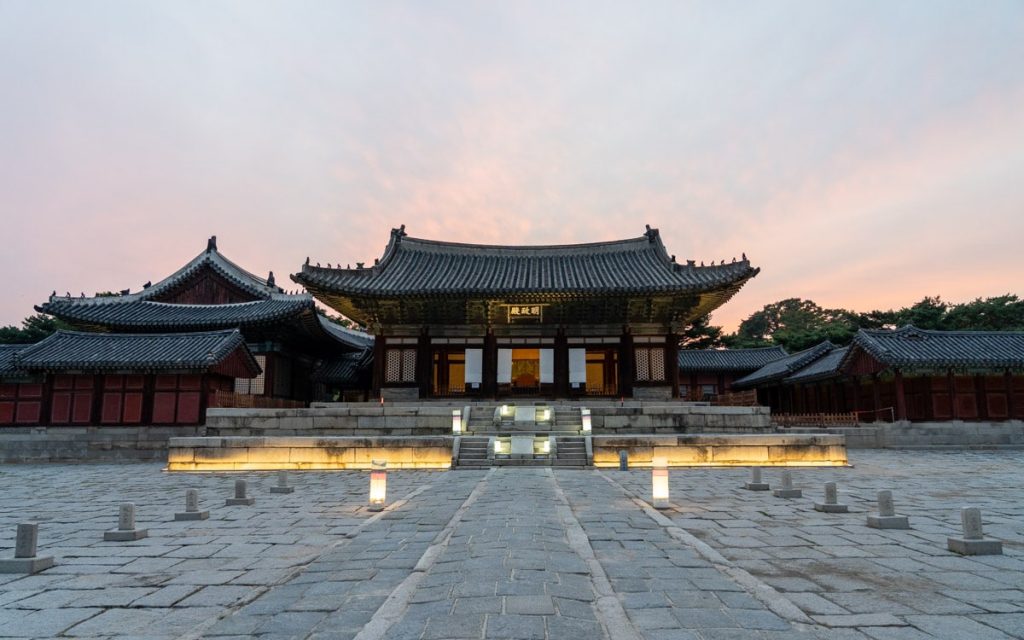
Myeongjeongjeon Hall: Seoul’s Oldest Throne Hall
Understanding Myeongjeongjeon’s Architectural Significance
Myeongjeongjeon Hall, whose name translates to “Hall of Illustrious Government,” serves as Changgyeonggung’s main throne hall and holds the distinction of being the oldest surviving throne hall in Seoul. The current building dates to 1616, rebuilt after the Japanese invasions of the 1590s destroyed the original structure. While other Seoul palaces have older founding dates, their throne halls are either modern reconstructions or date to later rebuilding periods, making Myeongjeongjeon uniquely significant as the only throne hall that has stood continuously for over 400 years.
The building’s architectural style demonstrates early Joseon Dynasty design principles with sophisticated bracket systems supporting the roof’s weight and distributing it efficiently across supporting columns. Unlike later throne halls that became increasingly elaborate and decorative, Myeongjeongjeon maintains elegant restraint with refined proportions and careful detailing rather than overwhelming ornamentation. This aesthetic restraint reflects Confucian principles that valued dignity and refinement over ostentatious display.
The throne hall faces south according to traditional Korean geomantic principles, ensuring optimal sunlight in winter while the generous roof overhang provides shade during summer. The building sits on a single-level stone platform rather than the towering multi-level platforms of some other throne halls, creating a more approachable, human scale while still maintaining appropriate dignity and elevation for the king’s position.
The interior ceiling above the throne features intricate carvings and paintings including the dragon that represented royal authority and heavenly mandate. The decorative patterns and colors follow traditional Korean symbolism with specific meanings attached to particular motifs, colors, and placements. Understanding these symbolic elements transforms what might appear to be merely pretty decoration into a carefully constructed symbolic universe reinforcing Confucian political ideology and royal legitimacy.
What Makes Myeongjeongjeon Different from Other Throne Halls
Unlike Gyeongbokgung’s massive Geunjeongjeon or even Changdeokgung’s refined Injeongjeon, Myeongjeongjeon has a more intimate, accessible character. The building’s relatively modest size reflects Changgyeonggung’s original purpose as a residential palace rather than primary ceremonial venue. Kings used this hall for important occasions when residing at Changgyeonggung, but it wasn’t designed to accommodate the massive state ceremonies that required the larger throne halls at primary palaces.
This residential character makes Myeongjeongjeon in some ways more historically revealing than grander throne halls. You can more easily imagine actual human governance occurring here rather than just symbolic displays of royal authority. The scale allows visitors to appreciate architectural details and craftsmanship that get lost in the overwhelming size of larger throne halls. The 400-year age gives the building an authentic weathered quality that modern reconstructions can’t replicate no matter how carefully executed.
The hall survived the Japanese colonial period largely intact, though it suffered from neglect and was decontextualized by the surrounding zoo facilities. The restoration work in the 1980s-90s focused on conservation and repair rather than reconstruction, preserving the building’s authentic historical character while stabilizing structure and refreshing decorative elements. Walking through Myeongjeongjeon’s courtyard, you’re seeing essentially what Joseon Dynasty kings saw, creating a direct visual and spatial connection across four centuries.
Personal Story: The Quiet Power of Age
I’ve visited all the major Seoul palace throne halls multiple times, and Myeongjeongjeon affects me differently than the others. Gyeongbokgung’s Geunjeongjeon impresses with scale and grandeur – you feel awed and perhaps slightly intimidated. Changdeokgung’s Injeongjeon moves with refined elegance – you appreciate sophisticated aesthetic achievement. But Myeongjeongjeon creates a quiet, contemplative mood that comes from genuine age and survival.
Standing in front of this building, I think about the four centuries it has witnessed. Korean kings conducting business here during the late Joseon Dynasty. Japanese invasions and fires destroying the original building. Reconstruction in 1616 when Korea was recovering from devastating wars. Centuries of gradual weathering and aging. The humiliation of existing as backdrop to a zoo. The patient restoration work. The reopening as honored cultural heritage. The wood, the stone, the decorative elements – all carrying this layered history.
A Korean architectural historian I met during one visit explained that Myeongjeongjeon’s greatest value isn’t impressive size or perfect restoration but authentic survival. This building genuinely stood here for 400 years, witnessing everything Korean history threw at it, and survived to tell its story. That survival through wars, colonization, poverty, and cultural assault represents a form of historical witness that reconstructions, no matter how accurate, simply cannot achieve.
Pros of Visiting Myeongjeongjeon
- Authentic Age: The 400-year-old building provides rare opportunity to see genuinely aged Joseon Dynasty architecture rather than modern reconstruction, offering authentic historical connection.
- Architectural Details: The refined craftsmanship, bracket systems, decorative painting, and proportions are clearly visible at this building’s approachable scale, allowing detailed appreciation.
- Historical Continuity: The building’s survival through multiple historical periods makes it a physical witness to Korean history from early Joseon Dynasty through modern restoration.
- Accessible Scale: The more modest size compared to grander throne halls creates intimate atmosphere where visitors can imagine actual human activity rather than just ceremonial display.
- Preservation Quality: Despite its age, the building is remarkably well-preserved, allowing visitors to see what centuries-old Korean palace architecture actually looks like rather than idealized reconstructions.
Cons of Visiting Myeongjeongjeon
- Less Impressive: Compared to Gyeongbokgung’s massive throne hall or other grander palace structures, Myeongjeongjeon might seem small and unimpressive to visitors seeking spectacular architecture.
- No Interior Access: Like other throne halls, visitors cannot enter the building or closely approach the throne, limiting ability to examine interior details and decorative elements.
- Minimal Explanation: English signage is basic with little detailed explanation of the building’s architectural features, historical significance, or symbolic elements.
- Easy to Undervalue: Without understanding the building’s 400-year age and survival story, visitors might rush past thinking it’s just another palace building, missing its unique significance.
- Weathering and Age: While authentic age is valuable historically, some visitors expecting pristine, freshly painted buildings might see the weathered quality as poor maintenance rather than genuine historical character.
STELLA’S LOCAL SECRET
The “Bracket System Appreciation”
Most visitors look at Myeongjeongjeon’s roof and decorative painting but miss the architectural sophistication of the bracket system supporting the roof. Look carefully at the elaborate wooden brackets connecting the building’s columns to the roof structure. These brackets, called “gongpo” in Korean, distribute the roof’s massive weight efficiently while creating beautiful geometric patterns.
What makes this sophisticated: The entire system uses no nails or metal fasteners, relying purely on precise cutting, fitting, and wooden joinery techniques perfected over centuries. The brackets aren’t merely structural but also decorative, painted with traditional colors and patterns that transform necessary engineering into art.
Photography angle: Stand at the courtyard’s edge and shoot upward at an angle capturing the bracket detail against the sky. Early morning or late afternoon light creates shadows that emphasize the brackets’ three-dimensional complexity and geometric beauty.
Cultural insight: This bracket technology represents Korea’s sophisticated pre-modern engineering and aesthetic integration. The same structures that solve technical problems of supporting massive tile roofs also create visual beauty, demonstrating Korean cultural values that refused to separate functional engineering from aesthetic design.
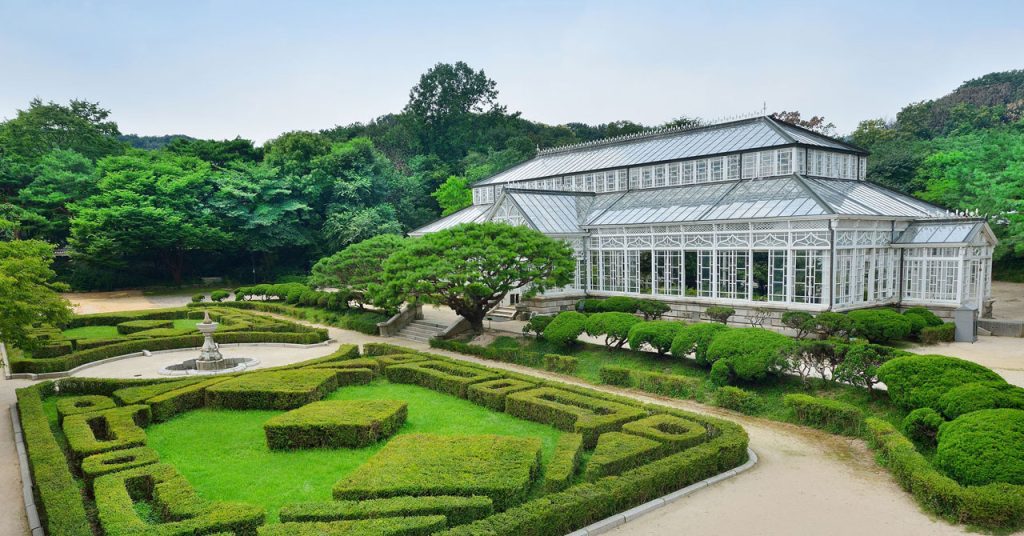
The Grand Greenhouse: Monument to Complex History
Understanding the Greenhouse’s Controversial Significance
The Grand Greenhouse at Changgyeonggung represents one of Korea’s most architecturally controversial heritage preservation decisions. Built in 1909 by Japanese colonial authorities as part of the botanical garden that degraded the palace into a public park, the greenhouse embodies the humiliation and cultural assault of the colonial period. Yet when Korea restored Changgyeonggung in the 1980s-90s, authorities made the deliberate decision to preserve the greenhouse rather than demolish it, choosing to maintain physical evidence of difficult history rather than create sanitized historical fantasy.
The greenhouse was the largest of its kind in Asia when built, featuring Victorian-era glass and steel construction technology that was impressive from pure engineering perspective but completely jarring and inappropriate in a Korean royal palace context. Japanese authorities deliberately chose this aggressively Western architectural style to assert colonial power and modern development while implicitly characterizing Korean traditional architecture as backward and obsolete.
The building served as a tropical plant exhibition space during the colonial period and continued this function during the decades when Changgyeonggung operated as a zoo and botanical garden after liberation. By the time restoration began in the 1980s, the greenhouse had existed for 75 years and had become a familiar Seoul landmark despite its problematic origins.
The decision to preserve it sparked genuine debate. Some argued forcefully for demolition, saying the building represented colonial humiliation that should be erased entirely. Others argued equally forcefully for preservation, saying honest acknowledgment of difficult history required maintaining physical evidence rather than pretending the colonial period never happened. The preservation advocates ultimately prevailed based on arguments that cultural maturity meant facing historical complexity rather than creating comfortable but false historical narratives.
Why Preservation Was the Right Decision
In retrospect, preserving the greenhouse demonstrated remarkable cultural confidence and historical honesty. Demolishing it would have been emotionally satisfying but historically dishonest, erasing physical evidence of what Korea experienced during colonization. Preservation required Korea to face uncomfortable history every time anyone visits Changgyeonggung, but this discomfort serves valuable educational and memorial purposes.
The greenhouse now functions as a three-dimensional history lesson that no textbook or museum exhibit could replicate. Visitors who see this jarring Victorian structure amid traditional Korean palace buildings immediately understand that something historically significant and problematic occurred here. This visual shock prompts questions, discussion, and deeper historical understanding in ways that seamless traditional architecture restoration could never achieve.
The preservation also demonstrates that Korean cultural identity is confident enough to acknowledge colonial trauma without fear that this acknowledgment threatens contemporary Korean dignity. Mature cultures can face difficult history honestly, while insecure cultures need to create sanitized historical myths. By preserving the greenhouse, Korea showed the world that it doesn’t need to hide or deny colonial period reality to maintain cultural pride.
Furthermore, the greenhouse represents impressive Victorian-era engineering and architecture from pure technical perspective. Despite its problematic colonial context, the building itself demonstrates sophisticated 1909 construction technology and glass architecture that has historical value independent of the political circumstances of its creation.
What the Greenhouse Reveals About Modern Korea
The preserved greenhouse tells visitors something crucial about contemporary Korean cultural attitudes. It demonstrates that Korea doesn’t shy away from confronting difficult history even when that history is painful or humiliating. It shows that Korean heritage preservation prioritizes historical honesty over creating comfortable nationalist narratives. It reveals confidence that Korea’s cultural identity is strong enough to acknowledge colonial trauma without that acknowledgment undermining contemporary Korean pride.
This approach contrasts with how some countries handle colonial-era structures, often demolishing them or obscuring their origins. Korea’s choice to preserve the greenhouse while clearly explaining its problematic history demonstrates a sophisticated approach to heritage management that respects both historical truth and the complexity of cultural memory.
Pros of Visiting the Greenhouse
- Historical Honesty: The preserved colonial-era building provides tangible evidence of Japanese occupation’s cultural dimensions, teaching history more effectively than text alone could achieve.
- Architectural Interest: Despite problematic origins, the Victorian-era glass and steel construction demonstrates impressive 1909 engineering and creates interesting architectural study opportunity.
- Visual Impact: The jarring contrast between Victorian greenhouse and traditional Korean palace buildings creates powerful visual statement about historical complexity and cultural collision.
- Educational Value: The building prompts questions and discussions about colonization, cultural heritage, and preservation philosophy that visitors might never consider at palaces with only traditional architecture.
- Cultural Confidence: Korea’s decision to preserve this building demonstrates mature cultural identity confident enough to acknowledge difficult history honestly.
Cons of the Greenhouse
- Aesthetic Disruption: The Victorian structure severely disrupts Changgyeonggung’s visual coherence, creating jarring clash that can feel aesthetically uncomfortable for visitors seeking traditional Korean beauty.
- Painful Reminder: For some Korean visitors, particularly elderly people who remember colonial period or its immediate aftermath, the greenhouse represents genuinely painful reminder of national humiliation.
- Confusing Narrative: International visitors without historical context might be confused about why a Victorian greenhouse exists in a Korean palace, missing the point entirely without explanation.
- Preservation Resources: Some argue that resources spent maintaining the colonial-era greenhouse would be better used reconstructing destroyed Joseon Dynasty buildings.
- Emotional Complexity: The building’s preservation creates emotional complexity that some visitors find uncomfortable, preferring simpler narratives of traditional Korean heritage without colonial complications.
STELLA’S LOCAL SECRET
The “Contrast Photography Strategy”
The greenhouse’s controversial nature actually creates unique photography opportunities unavailable at other palaces. Compose shots that include both the Victorian greenhouse and traditional Korean palace buildings in the same frame, deliberately emphasizing the visual clash rather than trying to hide it.
Why this works: These contrast images tell a more complete, honest story about Korean history than images of pristine traditional architecture alone could convey. The visual contradiction represents historical reality – Korea didn’t experience a smooth progression from traditional past to modern present but rather endured violent colonial interruption that the country has since recovered from.
Best photography spots: Stand in positions where you can frame the greenhouse with Myeongjeongjeon or other traditional buildings visible behind or beside it. The architectural contradiction creates visual tension that makes compelling images while serving as conversation-starter about Korean colonial history and heritage preservation philosophy.
Pro insight: Some of the most powerful Korean photo exhibitions about colonial period and recovery include Changgyeonggung greenhouse images precisely because the building makes colonial period tangible and visible rather than abstract historical concept. Your photos capturing this architectural collision participate in ongoing cultural dialogue about how Korea remembers and processes its complex 20th-century history.
Spring Cherry Blossoms: Changgyeonggung’s Seasonal Spectacle
Understanding the Cherry Blossom Phenomenon
Changgyeonggung Palace transforms into one of Seoul’s most spectacular cherry blossom viewing destinations each spring, typically during early to mid-April when the cherry trees that line palace pathways and courtyards explode into clouds of pink and white blossoms. While cherry blossoms attract crowds throughout Seoul during spring, Changgyeonggung offers uniquely beautiful viewing because the blossoms frame traditional palace architecture, creating scenes that look like classical Korean paintings come to life.
The cherry trees were actually planted during the Japanese colonial period as part of the botanical garden transformation. This creates complex symbolism – cherry blossoms are strongly associated with Japanese culture, and Japanese authorities deliberately planted cherry trees throughout Korea as a form of cultural colonization. Yet modern Koreans have largely reclaimed cherry blossom appreciation as simply enjoying natural beauty rather than accepting colonial symbolism, demonstrating again how contemporary Korean cultural confidence allows complex relationship with contested symbols.
Peak bloom typically lasts only 5-7 days when weather cooperates, though the exact timing varies year to year depending on March and early April temperatures. Forecasting peak bloom is an imperfect science despite sophisticated analysis, meaning visitors planning trips specifically for cherry blossoms always face uncertainty about whether they’ll arrive at optimal timing.
During peak bloom periods, Changgyeonggung attracts enormous crowds of both Korean domestic visitors and international tourists. Weekend afternoons can see thousands of people crowding pathways and photography spots, creating conditions where peaceful contemplation becomes impossible and even basic photography requires fighting crowds. This crowding represents the trade-off of visiting during nature’s most spectacular display – maximum beauty comes with maximum fellow visitors.
Night Cherry Blossom Tours: The Ultimate Experience
Changgyeonggung’s regular night opening hours during cherry blossom season create magical viewing opportunities that transform the already beautiful daytime experience into something genuinely extraordinary. The palace illuminates cherry blossom trees with carefully positioned lighting that makes the blossoms seem to glow from within, creating dreamlike scenes of illuminated pink clouds floating against dark night sky and dramatically lit traditional palace buildings.
Night viewing offers multiple advantages over daytime visits. The crowds, while still substantial, are more controlled because the palace limits night entrance numbers through a reservation system. The cooler evening temperatures make the walking more comfortable than often-warm spring days. The darkness obscures visual clutter like modern buildings visible from some palace areas, creating more immersive historical atmosphere. Most importantly, the dramatic lighting creates beauty impossible during daylight, turning cherry blossoms into ethereal luminous clouds.
These night openings only occur during the roughly 10-day cherry blossom peak period each spring, typically from early to mid-April depending on bloom timing that year. The exact dates are announced only 1-2 weeks in advance once cherry blossom forecasters can predict peak bloom timing with reasonable confidence. This late announcement creates planning challenges for international visitors who need to book flights and hotels months in advance.
Reservations for night viewing open online shortly after dates are announced and sell out extremely quickly, often within hours or even minutes for the most popular dates and time slots. Securing night viewing tickets requires being ready to book immediately when reservations open, similar to buying concert tickets for extremely popular performers.
Photography Strategies for Cherry Blossom Season
Photographing Changgyeonggung during cherry blossom season presents challenges from overwhelming crowds, highly varied lighting conditions, and the difficulty of capturing the delicate beauty of blossoms without creating generic snapshots identical to thousands of other cherry blossom photos.
For daytime photography, early morning visits before the palace opens to general public offer optimal conditions with best light, smallest crowds, and fresh blossoms before thousands of people have touched and jostled them. However, special early access isn’t regularly offered, meaning most visitors must work within normal operating hours and crowd conditions.
The best compositional strategy uses cherry blossoms as framing elements for traditional palace architecture rather than photographing blossoms alone. Wide shots of blossom-lined pathways leading to throne halls, medium shots of building details framed by overhanging blossom branches, or carefully composed images juxtaposing delicate pink blossoms with solid traditional architecture all create more interesting, culturally specific images than simple close-ups of flowers.
For night photography during special evening openings, the challenge shifts from crowds and harsh daylight to low-light technical requirements and controlling artificial illumination. A tripod would be ideal for long exposures but is typically prohibited during crowded events, requiring high ISO settings, wide aperture lenses, and very steady hands or makeshift stabilization against railings or walls.
Pros of Cherry Blossom Season Visits
- Spectacular Beauty: The combination of thousands of cherry trees in full bloom with traditional palace architecture creates genuinely breathtaking scenes that rank among Seoul’s most beautiful sights.
- Night Tours: The special evening openings with illuminated cherry blossoms offer magical experiences unavailable during regular daytime palace hours or at any other season.
- Perfect Timing: Cherry blossom season coincides with Korea’s best weather period – warm but not hot temperatures, clear skies, low humidity – making palace exploration comfortable.
- Cultural Experience: Spring cherry blossom viewing is deeply embedded in Korean culture, and participating connects visitors to Korean seasonal traditions and aesthetic appreciation.
- Photography Opportunities: The blossoms provide natural beauty and color that elevate photography from documentary palace shots to genuinely artistic images.
Cons of Cherry Blossom Season
- Extreme Crowds: Peak bloom weekends can bring thousands of visitors creating crowded conditions that diminish peaceful contemplation and make photography difficult.
- Timing Uncertainty: Cherry blossom peak bloom is unpredictable, with peak sometimes arriving earlier or later than forecasts, meaning visitors might arrive before or after optimal viewing.
- Short Duration: Peak beauty lasts only 5-7 days, creating narrow window for optimal viewing that many visitors miss despite careful planning.
- Booking Competition: Night tour reservations and premium viewing time slots sell out within hours or minutes, requiring immediate action when bookings open with no flexibility for delayed decisions.
- Higher Costs: Some hotels and guesthouses near major cherry blossom viewing sites raise prices during peak bloom periods, taking advantage of high demand from both Korean domestic and international visitors.
STELLA’S LOCAL SECRET
The “Late Evening Strategy”
During night cherry blossom viewing periods, the palace typically offers multiple entry time slots like 6:00 PM, 7:00 PM, 8:00 PM, and 9:00 PM. Most people book early slots like 6:00 or 7:00 PM, causing those times to sell out first and be most crowded.
The secret: Book the final 9:00 PM entry slot. Why this works: Smaller crowds because most people prefer earlier times, cooler temperatures as evening progresses making walking more comfortable, and more dramatic darkness providing better contrast for illuminated blossoms. The palace doesn’t rush you out immediately after entry, so you can still spend 60-90 minutes viewing despite entering later.
Photography advantage: The full darkness at 9:00 PM creates better conditions for capturing the illuminated blossoms as glowing elements rather than competing with twilight ambient light. The reduced crowds mean easier access to prime photography spots without constantly waiting for people to move out of your frame.
Practical tip: Late entry means potentially encountering transport challenges returning to accommodations after 10:30 or 11:00 PM. Confirm your hotel’s location near subway lines with late service, or budget for taxi fare if staying in areas where subway access becomes inconvenient at that hour.
Practical Planning for Your Changgyeonggung Visit
Regular Operating Hours and Admission
Changgyeonggung operates on seasonal hours that vary throughout the year. During spring and summer months from April through October, the palace opens at 9:00 AM and closes at 6:00 PM with last admission 5:00 PM. During autumn and winter from November through March, closing time moves earlier to 5:30 PM with last admission 4:30 PM. The palace closes every Monday for maintenance, though if Monday falls on a public holiday, the palace opens Monday and closes Tuesday instead.
Regular admission costs 1,000 won for adults, making Changgyeonggung the least expensive of Seoul’s major palaces. This low admission fee reflects the palace’s smaller size compared to Gyeongbokgung or Changdeokgung. Senior citizens over 65 and children under 7 enter free. Combination tickets covering multiple Seoul palaces are available for 10,000 won, though given Changgyeonggung’s already minimal individual admission cost, combination tickets only provide value if you plan to visit three or more palaces during your Seoul stay.
Special night opening periods occur twice yearly – during cherry blossom season in April and during autumn foliage season in October-November. These night openings require separate tickets purchased through online reservation systems, with admission typically costing 5,000 won. Night opening dates are announced only 1-2 weeks before the events based on cherry blossom or autumn foliage peak timing forecasts.
Free admission occurs on the last Wednesday of each month and on Korean traditional holidays like Lunar New Year and Chuseok. However, free admission days attract massive crowds of Korean domestic visitors, making them actually less enjoyable for serious cultural exploration despite cost savings.
Getting to Changgyeonggung
Changgyeonggung sits in central Seoul’s Jongno district, directly adjacent to Changdeokgung Palace sharing connected grounds. The most convenient subway access is Hyehwa Station on Line 4, using Exit 4 which brings you to the palace entrance within a short 5-minute walk. Clear directional signage in English guides visitors from the subway exit to the palace gate.
Alternative subway access includes Anguk Station on Line 3, which serves both Changgyeonggung and Changdeokgung, though it’s a slightly longer 10-12 minute walk to Changgyeonggung compared to the more direct Hyehwa Station route. The Anguk route passes through the traditional Bukchon Hanok Village area, offering pleasant walking with traditional architecture views if you’re not in a rush.
Taxi service to Changgyeonggung is straightforward as drivers know the location well. Simply saying “Changgyeonggung” (창경궁) suffices. From major tourist areas like Myeongdong or Insadong, taxi rides typically cost 6,000-10,000 won and take 10-20 minutes depending on traffic. However, Seoul traffic can be severe during rush hours, making subway usually faster for daytime visits.
The palace’s proximity to Changdeokgung creates excellent opportunities for combined visits. The two palaces share connected grounds with a connecting passage, though separately ticketed, allowing visitors to experience both in a single outing. Allocate 4-5 hours if visiting both palaces thoroughly.
What to Bring and Wear
Comfortable walking shoes are essential though Changgyeonggung’s relatively flat terrain makes it less demanding than Changdeokgung’s hilly Secret Garden. Athletic shoes, casual sneakers, or comfortable walking shoes all work well. The palace’s compact size means you’ll walk perhaps 1-2 kilometers total during a thorough visit, significantly less than larger palaces.
Camera equipment matters significantly if you’re visiting during cherry blossom or autumn foliage seasons when photography opportunities are exceptional. However, consider bringing lighter equipment than you might for other palaces – Changgyeonggung’s smaller size means less exhaustive walking, but you’ll want mobility to capture angles quickly during crowded peak seasons.
Sun protection during spring and summer includes hat, sunscreen, and sunglasses as many palace areas have limited shade. Korean spring and summer sun is intense despite comfortable temperatures, causing surprising sunburn on unprotected skin during extended outdoor exploration.
For night cherry blossom or autumn foliage viewing events, bring layers as April and October-November evenings can be chilly despite pleasant daytime temperatures. A light jacket or sweater becomes necessary as evening progresses, particularly if you enter during later time slots and remain until closing.
Combining Changgyeonggung with Other Attractions
Changgyeonggung’s central location and compact size make it easy to combine with other Seoul cultural attractions in a single day. The most obvious combination is Changdeokgung Palace immediately adjacent, though visiting both palaces thoroughly requires 4-5 hours total. For visitors interested primarily in historic treasures rather than comprehensive palace touring, Changgyeonggung alone requires only 1.5-2 hours, leaving ample time for other activities.
The palace sits near the traditional Bukchon Hanok Village, a historic residential area with well-preserved traditional Korean houses now converted to cultural centers, tea houses, museums, and guesthouses. The 10-15 minute walk from Changgyeonggung to Bukchon passes through pleasant neighborhoods and offers transition from royal palace grounds to traditional residential architecture.
Insadong, Seoul’s traditional culture and art district, lies about 15 minutes from Changgyeonggung by foot or one subway stop. Insadong offers traditional tea houses, art galleries, craft shops, and street food, providing contrast to palace visiting while maintaining cultural focus.
For visitors interested in Korean modern history, the Seodaemun Prison History Hall lies two subway stops from Changgyeonggung and provides sobering education about Japanese colonial period imprisonment and resistance, offering historical context that deepens understanding of Changgyeonggung’s own colonial history.
Pros of Strategic Planning
- Optimal Experience: Choosing visit timing carefully based on seasons, day of week, and time of day dramatically improves quality of experience and photography opportunities.
- Cost Efficiency: Low admission costs and proximity to other attractions allows excellent cultural exploration on modest budget, particularly valuable for extended Seoul stays.
- Combined Visits: Location near Changdeokgung, Bukchon Village, and Insadong enables efficient cultural touring seeing multiple significant sites without wasted transportation time.
- Crowd Avoidance: Understanding crowd patterns allows strategic visit timing that avoids worst congestion, particularly important during cherry blossom or autumn foliage periods.
- Special Events: Knowing about night opening periods and booking immediately when reservations open ensures access to otherwise sold-out special viewing opportunities.
Cons of Visiting Logistics
- Small Size Expectations: Visitors expecting palace grandeur comparable to Gyeongbokgung might feel disappointed by Changgyeonggung’s more modest scale despite its historical significance.
- Limited Night Access: Regular night viewing isn’t available – only special seasonal events offer evening access, restricting options for visitors interested specifically in night palace photography.
- Cherry Blossom Uncertainty: Planning trips specifically for cherry blossoms requires accepting significant timing uncertainty since peak bloom dates can’t be accurately predicted months in advance.
- Monday Closures: The weekly closure creates scheduling complications for visitors with limited Seoul time who might find their available days don’t align with palace operating schedule.
- Basic Facilities: Changgyeonggung has fewer visitor facilities like restaurants, extensive gift shops, or elaborate visitor centers compared to larger palaces, offering more basic amenities.
STELLA’S LOCAL SECRET
The “Changdeokgung Secret Garden + Changgyeonggung Combination”
Here’s the perfect combination strategy that most guides don’t mention: Book a Changdeokgung Secret Garden tour for 9:00 or 10:00 AM. After completing the Secret Garden tour around noon, you’ll exit near the connecting passage to Changgyeonggung. Instead of leaving the area, walk through the connection and spend the afternoon at Changgyeonggung when you’re already on site.
Why this works: You experience the two connected palaces efficiently in a single trip without redundant transportation or wasted time. You tackle the more physically demanding Secret Garden hike in the morning when you’re fresh. You avoid the hottest part of the day being inside the Secret Garden’s tree coverage. You experience Changgyeonggung during afternoon hours when lighting can be particularly beautiful for photography.
Practical tip: Bring lunch or substantial snacks since you’ll be palace-visiting for 4-5 hours continuously. Small convenience stores near Hyehwa Station sell rice balls, drinks, and portable snacks perfect for sustaining energy through extended cultural touring without expensive restaurant stops.
Budget consideration: This combination costs approximately 13,000 won total (Changdeokgung 3,000 + Secret Garden tour 5,000 + Changgyeonggung 1,000), delivering exceptional cultural value for roughly 10 USD of admission fees.
Frequently Asked Questions
Q: How long should I allocate for visiting Changgyeonggung?
Allocate 1.5 to 2 hours for a thorough visit covering all major buildings, gardens, and photography spots. If combining with Changdeokgung next door, allocate 4-5 hours total. During cherry blossom or autumn foliage peak seasons, you might want to allow additional time for photography and enjoying the seasonal beauty.
Q: Is Changgyeonggung worth visiting if I’ve already seen Gyeongbokgung?
Yes, but for different reasons. Gyeongbokgung offers impressive scale and grandeur, while Changgyeonggung offers important historical lessons about colonization and cultural recovery. If you’re interested specifically in Korean 20th-century history and cultural resilience, Changgyeonggung provides insights that Gyeongbokgung cannot offer. However, if you only want to see one palace for traditional architecture appreciation, Gyeongbokgung or Changdeokgung might be better choices.
Q: When is cherry blossom season at Changgyeonggung?
Cherry blossoms typically peak in early to mid-April, usually between April 5-15, though exact timing varies year to year based on March and early April weather. Peak bloom lasts only 5-7 days. Official forecasts are announced 1-2 weeks before predicted peak bloom. Night viewing events during cherry blossom season are announced shortly after bloom timing predictions become reliable.
Q: How do I book night cherry blossom viewing?
Night viewing reservations open online after the palace announces specific dates, typically 1-2 weeks before the event. The reservation system is linked from the official palace website. Tickets sell out quickly, often within hours or minutes for prime time slots. You must book immediately when reservations open if you want to secure tickets, particularly for weekend dates.
Q: Can I visit both Changdeokgung and Changgyeonggung on the same ticket?
No, despite their physical connection, the palaces require separate admission tickets. However, both are included in the combined palace pass covering multiple Seoul palaces. You can easily visit both in a single day and walk between them through connecting passages, but you need two separate tickets or a combination pass.
Q: What’s the significance of the Victorian greenhouse?
The greenhouse was built by Japanese colonial authorities in 1909 as part of transforming the palace into a public zoo and botanical garden, deliberately degrading Korean royal heritage. Korea chose to preserve the building during 1980s-90s restoration as a monument to colonial history rather than erasing evidence of that difficult period. It represents Korea’s willingness to acknowledge painful history honestly.
Q: Is Changgyeonggung suitable for children?
Yes, particularly during cherry blossom or autumn foliage seasons when the natural beauty engages children’s attention. The palace’s compact size and relatively flat terrain make it easier for children than larger palaces with extensive walking. However, the complex historical significance regarding colonization and restoration is best appreciated by older children, teenagers, and adults.
Q: Can I wear hanbok at Changgyeonggung?
Yes, hanbok rental is popular for palace photography, and Changgyeonggung’s relatively flat terrain makes it more practical for hanbok wearing than hillier palaces. During cherry blossom season, hanbok-clad visitors taking photos amid pink blossoms create classic Korean spring scenes. Rental shops exist near the palace entrance and in nearby Hyehwa area.
Q: How crowded does Changgyeonggung get?
Regular weekday visits outside peak seasons see moderate crowds allowing peaceful exploration. Cherry blossom and autumn foliage weekends attract thousands of visitors creating genuinely crowded conditions. Free admission days bring massive Korean domestic crowds. Early morning visits on weekdays offer the quietest, most contemplative experiences.
Q: What’s the best season to visit Changgyeonggung?
Spring during cherry blossom season in early-mid April offers spectacular beauty but also extreme crowds. Autumn during mid-October to early November provides beautiful foliage with slightly smaller crowds than spring. Late spring in May or early autumn in September offer pleasant weather and seasonal beauty without peak-season crowds. Winter offers solitude but limited seasonal interest compared to other seasons.
A Palace of Resilience and Recovery
You now have comprehensive knowledge to visit Changgyeonggung Palace with deep understanding of what makes this often-overlooked palace historically significant and emotionally resonant. You’ve learned the full story of Japanese colonial degradation when the palace was transformed into a zoo, the long post-liberation period when it remained degraded, and the conscious restoration effort that reclaimed it as honored cultural heritage.
You understand why Myeongjeongjeon Hall matters as Seoul’s oldest surviving throne hall despite its modest size compared to grander palace buildings elsewhere. You appreciate why the controversial Victorian greenhouse was preserved as a monument to difficult history rather than demolished to create comfortable historical fantasy. You know how to plan visits for spectacular spring cherry blossoms or autumn foliage, including booking strategies for highly competitive night viewing events.
Most importantly, you’ve gained insight into what Changgyeonggung reveals about Korean cultural resilience and contemporary Korean attitudes toward historical memory. This palace demonstrates that Korean heritage preservation values honest acknowledgment of painful colonial history alongside celebration of traditional royal culture. It shows that cultural confidence means facing complexity rather than creating sanitized narratives.
Changgyeonggung may be smaller and less immediately impressive than Gyeongbokgung or Changdeokgung, but it offers something those larger palaces cannot provide – tangible evidence of cultural survival, recovery, and the ongoing process of honoring the past while honestly acknowledging historical trauma.
The palace buildings are waiting. The cherry trees that bloom each spring despite their colonial-era planting tell stories of reclaimed beauty. The Victorian greenhouse stands as permanent reminder of what Korea endured and overcame. Your journey into this complex, meaningful palace is about to begin.