
Discovering Korea’s Most Beautiful Palace
Have you ever wanted to experience a place where Korean royalty found true peace and harmony with nature? Where every garden path, pond, and pavilion was designed not to dominate the landscape but to enhance its natural beauty? Where UNESCO experts declared it one of the finest examples of Far Eastern palace architecture ever created? Changdeokgung Palace and its legendary Secret Garden offer exactly this experience – but only if you understand how to secure tour tickets, navigate the booking system, and appreciate what makes this palace fundamentally different from every other royal residence in Seoul.Most visitors approach Changdeokgung with confusion and frustration. They struggle with the mandatory guided tour requirement, fight the online booking system that seems to reject their reservations, arrive unprepared for steep hillside walks through the Secret Garden, and leave feeling they saw something pretty but missed the deeper significance. They take photos at the same spots as everyone else, follow guides who rush through explanations, and wonder why this palace receives so much praise when Gyeongbokgung seems grander and more accessible.
I understand that frustration completely. When I first visited Changdeokgung years ago, I expected another palace tour similar to Gyeongbokgung – impressive throne halls, formal courtyards, and historical explanations. What I encountered instead was something far more sophisticated and emotionally moving, but only because a knowledgeable guide helped me understand the philosophical principles behind what I was seeing. Without that context, Changdeokgung’s subtlety can feel underwhelming compared to Gyeongbokgung’s obvious grandeur.
That’s why this comprehensive two-part guide exists. In this first part, I’m going to share everything you need to understand Changdeokgung’s historical significance, navigate the main palace buildings, grasp the basics of the Secret Garden, and plan your practical visit logistics. You’ll learn exactly how to book Secret Garden tours, which buildings deserve close attention, what makes this palace architecturally and philosophically unique, and how to prepare for the physical demands of the hillside tour.
By the end of Part 1, you’ll have the foundational knowledge to visit Changdeokgung confidently and appreciate why Korean kings preferred this palace over the larger Gyeongbokgung. In Part 2, we’ll dive deep into Secret Garden secrets, advanced photography strategies, seasonal timing optimization, and insider tips that transform good visits into extraordinary cultural experiences.
What Makes Changdeokgung Palace Truly Special
Understanding Changdeokgung’s Unique Position in Korean History
Changdeokgung Palace, whose name translates to “Palace of Prospering Virtue,” holds a special place in Korean consciousness that goes beyond its UNESCO World Heritage status or architectural significance. Built in 1405 as a secondary palace to Gyeongbokgung, Changdeokgung eventually became the preferred royal residence for most Joseon Dynasty kings, serving as the actual seat of power for over 250 years – longer than Gyeongbokgung itself. This wasn’t an accident or mere preference but reflected fundamental differences in how these palaces related to their natural surroundings and embodied Korean philosophical principles.
Unlike Gyeongbokgung, which was built according to rigid Chinese-influenced principles of symmetry and geometric order, Changdeokgung was designed to work with the natural landscape rather than imposing human order upon it. The palace buildings follow the contours of the hillside rather than sitting on flattened platforms. Pathways curve naturally around trees and rock formations instead of cutting straight lines through space. The relationship between architecture and nature reflects Korean adaptation of Confucian and Daoist principles – the belief that true harmony comes from working with nature’s patterns rather than forcing nature to conform to human geometric ideals.
This philosophical approach created a palace that felt more organic, more livable, and ultimately more beloved by the royal family. While Gyeongbokgung represented political power and formal authority, Changdeokgung represented wisdom, cultivation, and the sophisticated refinement that Korean culture valued equally to raw power. Kings who spent time in both palaces consistently preferred Changdeokgung for its comfort, its beauty, and its psychological harmony.
The palace compound includes over 300,000 square meters of gardens, forests, pavilions, and ponds that create an environment where royal residents could experience nature without leaving the palace grounds – a crucial consideration during the Joseon Dynasty when royal family members faced significant movement restrictions due to security and propriety concerns. The Secret Garden alone spans 78 acres of carefully designed naturalistic landscape where human intervention is so subtle that it appears almost untouched.
Why Changdeokgung Resonates More Deeply Than Other Palaces
For many visitors – particularly those interested in garden design, architecture, philosophy, or simply seeking beauty rather than just historical tourism – Changdeokgung offers a more emotionally satisfying experience than Gyeongbokgung or other Seoul palaces. While Gyeongbokgung impresses with scale and grandeur, Changdeokgung moves with subtlety and harmony. The experience is less about being awed by human power and more about appreciating sophisticated cultural refinement.
The palace’s layout creates a journey of discovery rather than immediate revelation. As you move from the formal palace buildings into the garden areas, the landscape gradually transitions from architectural to natural, from public to private, from ceremonial to contemplative. This progression wasn’t accidental but carefully designed to create psychological and spiritual transitions as kings moved from public duties to private reflection. Understanding this design intention transforms walking through Changdeokgung from sightseeing into experiencing a masterwork of environmental psychology created centuries before that field formally existed.
The buildings themselves showcase architectural solutions to specific Korean climate and lifestyle challenges. Unlike European palaces designed for cold winters with stone walls and fireplaces, or tropical Asian palaces designed for heat with open structures, Korean palaces had to accommodate both freezing winters often -15°C or colder and hot, humid summers 35°C plus. The sophisticated ondol underfloor heating systems, the adjustable door panels that could open completely in summer or close tight in winter, and the elevated wooden floors that separated living spaces from cold ground demonstrate remarkable architectural innovation.
The palace’s survival and restoration story also resonates emotionally. Like Gyeongbokgung, Changdeokgung suffered during the Japanese colonial period 1910-1945, though it fared somewhat better because Japanese officials actually used some buildings, which paradoxically ensured their maintenance. The palace also witnessed the last days of Korean monarchy – the last king and crown prince lived here, and the final royal family members remained in palace buildings until the 1960s. This relatively recent royal presence makes Changdeokgung feel less like a museum and more like a recently inhabited home.
Personal Story: The Garden That Changed My Understanding
I first visited Changdeokgung expecting it to be like Gyeongbokgung but smaller – a secondary attraction worth a few hours but not particularly special. I couldn’t have been more wrong. I joined a Secret Garden tour on a May afternoon, initially frustrated by the requirement to follow a guide rather than exploring freely. But as our guide led us deeper into the garden, something shifted in my perception and emotional response.
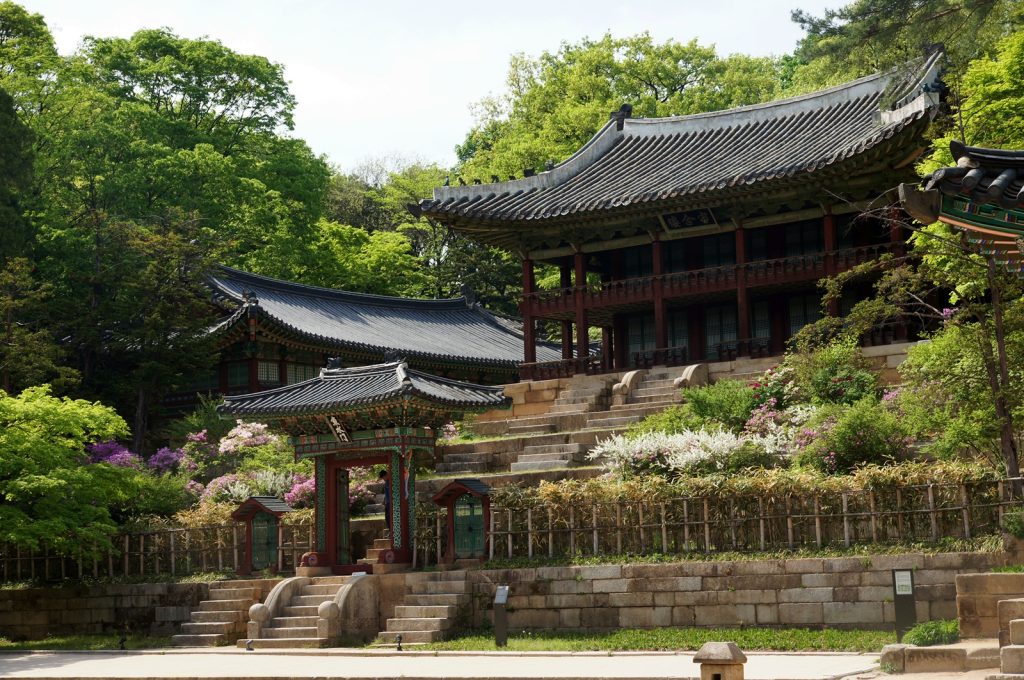
We arrived at Buyongji Pond, a square pond with a round island – shapes rich with Korean philosophical symbolism. The Buyongjeong and Juhamnu pavilions frame the pond, positioned with such perfect proportion that the scene looks like a traditional Korean painting come to life. Our guide explained that this pond area was where kings would hold civil service examinations, with candidates sitting in the pavilions composing poetry about nature, their work literally framed by the beauty they were describing.
That connection – between the physical space, its philosophical principles, and its practical function – suddenly made Korean culture click for me in a way years of museum visits hadn’t achieved. Later, we reached Ongnyucheon, an artificial waterway carved into rock with elegant curves. Stone channels direct water past pavilions where kings would gather with scholars for poetry competitions. Standing there, I could almost hear centuries-old conversations and understand viscerally how this culture valued refined pleasures and intellectual achievement.
What struck me most powerfully was the garden’s scale and ambition. This wasn’t a decorative space or small retreat but a 78-acre designed landscape where every vista, every pathway curve, every tree placement served aesthetic and philosophical purposes. The amount of thought, resources, and cultural sophistication required to create and maintain such a space demonstrated that the Joseon Dynasty was a civilization with remarkable artistic and intellectual achievements.
Since that first visit, I’ve returned to Changdeokgung over twenty times across all seasons. Each visit reveals new details, new angles, new understanding. The palace has become my standard for Korean beauty – not flashy or overwhelming but subtle, harmonious, and deeply satisfying to those willing to look carefully and understand thoughtfully.
Pros of Visiting Changdeokgung Palace
- UNESCO World Heritage Site: The only Korean palace to receive this designation in 1997, recognizing its outstanding universal value as an exceptional example of Far Eastern palace architecture and garden design, validating its significance beyond just Korean importance.
- The Secret Garden Experience: The 78-acre naturalistic landscape garden represents one of Asia’s finest examples of traditional garden design, offering beauty, tranquility, and insight into Korean aesthetic philosophy that no other Seoul palace can match.
- Better Preserved Authenticity: Many buildings retain original or early reconstructions rather than modern replicas, giving a more authentic sense of how palaces actually looked and felt during the Joseon Dynasty compared to heavily reconstructed sites.
- Less Crowded Than Gyeongbokgung: While still popular, Changdeokgung receives significantly fewer visitors than Gyeongbokgung, creating opportunities for more peaceful contemplation and easier photography without fighting massive crowds.
- Sophisticated Architecture: The buildings showcase Korean adaptation to climate and terrain better than other palaces, with sophisticated heating systems, flexible design elements, and harmonious landscape integration clearly visible and well-preserved.
Cons of Visiting Changdeokgung Palace
- Mandatory Guided Tours for Secret Garden: You cannot explore the Secret Garden independently – guided tours only, with strict timing, no deviating from group, which frustrates independent travelers and photographers wanting flexible timing.
- Ticket Booking Challenges: Secret Garden tours have limited capacity, sell out quickly during peak seasons, and the online reservation system can be difficult for international visitors navigating Korean websites.
- Extensive Walking on Hills: The palace and especially the Secret Garden involve significant uphill walking on sometimes steep paths, which can be challenging for elderly visitors, those with mobility issues, or anyone unprepared for the physical exertion required.
- Limited English Tour Times: While English-language tours are available, they run less frequently than Korean tours, limiting flexibility for non-Korean speakers and requiring careful scheduling around specific tour times.
- Weather Dependency: The Secret Garden’s appeal depends heavily on weather conditions – rain makes paths muddy and slippery, extreme heat makes the hillside walk uncomfortable, and winter’s bare trees disappoint visitors expecting lush greenery.
STELLA’S LOCAL SECRET
The “Early Morning Secret Garden Hack”
The very first Secret Garden tour of the day offers dramatically better experience quality than later tours. Why this works: Fresh morning light creates gorgeous lighting for photography, smallest groups typically have 20-40 people vs. 80-100 people on peak afternoon tours, quietest atmosphere before hundreds of visitors have trampled the garden, and coolest temperature crucial during summer.
Booking strategy: Online reservations open 30 days in advance at 12:00 AM Korean time. Set alarm for 11:55 PM your local time 29 days before visit, refresh at midnight, book first tour slot immediately as they go fast. Korean-language tours have more slots, so if you understand any Korean, book those for better availability.
Pro tip: If online booking fails, arrive at ticket booth 30 minutes before opening. They hold a small number of same-day tickets for walk-ups on a first-come-first-served basis. On weekday mornings in shoulder seasons like late March, early June, or late September, you might luck into tickets when online was sold out.
Injeongjeon Hall: The Throne of Refined Power
Understanding Changdeokgung’s Main Throne Hall
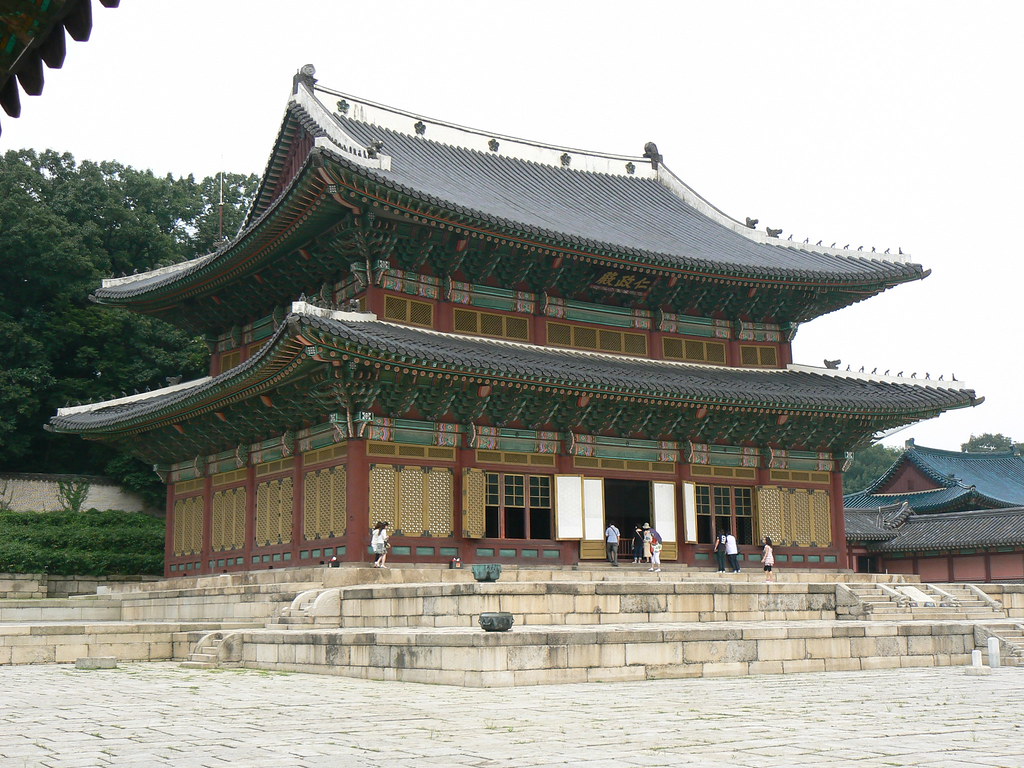
Injeongjeon Hall, whose name translates to “Hall of Benevolent Government,” serves as Changdeokgung’s main throne hall where kings conducted state affairs, received officials, and performed important ceremonies. While Gyeongbokgung’s Geunjeongjeon Hall impresses with massive scale and imposing grandeur, Injeongjeon demonstrates a different approach to royal architecture – one that emphasizes refined elegance and harmonious proportions rather than overwhelming size.
The hall was originally built in 1405, destroyed during the Japanese invasions of the 1590s, rebuilt in 1609, and has survived largely intact since then, making it one of Korea’s oldest surviving throne halls. Unlike Geunjeongjeon which sits on tall double platforms emphasizing vertical separation between king and subjects, Injeongjeon uses a single platform with gentler elevation, creating a different psychological relationship between ruler and ruled that reflects Changdeokgung’s overall philosophy of harmony rather than domination.
The building’s architectural details showcase the pinnacle of Joseon Dynasty craftsmanship. The elaborate bracket system supporting the roof demonstrates sophisticated carpentry techniques using no nails, relying purely on precise cutting and fitting. The dancheong decorative painting covering every exposed wooden surface uses five traditional colors with patterns that held symbolic meanings. The throne itself sits beneath an intricately carved and painted ceiling featuring a dragon descending from clouds, representing the king as the earthly manifestation of heavenly authority.
What makes Injeongjeon particularly significant is its authenticity. While many Korean palace buildings are reconstructions from the late 20th century, Injeongjeon has stood continuously since 1609 with only maintenance and repairs. When you stand in this hall’s courtyard, you’re looking at essentially the same structure that Joseon Dynasty kings saw, creating a direct visual connection across four centuries.
Why Injeongjeon Matters Beyond Architecture
The throne hall witnessed countless pivotal moments in Korean history. Kings were crowned here, important state decisions were made here, diplomatic ceremonies with Chinese envoys occurred here, and the slow decline of Korean monarchy played out here during the final decades before Japanese annexation. The building represents not just architectural achievement but the physical stage where Korean political history unfolded.
The courtyard in front of Injeongjeon features stone markers indicating where officials of different ranks would stand during royal audiences – a physical manifestation of the rigid hierarchical system that governed Joseon Dynasty society. These markers aren’t just historical curiosities but tangible evidence of how seriously Korean society took rank, position, and proper relationships. Understanding this courtyard layout helps visitors grasp the psychological and social reality of living in a strictly hierarchical Confucian society.
The hall’s interior arrangement demonstrates the symbolic universe that Joseon Dynasty ideology created around the king. The dragon on the ceiling represented the king as the earthly manifestation of heavenly power. The sun and moon on the screen behind the throne represented cosmic order. The careful positioning of every decorative element, every color choice, every architectural proportion worked together to create a space that reinforced the king’s legitimate authority and the ideological foundations of dynastic rule.
Personal Story: Understanding Through Comparison
After visiting Injeongjeon multiple times, I had the opportunity to stand in both Injeongjeon and Gyeongbokgung’s Geunjeongjeon on the same day. The contrast was striking and illuminating. Geunjeongjeon’s massive scale, towering platforms, and overwhelming decorative grandeur creates a space designed to inspire awe and remind everyone of the king’s supreme power. You feel small, impressed, perhaps intimidated.
Injeongjeon creates a completely different feeling. The scale is grand but not overwhelming. The platform elevation is significant but not towering. The decorative elements are exquisite but not oppressive. Standing in Injeongjeon’s courtyard, I felt I could imagine actual human interactions occurring here – nervous officials presenting petitions, scholars debating policy, the king making difficult decisions. The space felt lived-in rather than purely ceremonial.
A Korean architectural historian I spoke with explained that this difference reflects exactly what made Changdeokgung the preferred royal residence. Geunjeongjeon was designed for maximum political impact during state ceremonies. Injeongjeon was designed for actual governance – a place where a king could spend hours conducting real work rather than just performing symbolic authority. The architectural difference reflects a functional difference, and experiencing both helps visitors understand why Korean kings consistently chose to live and work at Changdeokgung despite Gyeongbokgung’s greater prestige.
Pros of Visiting Injeongjeon Hall
- Authentic Architecture: The hall dates to 1609 with minimal reconstruction, offering rare opportunity to see essentially original Joseon Dynasty architecture rather than modern replicas.
- Refined Aesthetics: The building demonstrates Korean architectural principles of proportion, harmony, and refined beauty rather than just impressive scale.
- Historical Significance: This is where actual governance occurred for centuries, making it more historically significant for understanding how Korean monarchy functioned than purely ceremonial spaces.
- Excellent Preservation: The dancheong, woodwork, and structural elements are remarkably well-preserved, allowing close examination of craftsmanship details.
- Less Crowded: Compared to Gyeongbokgung’s throne hall, Injeongjeon receives fewer visitors, allowing more peaceful appreciation and easier photography.
Cons of Visiting Injeongjeon Hall
- No Interior Access: Like other throne halls, you cannot enter the building or approach the throne closely, limiting your ability to examine interior details.
- Minimal English Explanation: The hall has basic English signage but lacks detailed explanations of architectural features, symbolic elements, or historical events.
- Easy to Rush Past: Many visitors spend only 5-10 minutes here before moving to the Secret Garden, missing the architectural and historical significance.
- Comparison Disadvantage: If you’ve already seen Gyeongbokgung’s more impressive throne hall, Injeongjeon might seem less spectacular despite its refinement.
- Photography Limitations: The courtyard’s relatively compact size and surrounding walls can make wide-angle photography challenging during crowded times.
STELLA’S LOCAL SECRET
The “Rank Marker Photography”
Most visitors ignore the stone rank markers in the courtyard, but they’re excellent photography elements. Stand at the courtyard’s rear edge, shoot with a long lens compressed perspective showing the markers receding toward the hall. This creates dramatic leading lines that draw the eye to Injeongjeon.
Best timing: Early morning when low sun creates long shadows from the markers, adding texture and depth. The shadows also help define the markers’ three-dimensional shapes in photographs.
Cultural insight: The markers closest to the hall represented the highest ranks – first and second rank officials. The farther from the hall, the lower the rank. During ceremonies, this created a visible hierarchy with hundreds of officials arranged in perfect order according to exact rank. Understanding this system transforms the courtyard from empty space into a stage where elaborate social choreography played out for centuries.
Other Key Palace Buildings Worth Your Attention
Seongjeongjeon Hall: The King’s Office
Seongjeongjeon Hall served as the king’s primary office where he met with ministers, reviewed documents, and made daily administrative decisions. Unlike the formal ceremonial space of Injeongjeon, Seongjeongjeon was designed for actual work – a functional office rather than a symbolic throne room. The building’s relatively modest size and practical layout reflect its purpose as a workspace rather than a stage for public ceremonies.
The hall demonstrates sophisticated Korean heating technology with an elaborate ondol system that kept the building warm during brutal Korean winters. The underfloor heating channels are still visible in some areas, showing how hot air from strategically placed fires would circulate under the floor before exiting through chimneys, providing even, radiant heat throughout the building. This technology, perfected over centuries, allowed Korean palaces to remain comfortable in temperatures that regularly dropped below -15°C.
Seongjeongjeon also showcases the adjustable nature of traditional Korean architecture. The building features removable wall panels that could be opened completely during summer to create an open pavilion-like space with maximum air circulation, then closed and sealed during winter to create an insulated enclosed room. This flexibility allowed a single building to adapt to Korea’s extreme seasonal temperature variations without requiring separate summer and winter structures.
Huijeongdang Hall: The Royal Residence
Huijeongdang Hall served as the king’s private residence – essentially the royal bedroom and private living quarters. The building originally dated to the early Joseon Dynasty but was rebuilt in the 19th century incorporating some Western architectural influences, making it a fascinating hybrid of traditional Korean and modern Western design elements. This unusual combination reflects Korea’s complex relationship with modernization during the late Joseon Dynasty.
The interior layout of Huijeongdang demonstrates how Korean royal family members actually lived rather than how they presented themselves publicly. The private quarters are far more modest and comfortable than the grandeur of public halls might suggest. The rooms are human-scaled, practical, and designed for actual daily life including sleeping, eating, reading, and family interactions. Seeing these spaces helps visitors understand that despite their power and status, Korean kings were ultimately human beings who needed comfortable places to sleep, warm rooms in winter, and private spaces away from constant public scrutiny.
Huijeongdang also features a Western-style reception room added in the late 19th century, complete with chandeliers, carpeting, and furniture that looks completely out of place in a traditional Korean palace. This room represents Korea’s attempts to modernize and engage with Western powers during the final decades of the Joseon Dynasty, showing the cultural tensions and transformations occurring as Korea struggled to maintain independence while adapting to a rapidly changing world.
Daejojeon Hall: The Queen’s Quarters
Daejojeon Hall served as the queen’s primary residence and is one of Changdeokgung’s most historically significant buildings because it survived the devastating fire of 1917 that destroyed many palace structures. The building showcases traditional Korean residential architecture designed specifically for female members of the royal family, with distinctive features including a beautiful rear garden area called Amisan.
Amisan, the hillside garden behind Daejojeon, features intricately carved brick walls with decorative patterns representing longevity, prosperity, and happiness. These walls are architectural masterpieces, demonstrating the sophisticated craftsmanship and aesthetic sensibility applied even to garden walls that few people would see. The garden also contains beautiful stone planters and carefully designed landscaping that created a private outdoor space where the queen could experience nature without leaving her residential compound.
The building’s interior arrangement reflects the complex protocol and hierarchy governing even the queen’s private life. Different rooms served specific functions for different types of activities and different levels of privacy. The queen’s bedroom was deeply private, accessible only to her closest attendants. Adjacent rooms provided spaces for receiving female relatives, conducting household administration, and pursuing leisure activities like embroidery or reading. Understanding this spatial organization helps visitors appreciate how strictly regulated and compartmentalized royal life was, even within supposedly private residential quarters.
Nakseonjae Complex: The Last Royal Residence
Nakseonjae is a special complex within Changdeokgung built in 1847 as a residence for King Heonjong and later inhabited by members of the Korean royal family well into the 20th century. Unlike other palace buildings, Nakseonjae was designed in a more modest scholarly style rather than grand royal architecture, reflecting the late Joseon Dynasty trend toward refined simplicity over ostentatious display.
What makes Nakseonjae particularly moving for many visitors is its relatively recent royal inhabitation. The last members of the Korean royal family lived here until the 1980s and 1990s, making this complex feel less like a museum piece and more like a recently inhabited home. Walking through these buildings, you can imagine actual people living here not centuries ago but within living memory, creating an emotional connection across time that older palace structures can’t match.
The complex demonstrates elegant restraint in its design. The buildings are beautiful but not overwhelmingly decorated. The proportions are graceful but not monumental. The gardens are lovely but not elaborate. This aesthetic of refined simplicity represents a sophisticated understanding of beauty that values subtlety and restraint over flashy display. Many visitors find Nakseonjae more personally appealing than grander palace structures precisely because its human scale and understated elegance feel more accessible and relatable.
Pros of Exploring Secondary Buildings
- Authentic Daily Life: These buildings show how royalty actually lived rather than just how they presented themselves publicly, providing insight into real historical daily experiences.
- Architectural Variety: Different buildings demonstrate different architectural styles, construction periods, and design purposes, offering richer understanding than just seeing throne halls.
- Less Crowded: Most tourists rush to the Secret Garden, leaving secondary buildings relatively quiet for peaceful exploration and unrushed photography.
- Cultural Details: The heating systems, adjustable walls, decorative elements, and spatial organization reveal sophisticated Korean cultural and technological solutions to daily living challenges.
- Historical Continuity: Buildings like Nakseonjae with recent inhabitation create emotional connections across time that purely historical reconstructions cannot achieve.
Cons of Secondary Building Tours
- Limited Access: Many buildings cannot be entered, restricting exploration to viewing from courtyards and peering through windows at interior spaces.
- Minimal Explanation: English signage is limited, leaving many visitors confused about what they’re looking at and why it matters without advance research or guidebooks.
- Easy to Skip: The pull of the Secret Garden and tour time constraints mean many visitors skip these buildings entirely, missing significant cultural and historical insights.
- Maintenance Closures: Some buildings undergo periodic conservation work and may be closed to visitors during your visit with little advance notice.
- Photography Challenges: Courtyard walls, protective railings, and afternoon shadows can make photographing building details difficult without proper planning and equipment.
STELLA’S LOCAL SECRET
The “Pre-Tour Building Exploration”
Most visitors arrive just in time for their Secret Garden tour and rush straight to the tour meeting point. Arrive 45-60 minutes early instead, giving yourself time to thoroughly explore the main palace buildings before joining the Secret Garden tour. Why this works: The palace buildings area has no time restrictions, letting you linger at interesting spots, the early morning timing means smallest crowds and best light, and you’ll understand palace layout context that makes the Secret Garden tour more meaningful.
Strategic route: Enter palace, head left to Injeongjeon for early morning photography with good light and no crowds, then explore Seongjeongjeon, Huijeongdang, and Daejojeon at your own pace. Save 15 minutes to reach Secret Garden tour meeting point, use restroom, and organize your belongings before the tour begins.
Pro tip: Bring a small notebook or use your phone to jot down questions during your building exploration. If you join an English Secret Garden tour, your guide can often answer questions about the main palace buildings during walking transitions between Secret Garden locations, giving you deeper insights you’d miss otherwise.
Introduction to the Secret Garden
What Makes the Secret Garden Special
The Secret Garden, known in Korean as Huwon (rear garden) or Biwon (secret garden), represents the pinnacle of Korean landscape design philosophy developed and refined over 600 years. This isn’t a garden in the Western sense of cultivated flower beds, geometric layouts, and manicured lawns. It’s a 78-acre naturalistic landscape where human intervention is so subtle that much of it appears almost untouched by human hands, yet every tree position, every pond shape, every pavilion placement, and every pathway curve was carefully designed according to sophisticated aesthetic and philosophical principles.
The garden served multiple crucial functions for the royal family. It provided a private natural retreat where kings and queens could escape the formality and constant scrutiny of official palace life. It offered venues for important state activities including civil service examinations where candidates composed poetry in pavilions overlooking carefully designed pond scenes. It created spaces for royal recreation, contemplation, study, and artistic pursuits. Most profoundly, it embodied Korean philosophical ideas about the proper relationship between human civilization and the natural world.
Korean garden design philosophy differs fundamentally from both Chinese formal gardens with their emphasis on symmetry and symbolic miniaturization, and Japanese zen gardens with their abstract, controlled representations of natural elements. The Korean approach, exemplified perfectly in Changdeokgung’s Secret Garden, seeks to enhance and reveal nature’s own beauty rather than imposing geometric patterns or creating idealized symbolic worlds. The technical term for this philosophy is “borrowing scenery” – using distant mountains, changing seasons, natural topography, and existing mature trees as integral parts of the garden design rather than treating them as external elements to be blocked out or ignored.
Understanding Garden Design Principles
Walking through the Secret Garden, attentive visitors begin to notice patterns that reveal the sophisticated design philosophy underlying what appears to be natural landscape. Paths rarely run straight but curve gently around existing trees, following natural contours of the hillside. When you round a curve, new vistas open gradually rather than appearing suddenly, creating a sense of discovery and progression through the landscape.
Ponds don’t occupy perfectly central positions in clearings but nestle into valley spots where water would naturally collect. Their irregular shapes follow natural basin contours rather than geometric circles or rectangles, though subtle human shaping is evident upon close observation. Pavilions don’t sit on massive artificial platforms but perch lightly on hillsides, often incorporating existing rock formations into their foundations or positioning themselves to frame specific natural views.
The garden demonstrates sophisticated understanding of how landscape is experienced through movement and changing perspectives. Most European and Chinese gardens were designed to be viewed from specific fixed vantage points – standing in one spot and looking at the entire composition. Korean garden design considers how scenes unfold and transform as you walk through them. A pavilion that looks one way from below reveals completely different proportions and relationships when viewed from across a pond or from a higher hillside path. This multi-perspective design demonstrates remarkable spatial thinking and artistic sophistication.
Water management throughout the garden showcases engineering hidden as aesthetic elements. Look carefully and you’ll see channels carved into rocks directing water flow with artistic curves that happen to serve hydraulic purposes. You’ll notice overflow systems preventing pond flooding during monsoon rains, disguised as decorative waterfalls or natural-looking rocky drainage. You’ll find filtration areas where sediment settles before water enters display ponds, designed as attractive transitional pools rather than obvious mechanical filters.
What to Expect on Your Tour
Secret Garden tours last approximately 90 minutes and cover roughly 2 kilometers of walking, much of it uphill on stone paths that can be steep and uneven in places. The tour follows a fixed route visiting the garden’s most significant pavilions, ponds, and landscape features. Guides stop at major points to provide historical and cultural explanations, typically spending 3-5 minutes at each location before moving on to the next spot.
The tour begins at the entrance area near the main palace buildings and initially climbs uphill into the forested rear garden area. The first major stop is usually Buyongji Pond with its associated pavilions, representing one of the garden’s most photographically beautiful and philosophically significant areas. From there, the tour continues through forest paths to other ponds, pavilions, and the famous Ongnyucheon stone water channel area. The route eventually loops back toward the palace buildings, concluding near where it started.
Physical demands should not be underestimated. The 2-kilometer distance includes elevation gain of approximately 50 meters, which doesn’t sound dramatic but becomes significant when you’re walking uphill for extended periods on irregular stone steps. The pace is steady – not leisurely strolling but purposeful walking with brief pauses. The tour doesn’t accommodate people who need frequent rest breaks or want to linger at particular locations. If you fall behind, you may find yourself rushing to catch up, missing explanations, and feeling stressed rather than enjoying the experience.
Tour group sizes vary dramatically by season and time. Winter weekday mornings might have groups of 20-30 people creating an intimate, manageable experience. Summer weekend afternoons during peak season can have groups of 80-100 people creating crowding at popular photography spots, difficulty hearing the guide’s explanations, and loss of the tranquil contemplative atmosphere the garden was designed to provide. This dramatic variation in experience quality makes tour time selection crucial to satisfaction.
Pros of the Secret Garden
- Unmatched Natural Beauty: The 78-acre landscape offers Seoul’s finest example of traditional Korean garden design with mature trees, some over 300 years old, creating an immersive natural environment.
- Philosophical Depth: The garden provides tangible insight into Korean aesthetic philosophy and the relationship between human creation and natural beauty in ways that museum exhibits or books cannot achieve.
- Seasonal Transformation: Each season offers completely different aesthetics from spring blossoms to summer green to autumn colors to winter structure, making multiple visits worthwhile across the year.
- Protected Sanctuary: Despite being in central Seoul, the garden maintains tranquility and separation from urban noise, creating rare opportunities for contemplative experiences in nature.
- Photography Opportunities: The combination of traditional architecture, water reflections, mature trees, changing seasons, and carefully composed vistas creates exceptional possibilities for both amateur and professional photography.
Cons of the Secret Garden Tour
- Mandatory Tour Restrictions: Complete inability to explore at your own pace, linger at favorite spots, or pursue photographic or contemplative interests outside the fixed tour schedule.
- Large Group Dynamics: Tours can include 50-100 people during peak times, creating crowding, difficulty hearing guides, and loss of the intimate atmosphere the garden was designed for.
- Limited Time per Location: The 90-minute tour covering extensive ground means each beautiful pavilion or pond receives only 3-5 minutes, barely enough for photos and certainly insufficient for deep appreciation.
- Physical Demands: Significant continuous uphill walking on uneven paths for 90 minutes can be genuinely exhausting, especially during summer heat or for visitors with mobility limitations.
- Language Limitations: English tours provide basic information but miss cultural nuances, philosophical context, and literary references that Korean-language tours include for domestic visitors.
STELLA’S LOCAL SECRET
The “Garden Study Strategy”
Before your visit, spend 30 minutes studying Secret Garden images and reading about specific locations like Buyongji Pond, Ongnyucheon, and Aeryeonji. Knowing what you’re going to see and why it matters dramatically improves the actual tour experience because you can immediately recognize significant features instead of struggling to understand rapid explanations while trying to figure out what you’re looking at.
Best preparation: Look at high-quality photos of major garden features, read about the symbolic meaning of square ponds with round islands representing earth and heaven, understand that waterway carvings were designed for poetry competitions where wine cups floated past pavilions, and learn which trees are 300+ years old versus more recent plantings.
Why this works: When you arrive at Buyongji and immediately recognize the square pond, round island, and Juhamnu pavilion you’ve studied, you can focus on appreciating the actual scene and capturing good photographs rather than spending your limited time trying to understand basic concepts the guide is rapidly explaining. You transform from confused tourist to informed observer, dramatically improving satisfaction and photographic results.
Practical Planning for Your Changdeokgung Visit
How to Book Your Secret Garden Tour
Secret Garden tours require advance reservations that open 30 days before your visit date. The online booking system can be accessed through the official palace reservation website. During peak seasons like cherry blossom time in early April or autumn foliage in mid-October, tours sell out within hours or even minutes of booking opening, requiring you to be ready exactly at midnight Korean time 30 days before your desired visit.
For off-season periods like winter months or shoulder season weekdays in March, June, or September, same-day walk-up tickets are sometimes available. Arrive at the palace ticket booth 30-45 minutes before opening time, and you might secure tickets that weren’t sold online. This strategy works best on weekday mornings when demand is lowest, but remains risky if you’re on a tight travel schedule with only one potential visit day.
Tour frequency varies by season and language. Korean-language tours typically run every 30-60 minutes during peak season, while English tours run only 2-3 times daily at fixed times like 10:30 AM and 1:30 PM. This limited English tour frequency means you must schedule your entire day around the available tour times rather than flexibly choosing when to visit. If you miss your reserved English tour, you can’t simply join the next one an hour later like you could with Korean tours.
Payment processing for online bookings sometimes rejects foreign credit cards, creating frustration for international visitors. If you encounter payment issues, try different cards including both credit and debit cards, ensure your billing address matches exactly what your bank has on file, or consider asking your hotel concierge to assist with booking using a local Korean card.
Admission and Costs
Regular palace admission to Changdeokgung is 3,000 won for adults, with the Secret Garden tour requiring an additional 5,000 won for adults, bringing total cost to 8,000 won (approximately 6-7 USD at current exchange rates). Children and teenagers receive discounted rates, and Korean citizens over 65 enter free. These prices are remarkably reasonable compared to similar cultural attractions worldwide, making Changdeokgung an excellent value for the experience quality provided.
Combination tickets covering multiple palaces are available if you plan to visit several Seoul palaces during your trip. The integrated palace pass includes Gyeongbokgung, Changdeokgung, Changgyeonggung, and Deoksugung for 10,000 won, saving money versus individual tickets if you visit three or more palaces. However, the combination ticket doesn’t include Secret Garden tour fees, which must be purchased separately.
Free admission days occur on the last Wednesday of each month for all palace buildings, though Secret Garden tours still require fees and advance booking. These free days attract enormous crowds of Korean domestic tourists, making them actually less enjoyable for serious visitors despite the cost savings. Unless you’re on an extremely tight budget, paying regular admission for a better experience on non-free days is worthwhile.
Getting to Changdeokgung Palace
Changdeokgung is located in central Seoul in the Jongno district, easily accessible by public transportation. The most convenient subway access is Anguk Station on Line 3, using Exit 3 which brings you within a short 5-minute walk of the palace entrance. Clear English signage from the subway exit directs you to the palace.
Alternative subway access includes Jongno 3-ga Station on Lines 1, 3, and 5, which is about a 10-minute walk from the palace. This station serves as a good option if you’re combining palace visits with exploring the nearby Insadong traditional culture district or Bukchon Hanok Village.
Taxi access is straightforward as drivers know Changdeokgung well. Simply say “Changdeokgung” (창덕궁) and drivers will understand. From major tourist areas like Myeongdong or Hongdae, taxi rides typically cost 8,000-12,000 won and take 15-30 minutes depending on traffic. However, Seoul traffic can be severe during rush hours, making subway usually faster for daytime visits.
If you’re visiting multiple palaces in one day, note that Changdeokgung sits very close to Changgyeonggung Palace (just next door, sharing a ticketing area) and relatively close to Gyeongbokgung (15-minute walk). This proximity allows efficient palace touring if you plan strategically.
What to Bring and Wear
Comfortable, sturdy walking shoes are absolutely essential and non-negotiable. You’ll walk 2+ kilometers uphill on stone paths, steps, and occasionally rough terrain. Athletic shoes, walking shoes, or light hiking shoes work well. Fashion sneakers with flat, smooth soles provide inadequate traction on sometimes slippery stone surfaces. Sandals, flip-flops, heels, or dress shoes are completely inappropriate and will make the experience miserable.
Water is crucial, especially during summer when temperatures regularly exceed 30°C with high humidity. Bring at least one liter per person in a reusable bottle. While you might find vending machines near the entrance, there are no refreshment facilities inside the garden once your tour begins. Dehydration during summer tours is a real risk that diminishes enjoyment and can cause actual health problems.
Sun protection during summer months includes hat, sunscreen, and sunglasses. The garden has extensive tree coverage providing intermittent shade, but many areas are exposed to direct sun. Korean summer sun is intense, especially reflecting off white stone courtyard surfaces, causing sunburn surprisingly quickly on unprotected skin.
Conversely, winter visits require serious cold-weather gear. Temperatures regularly drop to -10°C or below with wind chill making it feel even colder. You’ll be outdoors continuously for 90+ minutes with no opportunity to warm up inside. Essential winter gear includes insulated coat, thermal base layers, warm hat covering ears, insulated gloves, and waterproof winter boots. Many visitors underestimate Korean winter severity and end up cutting visits short due to cold.
Camera equipment choices matter because you’re walking uphill continuously for 90 minutes carrying everything. A heavy DSLR with multiple lenses and a large camera bag becomes genuinely burdensome after the first 30 minutes of uphill walking. Consider whether you really need all that equipment or if a lighter mirrorless camera or even smartphone might provide 80% of the image quality with 20% of the weight and hassle.
Pros of Careful Practical Planning
- Secured Access: Advance booking ensures you actually get to experience the Secret Garden rather than arriving to find tours sold out, which would waste your entire visit.
- Optimal Timing: Choosing tour times strategically based on light, weather, and crowds dramatically improves the quality of your experience and photographs.
- Comfortable Experience: Proper footwear, hydration, sun protection, and weather-appropriate clothing transforms what could be a miserable ordeal into an enjoyable cultural exploration.
- Efficient Schedule: Understanding timing, transportation, and logistics lets you combine palace visits with other nearby attractions without wasted time or stressful rushing.
- Cost Savings: Knowing about combination tickets, free days, and admission prices helps you budget appropriately and potentially save money on multi-palace visits.
Cons of Planning Requirements
- Time Investment: Researching booking systems, studying garden features, planning optimal timing, and organizing logistics requires significant advance preparation time.
- Reduced Spontaneity: The need to book exactly 30 days in advance for peak season visits eliminates flexibility to adjust travel plans or respond to weather forecasts.
- Stress from Uncertainty: Dealing with Korean booking websites, potential payment processing issues, and unclear confirmation systems creates anxiety for international visitors.
- Rigid Schedule: Committing to specific tour times locks your entire day’s schedule, reducing flexibility to linger at other attractions or adjust plans based on energy levels or weather.
- Over-Preparation Risk: Extensive advance research and planning might reduce the sense of discovery and spontaneous wonder that comes from experiencing new places without preconceptions.
STELLA’S LOCAL SECRET
The “Weather Backup Plan”
Korean weather can change rapidly and dramatically. Have a backup indoor activity planned for the same day as your Changdeokgung visit in case unexpected heavy rain or extreme heat makes the outdoor palace tour genuinely miserable. Good backup options near Changdeokgung include the National Palace Museum of Korea (free admission, excellent Korean royal culture exhibits), Insadong area for covered shopping and tea houses, or the Bukchon Hanok Village Cultural Center.
Why this flexibility matters: The palace and especially the Secret Garden lose much of their appeal during heavy rain when paths become muddy, you’re wet and uncomfortable, photography is nearly impossible, and you spend 90 minutes wishing you were indoors. Rather than forcing yourself through a miserable experience, having a quality backup plan lets you reschedule palace visits for better conditions while still having a good day.
Pro strategy: Book tours for two different days if your schedule allows. If weather is perfect on day one, enjoy the palace and cancel your day two reservation. If day one weather is terrible, postpone to day two. This insurance strategy costs nothing since cancellations made more than 24 hours in advance receive full refunds, and dramatically increases your likelihood of experiencing Changdeokgung under good conditions.
Frequently Asked Questions
Q: How much time should I allocate for visiting Changdeokgung Palace?
Allocate minimum 3 hours total: 30-45 minutes for palace buildings before your Secret Garden tour, 90 minutes for the Secret Garden tour itself, and 30-45 minutes buffer for ticketing, transitions, and any post-tour exploration. If you want to thoroughly explore palace buildings, visit the National Palace Museum in the complex, or combine with nearby Changgyeonggung Palace, allocate 4-5 hours total.
Q: Can I visit the Secret Garden without joining a guided tour?
No. The Secret Garden requires guided tours with absolutely no independent exploration allowed. This policy exists to protect the garden from overcrowding and damage. If you want flexible palace exploration without mandatory tours, visit Gyeongbokgung or Deoksugung instead, which allow completely independent wandering at your own pace.
Q: What’s the best season to visit Changdeokgung Palace?
Autumn, specifically mid-October through early November, offers the best combination of beautiful autumn foliage colors, comfortable temperatures, and Korea’s most reliable clear weather. Spring cherry blossom season in early April is more dramatically beautiful but weather-dependent and extremely crowded. Winter offers solitude and stark beauty but brutally cold temperatures. Summer brings lush greenery but oppressive heat and humidity that makes the hillside walk exhausting.
Q: How difficult is the Secret Garden walking tour?
The 90-minute tour covers approximately 2 kilometers with significant uphill sections on stone paths that can be uneven and steep. Moderately fit adults manage fine, but elderly visitors, those with mobility limitations, or anyone with knee or joint problems may struggle significantly. The tour maintains a steady pace, doesn’t accommodate slower walkers, and doesn’t allow people to turn back midway once the tour has begun.
Q: Is Changdeokgung suitable for young children?
Children who can walk 2 kilometers uphill without complaint and maintain attention during 90-minute tours will be fine. Very young children who tire easily or have short attention spans will struggle, and the tour doesn’t wait for families with slow children. Most Korean families with young children prefer Gyeongbokgung, which allows flexible self-paced exploration rather than mandatory fixed-schedule tours.
Q: Can I bring food and drinks into the palace?
Water in reusable bottles is allowed and strongly recommended, especially during summer months. However, eating food inside the palace grounds is prohibited. Plan to eat before visiting or after completing your tour. No food vendors or restaurants exist inside the palace complex.
Q: Are there English-speaking tour guides available?
Yes. English-language Secret Garden tours run multiple times daily, typically at times like 10:30 AM, 11:30 AM, and 1:30 PM, though exact schedules vary by season. Check current times when booking. The tours provide basic English explanations suitable for international visitors without Korean language ability, though they miss some cultural nuances that Korean-language tours include.
Q: How far in advance should I book during peak season?
For cherry blossom season in early April or peak autumn foliage in mid-October, book exactly when reservations open at midnight Korean time 30 days before your desired visit date. Popular time slots for these periods can sell out within hours or even minutes. Off-season winter months may have same-day availability for walk-up visitors.
Q: What’s the difference between Huwon and Biwon?
These are two names for the exact same place – the Secret Garden at Changdeokgung Palace. “Huwon” means “rear garden” and is the official name. “Biwon” means “secret garden” and is the popular name. Tour materials and guides use both terms interchangeably, so don’t be confused if you hear both.
Q: Can I wear hanbok traditional Korean dress during my visit?
Yes, and you’ll see many visitors, both Korean and international, wearing rented hanbok for palace photography. However, the Secret Garden’s extensive uphill walking makes hanbok less practical than at flat palaces like Gyeongbokgung. If you choose to wear hanbok, select comfortable modern shoes rather than traditional footwear since you’ll walk 2+ kilometers uphill in 90 minutes.
Conclusion: Your Changdeokgung Foundation
You now have the essential foundation to visit Changdeokgung Palace confidently and meaningfully. You understand what makes this UNESCO World Heritage Site genuinely special beyond just being another Korean palace. You know how to navigate the booking system to secure Secret Garden tour access. You’ve learned which palace buildings deserve close attention and why they matter to Korean architectural and cultural history. You’re prepared for the physical demands of the hillside tour and equipped with practical knowledge about timing, transportation, admission, and what to bring.
Most importantly, you’ve gained insight into the philosophical principles that make Changdeokgung different from every other palace in Seoul. This isn’t just about impressive buildings or pretty gardens but about a sophisticated civilization’s approach to beauty, harmony, and the relationship between human creation and natural environment.
Part 1 has given you the knowledge to visit Changdeokgung successfully. Part 2 will transform that successful visit into an extraordinary experience by diving deep into Secret Garden secrets, revealing photography strategies for tour restrictions, explaining optimal seasonal timing, and sharing insider tips that most visitors never discover.
The palace buildings are waiting. The Secret Garden’s pavilions sit peacefully among ancient trees. Your journey into one of Korea’s greatest cultural treasures is about to begin.