
Beyond the Tourist Trail
So you’ve visited Gyeongbokgung Palace once. You walked through Gwanghwamun Gate, photographed the main throne hall, watched the guard ceremony, and checked it off your Seoul itinerary. You got some nice photos, learned a bit of history, and moved on to the next attraction. But here’s what I know from years of exploring this palace: you’ve only experienced about 20% of what Gyeongbokgung truly offers.
Most visitors follow the same predictable route – they enter through the main gate, crowd around the three or four most famous buildings, take identical photos from identical angles, and leave within 90 minutes feeling like they’ve “done” the palace. They miss the quiet courtyards where court ladies once whispered secrets, the hidden pavilions where kings contemplated difficult decisions, the strategic viewpoints that transform photography from tourist snapshots into art, and the timing strategies that separate rushed sightseeing from meaningful cultural immersion.
If you read Part 1 of this guide, you now understand the historical significance of Gyeongbokgung Palace, you know the stories behind the main structures like Geunjeongjeon Hall and Gyeonghoeru Pavilion, and you have the foundational knowledge that most tourists lack. This second part takes you deeper – into the palace’s hidden corners, secret viewing angles, strategic timing windows, and insider knowledge that even many Seoul residents don’t know. This is the guide for travelers who want to experience Gyeongbokgung like a cultural scholar, not a checkbox tourist.
By the end of this advanced guide, you’ll know exactly which obscure courtyards hold the palace’s most photogenic spots, how to time your visit to avoid crowds while catching perfect lighting, which seasonal strategies transform good visits into extraordinary experiences, and most importantly, how to discover the palace’s secrets that 95% of visitors never find. Whether you’re planning a return visit or want to get it absolutely right the first time, this guide will elevate your Gyeongbokgung experience from ordinary to unforgettable.
Hidden Palace Quarters Tourists Miss
The Forgotten Women’s Quarters: Where Palace Life Really Happened
While everyone crowds around the public ceremonial halls, the palace’s most intimate and historically fascinating spaces lie in the rear quarters where the royal family actually lived. These buildings witnessed the real human drama – jealous queens, murdered consorts, lonely children raised to be kings, and court ladies navigating dangerous palace politics. The architecture here is more delicate, the decorative elements more personal, and the atmosphere dramatically different from the imposing public spaces that dominate most tours.
Gyotaejeon Hall served as the queen’s main residence, positioned strategically behind the king’s quarters but connected by covered walkways that allowed private movement. The name translates to “Hall of Harmonious Bliss,” though the reality was often far from blissful. This is where Queen Min lived before her brutal assassination in 1895 by Japanese agents who broke into the palace at dawn. The building’s ondol heating system (underfloor heating using smoke channels from fires) was so sophisticated that different rooms could be heated to different temperatures – a luxury that demonstrated the technological advancement of Joseon architecture. The decorative chimney breasts on the hillside behind Gyotaejeon, called Amisan chimneys, are architectural masterpieces combining function and art. These aren’t just chimneys but elaborately decorated brick structures featuring floral patterns, geometric designs, and symbolic animals, transforming practical smoke vents into works of art.
Jakyeongjeon Hall, the quarters of the Queen Dowager (the king’s mother or grandmother), sits slightly elevated on the western side of the palace complex. This building’s significance comes from the immense political power wielded by dowager queens in Joseon Dynasty politics. When kings were children or weak, dowager queens often ruled as regents, making this residence the actual center of political power during certain periods. The hall features exceptionally fine dancheong (decorative painting) with unusual color combinations – more pinks and soft greens than the typical reds and blues, reflecting the feminine nature of the space. The courtyard garden includes carefully arranged stones, miniature trees, and a small pond that creates a contemplative atmosphere completely different from the grand public courtyards.
Jipokjae Library represents one of the palace’s most unusual buildings because it was built in the Chinese architectural style rather than traditional Korean style. King Gojong commissioned this building in the late 19th century as his personal study and library, filled with books, maps, and documents about foreign countries as Korea struggled to navigate increasing pressure from Japan, China, and Western powers. The building’s Chinese-style lattice windows, different roof structure, and unique interior layout make it architecturally fascinating. Gojong would spend hours here reading about foreign governments, modern technologies, and international diplomacy, desperately seeking solutions to protect Korean sovereignty. Standing in Jipokjae feels like entering a time capsule of that tragic moment when Korea’s traditional isolation policy collapsed and the nation struggled to adapt to a rapidly changing world.
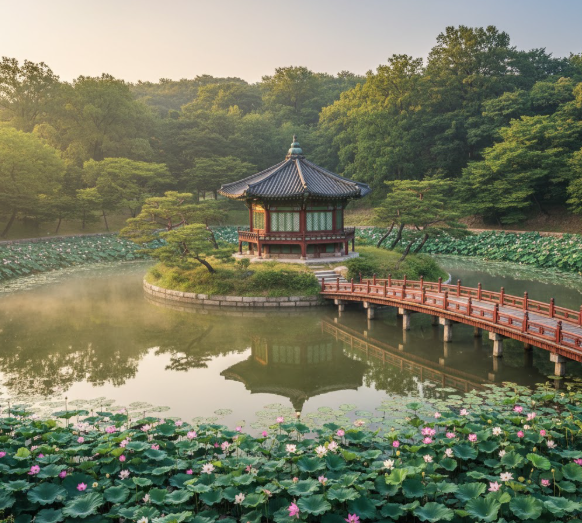
Hyangwonjeong Pavilion, a hexagonal structure sitting on an island in an artificial lotus pond, might be the palace’s most romantic and photogenic spot that tourists consistently miss because it requires walking away from the main route. The pavilion was built as a private retreat where the king could escape court pressures, read poetry, contemplate nature, and find moments of peace. A beautiful wooden bridge (Chwihyanggyo, meaning “Bridge Intoxicated with Fragrance”) crosses the pond to the island, though visitors cannot cross it today. The pond surrounds the pavilion completely, creating perfect reflections and a sense of isolation from the palace’s political intensity. During summer, lotus flowers bloom across the pond’s surface, creating scenes that look exactly like classical Korean paintings. During autumn, the surrounding trees reflect golden and red colors in the water, while winter sometimes freezes the pond into a mirror of ice.
Why These Hidden Quarters Matter
Understanding these private quarters transforms your perception of palace life from grand ceremonies to human reality. The public halls like Geunjeongjeon show the king as a political figure, but these hidden quarters show the king as a human being – reading alone in his library, walking in private gardens, trying to escape the crushing weight of responsibility. The women’s quarters reveal the often-tragic lives of queens and court ladies trapped in gilded cages, wielding power through influence rather than authority, navigating jealous rivalries that could mean the difference between favor and exile or even death.
These spaces also showcase different aspects of Korean traditional architecture. While the public halls emphasize grandeur, symmetry, and political symbolism, the private quarters emphasize comfort, beauty, and harmony with nature. The scale is more human, the decorative elements more delicate, and the relationship with surrounding gardens more intimate. Architecture enthusiasts will find the chimney artistry, the sophisticated heating systems, the creative use of limited space, and the seamless indoor-outdoor transitions particularly fascinating.
For photographers, these hidden areas offer what the crowded public spaces cannot – solitude, unique angles, and the opportunity to capture the palace’s quieter, more contemplative character. A photo of Hyangwonjeong reflected in its lotus pond tells a completely different story than a photo of the main throne hall. One speaks of public power; the other speaks of private contemplation. Both are essential to understanding what the palace truly was.
Personal Story: Discovery in the Queen’s Garden
During one visit, I deliberately avoided the main route and wandered into the western palace section that most tour groups skip. I found myself in a small courtyard behind Gyotaejeon with perhaps two other visitors – a stark contrast to the hundreds crowding the main halls. The courtyard featured a tiny garden with carefully arranged rocks, miniature pines sculpted by decades of pruning, and a small stone pagoda half-hidden by foliage. Sitting on a stone bench, I could hear birds singing, wind rustling leaves, and the distant murmur of crowds from the main palace areas, but in this courtyard, there was profound peace.
An elderly Korean woman tending the garden noticed me and approached. In broken English supplemented by gestures, she explained she’d been a palace gardener for over thirty years. She showed me plants that had been growing in this exact courtyard for over a century, survivors of the Japanese colonial period when most palace gardens were destroyed or neglected. She pointed to specific stones in the garden arrangement and explained their symbolic meanings – the largest represented mountains, smaller ones represented islands, the careful placement creating a miniature landscape that symbolized the Korean peninsula itself.
She told me that this courtyard garden was where Queen Min would walk early in the morning, before court obligations consumed her day. The queen loved flowers, particularly chrysanthemums, and would personally tend some of the plants. On the morning of her assassination, Queen Min had been in her sleeping quarters nearby, and conspirators broke through the palace walls and dragged her into a courtyard very much like this one. The gardener’s eyes filled with tears as she explained that tending these gardens felt like honoring the memory of all the women who had lived, suffered, and sometimes died in these quarters.
That conversation transformed the garden from a pleasant spot into a memorial. I stayed for nearly an hour, watching sunlight shift across the carefully placed stones, imagining a queen finding brief moments of peace among flowers before returning to the dangerous politics of court life. Since that day, I’ve never been able to see the palace’s hidden quarters as just beautiful architecture – they’re stages where real human stories of love, fear, ambition, and tragedy unfolded.
Pros of Exploring Hidden Quarters
- Escape the Crowds: These areas receive a fraction of the visitor traffic compared to main halls, offering peaceful contemplation and easy photography without human obstacles blocking your shots or rushing your experience.
- Authentic Architecture: Private quarters showcase residential Korean architecture rather than ceremonial spaces, revealing how ondol heating worked, how rooms were arranged for daily life, and how gardens integrated with living spaces in traditional Korean design.
- Unique Photography: The more intimate scale, decorative details like the Amisan chimneys, lotus pond reflections at Hyangwonjeong, and Chinese-style elements at Jipokjae offer photography opportunities completely different from the main halls’ grand but repetitive angles.
- Deeper Historical Understanding: Learning where Queen Min was assassinated, where young kings lived isolated from normal childhood, and where dowager queens wielded power adds human dimension to history that ceremonial halls cannot provide.
- Seasonal Beauty: The gardens and lotus ponds in private quarters show dramatic seasonal changes – spring flowers, summer lotuses, autumn colors, winter snow – making repeat visits worthwhile across different times of year.
Cons of Exploring Hidden Quarters
- Easy to Miss Without Guidance: These areas aren’t on the obvious main route, lack prominent English signage directing visitors to them, and many tourists never realize they exist or assume areas away from crowds must be closed or unimportant.
- Limited Access: Some buildings and courtyards have restricted access or viewing hours, the beautiful bridge to Hyangwonjeong cannot be crossed (only viewed from shore), and you cannot enter most building interiors, limiting how closely you can examine architectural details.
- Requires Extra Time: Thoroughly exploring hidden quarters adds 45-60 minutes to your palace visit, which may not be feasible for travelers on tight schedules trying to see multiple attractions in one day.
- Minimal English Information: While main halls have decent English explanations, these hidden areas often have Korean-only signage or no explanations at all, meaning foreign visitors miss crucial context about what they’re seeing without guides or prior research.
- Weather Dependency: Gardens and outdoor areas that comprise most hidden quarters offer little shelter from rain or extreme heat, and some paths can be slippery when wet, making comfortable exploration weather-dependent.
🎁 STELLA’S LOCAL SECRET
The “Amisan Chimney Photo Masterclass”
The decorative chimneys behind Gyotaejeon are among the palace’s most unique features, but 90% of visitors either miss them or photograph them poorly. Here’s the secret approach:
Location: Behind Gyotaejeon Hall, walk up the small hillside path (Amisan, meaning “Beautiful Mountain”). You’ll find four elaborately decorated chimney structures.
Best time: 2:00-3:30 PM in autumn (October-November) when afternoon sun illuminates the decorative brickwork at an angle that creates shadows revealing the three-dimensional floral patterns. Avoid mornings when the chimneys are backlit.
Photography secret: Use the chimneys’ decorative patterns to frame shots of the palace buildings below. Stand on the upper path, position a chimney in your foreground (use the rule of thirds), and capture palace rooflines in the background. This creates layered compositions with unique foreground interest that no one else gets.
Hidden detail: Look for the small stone channels at the chimneys’ bases – these directed smoke underground before it rose through the decorative structures, keeping smoke away from living quarters while creating beautiful functional art. This sophisticated system is 150+ years old and still visible.
Insider tip: Visit Gyotaejeon area around 3:00 PM on weekdays. Tour groups visit mornings (9-11 AM) and early afternoons (1-2 PM), leaving a quiet window from 2:30-4:00 PM when you might have the entire area nearly to yourself.
Secret Photography Spots & Golden Hour Guide
The Photographer’s Palace: Angles Tour Groups Never Find
Gyeongbokgung Palace attracts photographers from around the world, but most leave with the same standard shots everyone else has – frontal views of Gwanghwamun Gate, the throne hall from the main courtyard, and Gyeonghoeru from the southern viewing platform. These shots are beautiful but generic. After years of photographing this palace across all seasons and times of day, I’ve discovered specific locations and timing windows that transform photography from tourist documentation to genuine art.
The key principle most photographers miss is that the palace was designed with the sun’s path in mind. The main axis runs north-south, meaning morning light hits eastern structures while afternoon light illuminates western areas. Understanding this directional lighting is crucial. Additionally, the palace’s relationship with Mount Bugaksan to the north creates specific lighting conditions as the sun moves across the sky, blocking direct light at certain times while creating dramatic backlighting at others. Professional photographers who understand these patterns can predict exactly when specific structures will be perfectly lit.
The palace’s stone platforms and white gravel courtyards act as natural reflectors, bouncing light upward to illuminate building eaves and decorative elements from below – an effect that’s strongest when the sun is at lower angles (early morning and late afternoon). This bottom lighting creates a glow on dancheong colors and architectural details that disappears during midday when harsh overhead sun creates unflattering shadows and washed-out colors. The difference between palace photography at noon versus golden hour is so dramatic that they barely look like the same location.
Water features throughout the palace – ponds at Gyeonghoeru and Hyangwonjeong, stone water channels, and even puddles after rain – create reflection opportunities that many photographers ignore. Korean traditional architecture was specifically designed to be viewed with its reflection, creating visual symmetry and doubling the visual impact. The most sophisticated Korean garden design principle, called “borrowed scenery” (차경, chagyeong), intentionally incorporates reflections, distant mountains, and sky as integral parts of the architectural composition. Photographers who understand this principle shoot differently – they don’t just photograph buildings but photograph buildings in relationship to water, sky, and surrounding landscape.
Why Photography Strategy Matters
Most tourists approach palace photography randomly – they see something pretty and snap a photo without considering lighting, angle, timing, or composition. This reactive approach results in acceptable snapshots but rarely produces exceptional images. Strategic photography requires planning: arriving at specific locations during specific time windows, positioning yourself at calculated angles, waiting for optimal lighting conditions, and sometimes making multiple visits to catch everything at its best.
The difference between amateur and advanced palace photography isn’t primarily equipment (though good gear helps) but knowledge and patience. A photographer with a smartphone who understands when Geunjeongjeon’s eastern corner will be perfectly lit, who knows the quiet viewing platform that allows you to shoot Gyeonghoeru with lotus reflections, and who waits for the precise moment when morning mist rises from ponds will create better images than someone with expensive cameras shooting randomly at midday.
Understanding photography strategy also helps you avoid frustration. If you arrive at Gwanghwamun Gate at noon on a bright summer day, you’re fighting harsh overhead shadows, squinting tourists, and blown-out highlights in a white stone plaza. You’ll struggle to get decent shots and leave disappointed. But if you arrive at the same gate during the golden hour before sunset, you’ll find gentle directional light, longer shadows that add depth, and colors that look saturated and rich. Same location, completely different photographic experience.
Personal Story: The Mist Morning Revelation
I had visited Gyeongbokgung dozens of times before I experienced the phenomenon that changed my entire approach to palace photography. It was late October, and I’d set my alarm for 5:30 AM to arrive before the palace opened at 9:00 AM. I wanted to photograph Gwanghwamun Gate without crowds, so I planned to shoot from the plaza during the hour before opening when absolutely no one would be there.
I arrived in darkness around 6:15 AM, found a spot across from the gate, and waited for sunrise. As dawn broke around 6:40 AM, something magical happened that I’d never seen during daytime visits. Mist – actual low-hanging fog – began rising from the ground across the stone plaza, flowing around the gate’s base like water. The combination of overnight temperature drop and morning warming created this ground-level mist that completely transformed the scene. The gate seemed to float on clouds, ancient and mysterious, looking exactly like it must have appeared centuries ago before modern Seoul surrounded it.
But the mist lasted only about twenty minutes. By 7:10 AM, it had completely evaporated, and the scene returned to its normal appearance. I realized in that moment that there are entire layers of palace beauty that exist only during specific, brief time windows – dawn mist, particular light angles, seasonal flowers blooming, frost patterns on roof tiles – and if you’re not there at the exact right moment, you simply miss them. This revelation transformed me from a casual palace visitor into a strategic photographer who plans visits around specific natural phenomena.
Since then, I’ve witnessed the palace during rare conditions: after snowfall when roofs are perfectly white, during cherry blossom season when petals fall like pink snow, on foggy autumn mornings when buildings fade into atmospheric mystery, and during golden hour when everything glows like it’s lit from within. Each of these experiences taught me that the palace doesn’t just look one way – it has dozens of different moods and appearances depending on when and how you visit it.
Pros of Strategic Photography Planning
- Dramatically Better Images: Planning visits around lighting conditions, weather, and seasonal events produces photography that’s qualitatively superior to random shooting, with professional-quality results even from smartphone cameras when timing and positioning are optimal.
- Unique Perspectives: Knowing secret viewpoints and unusual angles means your photos won’t look like everyone else’s – you’ll capture views that most visitors never see, creating portfolio-worthy images rather than generic tourist documentation.
- Efficient Use of Time: Strategic planning means you spend your palace time photographing under optimal conditions rather than struggling against harsh midday light, crowds, or poor weather, maximizing the quality of images per minute spent.
- Seasonal Flexibility: Understanding which features look best during which seasons allows you to plan multiple visits throughout the year, with each visit offering completely different photographic opportunities – cherry blossoms in spring, lotus flowers in summer, autumn colors, winter snow.
- Personal Satisfaction: There’s deep satisfaction in planning a specific shot, waiting for perfect conditions, and executing exactly what you envisioned – this transforms photography from random documentation into creative expression and skillful craft.
Cons of Strategic Photography Planning
- Requires Multiple Visits: Getting every shot under optimal conditions might require several visits across different seasons, times of day, and weather conditions, which may not be feasible for travelers visiting Seoul briefly or only once.
- Weather Dependency: Careful plans can be destroyed by unexpected weather – rain canceling your golden hour shoot, clouds blocking sunrise, or wind destroying water reflections. Photography-focused visits carry higher disappointment risk when conditions don’t cooperate.
- Time Investment: Arriving before opening for dawn shots, staying through multiple golden hours, or making dedicated trips during specific seasonal windows requires significant time commitment that casual tourists might prefer spending on other attractions.
- Technical Knowledge Required: Maximizing these opportunities requires at least basic photography knowledge – understanding exposure, composition, and your camera’s capabilities. Complete beginners might feel overwhelmed trying to implement advanced strategies.
- Can Feel Pressured: Focusing heavily on getting perfect shots can sometimes reduce your enjoyment of simply experiencing the palace, creating pressure to perform photographically rather than organically enjoying the beauty and history around you.
🎁 STELLA’S LOCAL SECRET
The “Three Perfect Shots” Golden Hour Route
Most photographers try to shoot everything in one visit, resulting in mediocre lighting for most shots. Instead, use this focused strategy for three world-class images in one golden hour visit:
Shot 1: Gwanghwamun Gate (6:30-7:00 AM)
- When: Summer mornings (June-August) around 6:30-7:00 AM
- Position: Western side of plaza, 30-degree angle
- Why: Low sun from the east creates dramatic side-lighting, long shadows, and warm color temperature. Zero crowds.
- Pro tip: Include the haetae statue in your foreground using the rule of thirds for layered composition.
Shot 2: Gyeonghoeru Pavilion (7:15-7:45 AM)
- When: Immediately after Shot 1, move to western viewing area
- Position: Northwest corner platform looking southeast
- Why: Morning sun illuminates the pavilion while water remains mirror-calm. During lotus season (July-August), flowers are opening.
- Pro tip: Use a polarizing filter to control water glare and enhance sky color.
Shot 3: Geunjeongjeon Hall (8:00-8:30 AM)
- When: Right before 9:00 AM opening rush
- Position: From eastern corridor looking west across the courtyard
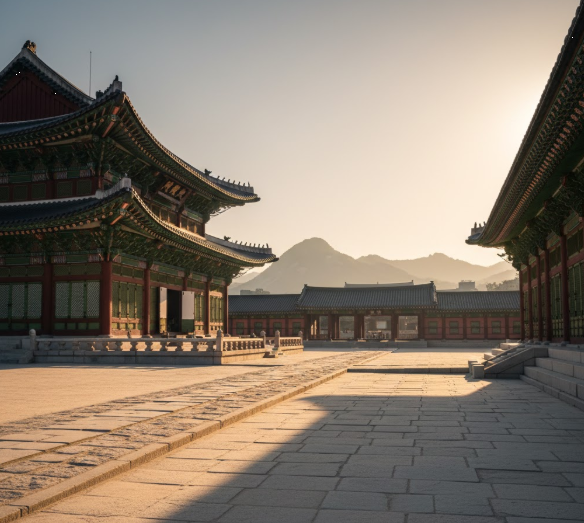
- Why: Low sun creates texture on dancheong details and long shadows across the white stone courtyard.
- Pro tip: Wait for a single person (palace staff or early visitor) to cross the courtyard, adding human scale and interest to your composition.
Critical timing: This route works because you’re chasing the rising sun from east to west across the palace, keeping it at your back for optimal lighting. Total time: 2 hours. Required: Arrive 15 minutes before palace opens (they sometimes allow photographers to enter slightly early).
Seasonal variation: In autumn (October-November), add 30 minutes to all times as sunrise is later. In winter (December-February), this route is brutally cold but produces the year’s most dramatic images with potential frost and snow.
Strategic Routes by Time of Day
The Morning Explorer Route (9:00-11:00 AM)
The first two hours after opening offer the palace’s best balance between good lighting, manageable crowds, and comfortable temperatures. This window is precious because it’s when you can see popular areas before they become overwhelmed while lighting is still acceptable for photography. The strategic morning route takes advantage of this timing by hitting crowded spots first when they’re relatively empty, then moving to quieter areas as tour groups arrive.
9:00-9:15 AM: Enter immediately at opening. Don’t stop at Gwanghwamun for photos (you did that yesterday during golden hour using the secret spot guide, right?). Walk straight through to the rear palace areas – specifically Gyeonghoeru Pavilion. You’ll likely have it nearly to yourself for 15-20 minutes before others arrive. This is your chance for reflection photos without people ruining the water’s mirror surface.
9:15-9:45 AM: Move to Gyotaejeon (Queen’s quarters) and explore the women’s residential areas including the Amisan chimneys. Tour groups won’t arrive here until 10:30 AM or later, giving you peaceful exploration. Morning light is perfect for photographing the decorative chimneys from the hillside path.
9:45-10:30 AM: Visit Hyangwonjeong Pavilion. The morning light creates beautiful conditions, and you’ll beat most crowds. During lotus season, flowers are fully open by this time, and water is still calm for reflections. Spend extra time here – it’s worth it.
10:30-11:00 AM: Return toward the front palace but take western paths to avoid the now-arriving tour groups. Visit Jipokjae Library and the National Palace Museum. As crowds descend on outdoor areas, you’re moving indoors to climate-controlled museum spaces, perfectly timed to avoid both crowds and increasing outdoor heat.
Result: You’ve seen the palace’s most important and beautiful areas under optimal conditions, avoiding 90% of crowd problems while maintaining good lighting and comfortable temperatures. You’re finished by 11:00 AM, leaving your afternoon free for other Seoul attractions while other tourists are just arriving at the palace for mediocre midday visits.
The Afternoon Strategist Route (2:00-5:00 PM)
Afternoon visits are underrated because most guidebooks warn against midday palace visits. They’re correct that 11:00 AM to 2:00 PM is terrible (harsh overhead light, maximum crowds, peak heat), but 2:00-5:00 PM offers a different but valuable experience. This is when you focus on western-facing structures that benefit from afternoon light and shaded areas that remain comfortable.
2:00-2:45 PM: Start at the National Palace Museum (air-conditioned comfort during peak heat). This comprehensive museum provides crucial context about palace artifacts, royal clothing, architectural elements, and daily life. Understanding this information enriches your subsequent palace exploration immensely. Most visitors skip the museum or visit it last when they’re exhausted – visiting first when you’re fresh and alert is strategically superior.
2:45-3:30 PM: Exit the museum and head straight to the western palace sections. The afternoon sun now illuminates western buildings beautifully while they were backlit during morning visits. The Jakyeongjeon area (Queen Dowager’s quarters) is particularly lovely in afternoon light. This time window is also when tour groups are thinning out (they typically visit 10:00 AM-1:00 PM), giving you breathing room.
3:30-4:15 PM: Position yourself at Geunjeongjeon Hall’s western viewing areas. The afternoon sun creates dramatic shadows across the throne hall’s elaborate roof details and dancheong paintings, revealing three-dimensional depth that morning light flattens. This is also an excellent time to appreciate architectural details because the harsh overhead light that washes out colors in midday has passed, but the golden hour hasn’t quite started.
4:15-5:00 PM: End at Gyeonghoeru Pavilion as pre-sunset light begins creating magical conditions. If you’re visiting during evening illumination seasons (spring and autumn when the palace stays open until 9:00 PM), position yourself here to watch the transition from daylight to twilight to full illumination – a progression that’s absolutely breathtaking.
Result: You’ve avoided the worst crowds and lighting while seeing areas that morning visitors photographed under poor conditions. The afternoon route complements morning visits perfectly, showing the same palace under completely different lighting and atmospheric conditions.
Why Route Timing Transforms Your Experience
The palace isn’t just one experience – it’s multiple experiences depending on when you visit. Morning visits offer freshness, calm, and soft light. Afternoon visits provide warmth, dramatic shadows, and different building illumination. Evening visits (when available) create romance, mystery, and a completely different aesthetic through artificial lighting that transforms the architecture.
Random visiting without timing strategy means you’re at the mercy of whatever conditions exist when you happen to arrive. Strategic timing means you control your experience, choosing the specific mood, lighting, crowd level, and temperature that matches your preferences and priorities. A photographer prioritizes golden hour. A family with children prioritizes comfortable temperatures and moderate crowds. A history enthusiast prioritizes quiet contemplation. Each group should visit during different windows to optimize their specific experience.
Personal Story: The Temperature Lesson
I once made the mistake of visiting Gyeongbokgung at 1:00 PM on an August afternoon – exactly when I now know you should never visit. The temperature was 35°C (95°F), humidity was oppressive, and the sun was directly overhead, creating harsh shadows and squinting conditions. The white stone courtyard reflected heat like a mirror, making the throne hall area feel like a convection oven. I lasted about thirty minutes before retreating to air-conditioned spaces, having accomplished almost nothing photographically and feeling physically miserable.
Six months later, I returned during late afternoon in February. The temperature was around 0°C (32°F), but I’d dressed appropriately in layers. The winter sun hung low in the sky even at 3:00 PM, creating beautiful warm light across cold stones. The palace was nearly empty – maybe fifty total visitors across the entire complex. I spent three hours exploring comfortably, taking my time with photographs, and experiencing the palace’s winter personality of stark beauty and quiet solitude. The contrast between these two visits to the same location taught me that when you visit matters as much as whether you visit at all.
Now I plan palace visits around weather forecasts, seasonal considerations, and specific timing windows. Summer visits happen early morning (9:00-11:00 AM) or evening (after 6:00 PM during extended hours). Winter visits happen mid-afternoon (2:00-4:00 PM) when the low sun provides maximum warmth. Spring and autumn allow flexibility but still benefit from strategic timing around crowds. This approach has transformed palace visiting from occasionally uncomfortable obligation to consistently enjoyable experience.
Pros of Strategic Route Planning
- Maximize Comfort: Timing visits around temperature, sun exposure, and weather patterns keeps you physically comfortable, allowing longer exploration and better focus on actually experiencing the palace rather than just surviving it.
- Control Crowd Exposure: Strategic routes let you see popular areas when they’re quieter and position yourself in less-visited areas during peak crowd times, giving you space and peace throughout your visit.
- Optimize Photography: Different routes favor different lighting conditions, allowing you to plan visits around your photographic priorities – dramatic shadows, soft light, reflections, or specific seasonal features like autumn colors or spring blossoms.
- Efficient Time Use: Well-planned routes minimize backtracking, position you in climate-controlled spaces during temperature extremes, and sequence your visit logically from energetic exploration early to relaxed contemplation later as you tire.
- Flexible Adaptation: Understanding multiple route options lets you adapt plans based on real-time conditions – if unexpected rain hits, shift to the museum route; if crowds are worse than expected, pivot to the hidden quarters route.
Cons of Strategic Route Planning
- Requires Prior Research: Effective route planning demands significant advance preparation – studying palace maps, understanding building positions relative to sun angles, researching crowd patterns – which some travelers find burdensome or simply don’t have time for.
- Reduces Spontaneity: Following predetermined routes can feel restrictive compared to wandering freely and discovering things organically, potentially reducing the joy of unexpected discoveries that come from unplanned exploration.
- Weather Can Derail Plans: Carefully planned routes optimized for specific lighting or temperature conditions become less relevant if weather doesn’t cooperate, potentially leaving you without a good backup plan.
- Creates Timing Pressure: Trying to stick to specific timing windows can create stress – rushing from one area to another to maintain your schedule rather than lingering when something captures your interest or moving on when it doesn’t.
- Not Ideal for Groups: Route timing that works perfectly for solo travelers or couples becomes complicated with larger groups, families with children (who need bathroom breaks and move at unpredictable speeds), or mixed groups with different interests and physical abilities.
🎁 STELLA’S LOCAL SECRET
The “Tuesday Hack” for Ultimate Peace
Most travelers know the palace is closed Tuesdays, but here’s what they don’t know: Changdeokgung Palace and Deoksugung Palace (Seoul’s other major palaces) are OPEN on Tuesdays. This creates a massive opportunity.
The strategy: Visit Gyeongbokgung on Wednesday or Thursday (when serious travelers are visiting palaces that were closed Tuesday), then visit Changdeokgung or Deoksugung on Tuesday.
Why this works: On Tuesday, everyone who wants to see palaces floods to the ones that are open. On Wednesday/Thursday, those same people are recovering or have moved to other attractions, while new arrivals (who just landed Monday night) haven’t started palace visits yet. Wednesday and Thursday are statistically the quietest days at Gyeongbokgung.
Data proof: I’ve counted crowds multiple times. Saturday/Sunday: 8,000-12,000 visitors. Monday/Friday: 4,000-6,000 visitors. Tuesday: Closed. Wednesday/Thursday: 2,000-3,500 visitors. That’s 60-70% fewer people on Wednesday/Thursday compared to weekends.
Bonus hack: Combine this with the 2:00-5:00 PM afternoon route on a Wednesday or Thursday in February or November (shoulder season). You might experience the palace with under 1,000 total visitors across 410,000 square meters – essentially private touring conditions at a world-famous attraction.
Seasonal Visiting Strategies: Timing Your Perfect Experience
Understanding Korea’s Four Dramatic Seasons
Korea experiences four intensely distinct seasons, and Gyeongbokgung Palace transforms completely with each seasonal shift. Unlike tropical destinations where weather remains relatively constant or temperate regions where seasonal changes are subtle, Korea’s continental climate creates dramatic differences between summer’s humid heat and winter’s dry cold, spring’s explosion of blossoms and autumn’s spectacular foliage. These aren’t just minor aesthetic variations – they fundamentally change what the palace looks like, how it feels to visit, what you can photograph, and even which areas are most enjoyable to explore.
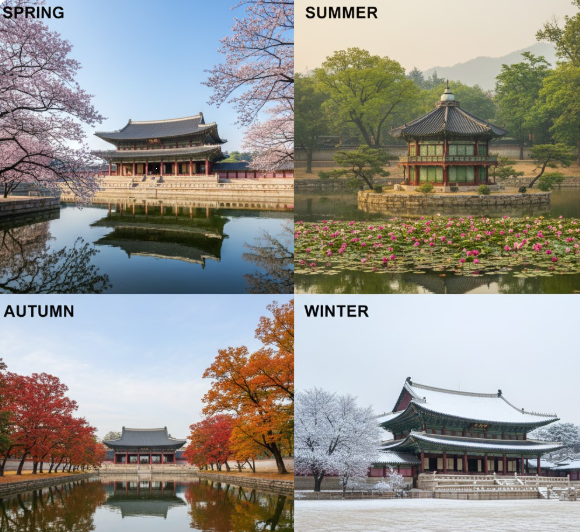
Spring (April-May) brings the palace’s most famous visual spectacle: cherry blossoms and azaleas transforming the grounds into a pink and white wonderland. The stone courtyards that look stark in winter suddenly frame delicate petals floating on gentle breezes. Traditional Korean architecture was deliberately designed to showcase seasonal flowers – building positions, courtyard layouts, and garden placements all considered how spring blossoms would frame structures and create layered views. During peak bloom (typically early April), the palace becomes almost overwhelmingly popular, with crowds reaching their annual maximum. But the two weeks before and after peak bloom offer similar beauty with fewer people, making strategic timing within spring crucial.
Summer (June-August) transforms the palace into a lush green oasis within urban Seoul. The lotus ponds at Gyeonghoeru and Hyangwonjeong explode with pink and white flowers, creating scenes straight from classical Korean paintings. Summer also brings Korea’s monsoon season (jangma), with heavy rains in late June through July that can disrupt visits but also create dramatic atmospheric conditions – mist rising from ponds, rain cascading off traditional rooflines, and reflections in puddles across stone courtyards. The challenge is heat and humidity, with temperatures regularly exceeding 30°C (86°F) and humidity making it feel even hotter. Strategic summer visits require early morning or evening timing, plenty of water, and acceptance that you’ll be sweating regardless of precautions.
Autumn (September-November) rivals spring for beauty but with completely different aesthetics. Instead of delicate blossoms, autumn brings bold colors – maple trees turning brilliant red, ginkgo trees glowing golden yellow, and persimmon trees heavy with orange fruit. The palace’s relationship with Mount Bugaksan becomes especially dramatic as the mountain’s forests turn into a tapestry of fall colors providing a spectacular backdrop. October and early November offer Korea’s most reliable weather – clear skies, comfortable temperatures, low humidity, and stable conditions perfect for extended outdoor exploration. This combination of perfect weather and peak colors makes autumn the insider’s favorite season, though crowds are significant during peak foliage periods (mid-October through early November).
Winter (December-February) reveals the palace’s stark geometric beauty without the softening effects of flowers or foliage. The traditional architecture’s elegant lines, the intricate roof patterns, and the dancheong colors stand out more clearly against bare trees and often snow-covered courtyards. Fresh snowfall transforms the palace into a monochromatic masterpiece – white snow against red and green dancheong, black roof tiles, and grey stone platforms. Winter visits are brutally cold (temperatures often drop below -10°C/14°F), but they offer the quietest crowds of the year, crystal-clear winter light perfect for photography, and a completely different aesthetic that reveals architectural details obscured by summer greenery. The palace feels more authentic in winter – closer to how it would have felt during the Joseon Dynasty when no modern heating meant even royal quarters were cold.
Why Seasonal Strategy Matters More Than You Think
Most travelers treat seasons as minor variables – nice to consider but not crucial to planning. For Gyeongbokgung Palace, seasonal timing is one of the most important decisions you’ll make because it determines not just what the palace looks like but the entire nature of your experience. A summer visit focused on lotus flowers requires completely different planning than a winter visit focused on snow photography or a spring visit timed around cherry blossoms.
Season affects crowd levels dramatically. Spring cherry blossom season (especially the first two weeks of April) and autumn foliage peak (mid-October) see crushing crowds that can make the palace feel more like Disneyland than a contemplative historical site. But visit in the “shoulder” periods just before or after peak seasons, and you get 80% of the beauty with 40% of the crowds – a trade-off that’s almost always worth it. Winter’s bitter cold deters many visitors, creating opportunities for nearly private palace experiences if you can tolerate temperatures that sometimes drop below -15°C (5°F) with wind chill.
Season determines which areas are most enjoyable. In summer, shaded corridors and areas near water features (Gyeonghoeru, Hyangwonjeong) provide relief from heat. In winter, southern-facing courtyards that catch maximum sunlight become the most comfortable exploration areas. In spring, the palace’s western section near Jipokjae has the most concentrated cherry blossom trees, while autumn’s best foliage is in the northern sections near the mountains. Understanding these seasonal micro-climates lets you plan routes that maximize comfort while still seeing everything important.
Season also affects practical logistics. During peak seasons (spring blossoms, autumn colors), hanbok rental shops are overwhelmed, requiring long waits or advance reservations. Weekends during these periods can see entry lines exceeding 30-45 minutes just to buy tickets. The palace sometimes implements crowd control measures during extreme peak times, limiting the number of visitors allowed in certain areas simultaneously. Winter eliminates these logistical hassles completely – walk right in, no lines, no waiting, no crowd management stress.
Personal Story: The Snow Day Miracle
I’ve visited Gyeongbokgung across all four seasons multiple times, but one winter visit stands out as magical beyond all others. Seoul had received an unexpected heavy snowfall overnight – about 20 centimeters (8 inches), which is unusual for the city. I woke up to see snow still falling and immediately checked the palace website to confirm it would open despite weather (Korean sites remain open except during truly extreme conditions).
I arrived around 10:00 AM to find perhaps thirty people total in the entire palace complex. The overnight snow had covered every surface – roof tiles were perfectly white, courtyards looked like pristine white carpets, and tree branches bowed under snow weight. The palace staff hadn’t yet cleared the main paths completely, so I was walking through shallow snow, my footsteps the first to cross certain courtyards. The silence was profound – snow muffles sound, and with so few visitors, I could hear individual snowflakes landing on my jacket.
I stood alone in the main courtyard in front of Geunjeongjeon Hall for almost fifteen minutes without another person visible anywhere. The throne hall’s red and green dancheong colors looked impossibly vivid against the white snow – like a traditional Korean painting come to life. I took photos, but mostly I just stood there experiencing a moment of peace and beauty that felt almost spiritual. This was the palace as it would have appeared hundreds of years ago during winter – quiet, cold, beautiful, and utterly serene.
An elderly palace guard approached and in careful English said, “You are very lucky. This much snow, very rare. Most people stay home, so you get private palace.” He was right – I realized I was experiencing something that even most Seoul residents would never see because they’d look at the snow and decide to stay indoors rather than braving the cold. That winter visit taught me that the “worst” visiting conditions according to conventional wisdom (cold, snow, off-season) can actually create the best experiences if you’re willing to embrace them.
Since that day, I actively prefer winter palace visits. I dress in layers, bring heat packs, accept that I’ll be cold, and enjoy the reward of empty courtyards and unique photographic opportunities. Summer and spring have their beauty, but winter has magic.
Pros of Seasonal Strategy Planning
- Optimal Beauty: Timing visits around specific seasonal features (cherry blossoms, lotus flowers, autumn colors, fresh snow) ensures you see the palace at its most beautiful rather than during transitional periods when nothing is at peak.
- Crowd Management: Understanding when crowds peak and when they’re minimal allows you to plan visits that either embrace popular times (if you enjoy bustling energy) or avoid them (if you prefer solitude and contemplation).
- Unique Photography: Each season offers completely different photographic opportunities – spring pastels, summer greens, autumn golds and reds, winter whites. Multiple seasonal visits create diverse portfolio images rather than variations on one look.
- Comfortable Conditions: Planning around weather patterns (avoiding monsoon season, embracing autumn’s perfect weather, preparing for winter cold) keeps you physically comfortable and able to explore longer without weather cutting visits short.
- Authentic Cultural Connection: Experiencing the palace across seasons connects you to how Koreans traditionally related to seasonal change – celebrating spring’s arrival, enduring summer heat, appreciating autumn’s harvest abundance, surviving winter’s challenges. This deepens cultural understanding beyond just sightseeing.
Cons of Seasonal Strategy Planning
- Requires Flexibility: Optimal seasonal timing often requires flexible travel dates – you can’t always control exactly when you’ll be in Seoul, but seasonal strategy works best if you can plan trips around specific windows (early April, mid-October, post-snowfall, etc.).
- Weather Unpredictability: Nature doesn’t follow schedules – cherry blossoms might bloom early or late, autumn colors might peak differently than historical averages, expected snow might not materialize. Seasonal planning carries inherent uncertainty that guaranteed year-round features don’t.
- Limited Time Visitors Disadvantaged: If you’re visiting Seoul once in your life for a fixed period, you get whatever season coincides with your trip. Seasonal strategy benefits most those who can visit multiple times or those who can adjust travel dates around seasonal peaks.
- Peak Season Trade-offs: Visiting during peak beauty periods (cherry blossoms, autumn colors) means accepting significantly larger crowds, higher prices for nearby hotels, and need for advance planning. The beauty increase may not compensate for the stress increase.
- Winter Requires Serious Preparation: Winter visits demand appropriate cold-weather clothing, acceptance of limited daylight hours (4:00 PM sunset in December), and willingness to endure genuinely uncomfortable temperatures. Not everyone finds this trade-off worthwhile despite quieter crowds.
🎁 STELLA’S LOCAL SECRET
The “Cherry Blossom Timing Hack”
Everyone tries to visit during peak cherry blossom week (usually April 5-12), creating absolute chaos. Here’s the secret: Visit exactly one week AFTER peak bloom.
Why this works:
- Flowers are still 60-70% on trees (still beautiful!)
- Falling petals create even more magical scenes – pink snow drifting across courtyards
- Crowds drop by 50-60% compared to peak week
- Hanbok rentals have availability
- No entry lines
Pro timing: April 12-18 is the sweet spot. You get “flower petal rain” effect without peak crowds.
Advanced hack: Check Korea’s official cherry blossom forecast (available in English on Korea Tourism Organization website around March 15) and plan your Seoul arrival for 8-10 days after the predicted peak. This gives you falling petals + fewer crowds + still plenty of blooms.
Photography tip: Falling petals photograph BETTER than perfect blooms because they add motion, texture, and foreground interest. Set your shutter speed to 1/250 or faster to freeze individual falling petals, or use 1/30 – 1/60 for artistic motion blur.
Bonus: Late cherry blossom period (late April) overlaps with azalea bloom, giving you TWO flower types simultaneously.
Advanced Insider Tips Only Experts Know
The Hidden Entrance Strategy
Most visitors enter through Gwanghwamun Gate because it’s the main entrance and where tour groups assemble. But Gyeongbokgung has additional entrances that dramatically reduce your entry time during busy periods. The eastern entrance (Sinmumun Gate) and western entrance (Yeongchumun Gate) remain open during operating hours but see a fraction of Gwanghwamun’s traffic.
Why this matters: During peak season weekends, Gwanghwamun can have 30-45 minute waits just to enter. The side gates often have zero wait. You save time and avoid the stressful crowded plaza experience. Once inside, you’re in the same palace – there’s no admission difference or restricted access based on which gate you used. This simple knowledge saves you up to an hour during busy periods.
How to use it: If arriving by subway, exit at Gyeongbokgung Station Exit 3 (for eastern entrance) or Exit 2 (for western entrance) instead of the main Exit 5. Walk along the palace walls until you reach the side gates. Buy tickets there (same price, same access, zero wait). Enter and begin exploring from a different starting point than 95% of visitors, immediately putting you away from crowds.
Additional benefit: Starting from side entrances naturally routes you to less-visited areas first (hidden quarters, gardens, museum) while everyone else is jamming the main courtyards. By the time you reach the popular areas, initial entry crowds have dispersed throughout the grounds, and you get better access.
Understanding the Free Admission Loophole
Here’s something many tourists miss: Gyeongbokgung offers free admission to visitors wearing hanbok (traditional Korean clothing). This policy is designed to encourage cultural appreciation and create beautiful scenes of traditionally-dressed visitors in historical settings. While hanbok rental shops charge ₩15,000-25,000 for 2-4 hour rentals, you save the ₩3,000 admission fee and gain significantly enhanced photography opportunities.
The economics: If visiting with a partner or friend, two admission tickets cost ₩6,000. Renting hanbok for two costs around ₩35,000-40,000. After free admission discount, your net cost is ₩29,000-34,000 for an experience that dramatically improves your palace visit aesthetically and gives you rental clothing for exploring Bukchon Hanok Village afterward. For many visitors, particularly those interested in photography or cultural immersion, this is absolutely worth the extra cost.
The timing trick: Most hanbok renters arrive at the palace between 10:00 AM – 2:00 PM, contributing to peak crowding. Rent hanbok early (8:00-8:30 AM – some shops open this early specifically for early visitors) and arrive at palace opening (9:00 AM). You get hanbok photography benefits without the crowds of other hanbok wearers, making your photos more distinctive and less “touristy.”
Photography advantage: Even if you don’t care about saving ₩3,000, consider hanbok rental purely for photography. Traditional Korean architecture was literally designed with traditionally-dressed people in mind – the colors, proportions, and spaces all assume hanbok-wearing occupants. Photos of yourself or companions in hanbok create context and scale while looking naturally integrated with the architecture in ways Western clothing simply doesn’t.
The National Museum Connection Secret
The National Palace Museum of Korea sits within Gyeongbokgung grounds and is included in your palace admission ticket. Most tourists either skip it entirely or visit it last when they’re exhausted. This is backwards strategy. The museum houses artifacts from the palace itself – royal clothing, ceremonial objects, architectural elements, paintings, and everyday items that once filled the buildings you’re about to explore.
Strategic approach: Visit the museum FIRST, before exploring outdoor palace areas. Spend 30-45 minutes seeing the throne used in Geunjeongjeon Hall, the royal garments worn in these courtyards, the ceremonial objects used in specific rituals, and the architectural models showing how buildings were constructed. This context transforms your subsequent palace exploration from “looking at old buildings” to “seeing where specific historical objects were used and understanding the activities that happened here.”
Specific benefits: After seeing the museum’s display of royal court clothing with its elaborate hierarchical color codes, you’ll understand why certain buildings have specific dancheong color patterns. After seeing ceremonial vessels used in ancestral rites, you’ll recognize the ritual spaces in the palace where these ceremonies occurred. After viewing the architectural models showing construction techniques, you’ll appreciate the carpentry and engineering visible in actual buildings.
Air conditioning bonus: During summer, the museum provides air-conditioned relief from heat. Strategic visitors explore outdoor areas during the cooler early morning (9:00-10:30 AM), retreat to the air-conditioned museum during peak heat (10:30-11:30 AM), then return to outdoor areas after the museum visit with renewed energy and crucial context that enhances the rest of their exploration.
Why These Insider Tips Change Everything
The difference between tourist experiences and expert experiences isn’t primarily about spending more money or having special access – it’s about knowledge. Knowing about side entrances doesn’t cost anything but saves massive time. Understanding hanbok rental economics lets you make informed decisions rather than either automatically rejecting it as “too expensive” or accepting it without understanding the full value. Using the museum strategically as both educational resource and climate refuge transforms it from optional add-on to integral experience component.
These tips also compound – using side entrances + early arrival + museum-first strategy + hanbok rental creates an entirely different experience than the standard approach of main entrance + random wandering + skip museum + no hanbok. The compound effect isn’t just additive but multiplicative, creating an experience quality difference far beyond what any single tip could achieve.
Personal Story: The Guide Who Changed My Approach
Years ago, I hired a private palace guide (expensive but worthwhile for learning). She was a retired palace docent who had worked at Gyeongbokgung for over twenty years. Instead of entering through Gwanghwamun like I expected, she led me to the eastern gate, explaining the time-saving benefit. Inside, she immediately took me to the museum rather than the throne hall I wanted to see first.
I was initially frustrated – I’d hired her to see the palace, not sit in a museum. But she insisted: “You need to know what you’re looking at before you look at it.” The museum visit transformed how I saw everything afterward. When we reached Geunjeongjeon, she pointed to architectural details I’d photographed multiple times before but never understood. She explained the bracket system I’d seen in the museum now supporting real roofs. She showed me where ceremonial vessels I’d just seen were stored and used.
Near the end of our tour, she shared something that stuck with me: “Most tourists see the palace with their eyes. You need to see it with your mind. Understanding what happened here, who used these spaces, what the details mean – that’s when the palace stops being pretty buildings and becomes meaningful.” She was right. After that tour, I could never unsee the knowledge she’d shared. Every subsequent visit built on that foundation, each time discovering new details because I finally understood what to look for.
That guide taught me that expert palace visiting isn’t about hidden physical spaces that tourists can’t access – it’s about hidden knowledge that transforms how you perceive the accessible spaces everyone can see. These insider tips are my attempt to share that transformative knowledge.
Pros of Using Advanced Insider Tips
- Significant Time Savings: Side entrance strategy, strategic timing, and route planning can save 1-2 hours that would otherwise be wasted in lines, crowds, or inefficient backtracking, giving you more actual palace exploration time.
- Enhanced Understanding: Museum-first approach and contextual knowledge tips transform visits from superficial sightseeing to genuine cultural education, creating memories and understanding that last far beyond pretty photos.
- Better Value for Money: Hanbok rental economics, free admission opportunities, and strategic photo timing mean you get more experiential value per dollar/won spent, making the overall experience feel more worthwhile.
- Reduced Frustration: Knowing about crowd patterns, temperature timing, and logistical shortcuts eliminates many common tourist frustrations – long waits, uncomfortable conditions, missed opportunities, and feeling like you “didn’t see everything.”
- Unique Experiences: Insider knowledge creates experiences different from standard tourist visits – from side entrance entries to strategic museum timing to understanding architectural details – making your visit memorable and distinctive.
Cons of Using Advanced Insider Tips
- Information Overload: Too many tips and strategies can create decision paralysis or anxiety about “doing it right,” potentially reducing enjoyment if you’re constantly worried about optimizing rather than simply experiencing.
- Requires Preparation Time: Learning and implementing these tips demands significant advance research, planning, and mental energy that some travelers prefer to spend on spontaneous exploration and discovery.
- Can Feel Overly Calculated: Following strategic approaches might make palace visiting feel like executing a battle plan rather than organic cultural exploration, potentially reducing the joy of unexpected discoveries and spontaneous moments.
- Not Always Applicable: Some tips require specific conditions (good weather for side entrance strategy, early arrival capability, budget for hanbok rental) that not all visitors can accommodate, creating frustration when recommended strategies aren’t feasible.
- May Disappoint if Overhyped: Building up expectations through advanced planning and insider knowledge can sometimes create disappointment if actual conditions don’t match idealized scenarios, whereas lower expectations from casual visits might lead to pleasant surprises.
🎁 STELLA’S LOCAL SECRET
The “Royal Toilet Photography Secret”
This sounds ridiculous, but it’s real: The traditional royal toilet facilities (called “chaekgang” or 책강) behind the Queen’s quarters are among the most unique and photographable historical artifacts in the palace – and 99% of visitors walk right past them.
Where to find them: Behind Gyotaejeon Hall, near the Amisan chimney area, look for small traditional structures that housed royal bathroom facilities. They’re not marked prominently in English.
Why they matter: These aren’t just bathrooms but architectural masterpieces. The royal toilet building features elaborate decorative elements, sophisticated ventilation systems, and demonstrates the technological advancement of Joseon sanitation. The structures were positioned with careful attention to feng shui and privacy, using strategic walls and landscaping.
Photography gold: The small structures create perfect foreground interest for shots of larger buildings behind them. The decorative roof tiles, intricate woodwork, and miniature scale create charming compositions that look like dollhouse versions of palace architecture.
Cultural insight: Understanding that even bathroom facilities received this level of architectural attention reveals the Joseon Dynasty’s sophisticated approach to every aspect of royal life, not just public ceremonial spaces.
Bonus fact: The toilet waste was considered valuable fertilizer and was carefully collected and sold to farmers – creating an early circular economy system centuries before modern sustainability movements.
Planning Your Perfect Visit: Complete Practical Guide
Ticket Information and Advance Preparation
Admission Pricing (2024):
- Adults (ages 19-64): ₩3,000 (~$2.25 USD)
- Youth (ages 7-18): ₩1,500
- Children under 7: Free
- Seniors 65+: Free
- Combined Palace Pass (5 palaces): ₩10,000 (valid 3 months)
Free Admission Conditions:
- Visitors wearing hanbok (traditional Korean dress)
- Last Wednesday of each month for Korean Cultural Day
- Temporary exhibitions may have separate fees
Operating Hours:
- March-May: 9:00 AM – 6:00 PM
- June-August: 9:00 AM – 6:30 PM
- September-October: 9:00 AM – 6:00 PM
- November-February: 9:00 AM – 5:00 PM
- Last admission: 1 hour before closing
- Closed: Every Tuesday
Special Evening Openings (Seasonal):
- Spring (April-May): Extended hours until 9:00 PM
- Autumn (September-October): Extended hours until 9:00 PM
- Check official website for exact dates as they change yearly
- Evening admission requires separate tickets (₩3,000)
Getting There: Transportation Guide
By Subway (Most Convenient):
- Line 3: Gyeongbokgung Station, Exit 5 (Main entrance – Gwanghwamun Gate)
- Walk straight 5 minutes, palace directly ahead
- Most crowded entrance but most straightforward
- Line 3: Gyeongbokgung Station, Exit 2 (West entrance – Yeongchumun Gate)
- Turn left, walk along wall 3-4 minutes
- Less crowded, great for avoiding lines
- Line 3: Gyeongbokgung Station, Exit 3 (East entrance – Sinmumun Gate)
- Turn right, walk along wall 3-4 minutes
- Quietest entrance, strategic for crowd avoidance
- Line 5: Gwanghwamun Station, Exit 2
- Walk north 7-8 minutes to main gate
- Useful if coming from Myeongdong area
By Bus:
- Multiple buses stop at Gyeongbokgung Station
- Route numbers: 109, 171, 172, 272, 601, 606, 704, 7025
- Less convenient than subway for most tourists
By Taxi:
- Tell driver: “경복궁” (Gyeongbokgung)
- From Myeongdong: ₩5,000-7,000 (15 min)
- From Hongdae: ₩8,000-12,000 (25 min)
- From Gangnam: ₩12,000-18,000 (35 min)
What to Bring: Essential Items Checklist
Must-Have Items:
- Comfortable walking shoes – You’ll walk 3-5km on stone paths
- Sun protection – Hat, sunglasses, sunscreen (courtyards have minimal shade)
- Water bottle – Limited water fountains; vending machines near museum
- Phone/camera with full charge – You’ll take 100+ photos
- Cash – Some facilities don’t accept cards
Seasonal Additions:
Spring (April-May):
- Light jacket (temperature fluctuates 10-20°C/50-68°F)
- Allergy medication (high pollen counts during cherry blossom season)
- Umbrella (occasional spring showers)
Summer (June-August):
- Extra water (heat/humidity dangerous – drink constantly)
- Small towel (you will sweat profusely)
- Portable fan or cooling pack
- Light, breathable clothing
- Rain gear (monsoon season June-July)
Autumn (September-November):
- Layers (mornings cool, afternoons warm)
- Light jacket for early morning/evening visits
Winter (December-February):
- Serious cold weather gear – Temperatures below -10°C/14°F common
- Heat packs for hands/feet (buy at convenience stores)
- Insulated, waterproof boots
- Scarf, hat, gloves (non-negotiable)
- Layers, including thermal underwear for extended visits
Time Management: How Long to Allocate
Quick Visit (1-1.5 hours):
- Main route only: Gwanghwamun → Geunjeongjeon → Gyeonghoeru → Exit
- Suitable for travelers with very limited time
- Hits top 3 photo spots but misses 80% of palace
Standard Visit (2-3 hours):
- Main buildings + museum + selected hidden quarters
- Recommended minimum for meaningful experience
- Allows some exploration while maintaining reasonable pace
Thorough Visit (3-4 hours):
- Complete grounds exploration including hidden areas
- Museum visit, all major buildings, gardens, hidden quarters
- Recommended for history enthusiasts and photographers
Expert Visit (4-6 hours):
- Everything above + extended photography time
- Multiple visits to same spots under different lighting
- Contemplative sitting, reading plaques, deep engagement
- For serious cultural travelers and repeat visitors
Combining Gyeongbokgung with Nearby Attractions
Half-Day Combination (4-5 hours total):
- 9:00-11:30 AM: Gyeongbokgung Palace (2.5 hours)
- 11:30-1:00 PM: National Folk Museum (within palace grounds)
- 1:00-2:00 PM: Lunch at Tongin Market or Seochon area
Full-Day Cultural Route (8-9 hours total):
- 9:00-12:00 PM: Gyeongbokgung Palace (3 hours)
- 12:00-1:00 PM: Lunch in Insadong
- 1:00-2:30 PM: Bukchon Hanok Village walk
- 2:30-4:00 PM: Samcheong-dong cafes and galleries
- 4:00-5:30 PM: Changdeokgung Palace (if energy remains)
Photography-Focused Route:
- 6:30-9:00 AM: Gyeongbokgung sunrise/golden hour
- 9:00-11:00 AM: Breakfast + rest
- 3:00-6:00 PM: Return for afternoon light
- Evening: Return for illuminated palace (seasonal)
Why Planning Details Matter
The difference between a mediocre palace visit and an exceptional one often comes down to small practical details. Arriving 30 minutes before opening versus 30 minutes after opening means the difference between empty courtyards and crowded chaos. Wearing appropriate shoes means exploring comfortably for 3-4 hours versus painful feet forcing early exit after 90 minutes. Bringing sufficient water in summer might literally prevent heat exhaustion.
These practical considerations aren’t glamorous or exciting, but they determine whether you can actually implement the strategic routes, photography tips, and insider knowledge shared throughout this guide. You might know the perfect viewpoint for photographing Gyeonghoeru at sunset, but if you’re dehydrated, exhausted from wearing inappropriate shoes, and need to leave early because you didn’t allocate sufficient time, that knowledge becomes useless.
Personal Story: The Day Everything Went Wrong (And Right)
On one visit, I made every mistake possible, teaching me why planning matters. I arrived at 11:00 AM on a Saturday (peak crowds), wore brand new shoes I hadn’t broken in (blisters by noon), brought no water (dehydrated in summer heat), and allocated only 90 minutes before a scheduled afternoon meeting (felt constantly rushed).
The experience was miserable. Crowds made photography impossible. My feet hurt within an hour. The heat became dangerous by noon. I rushed through the palace checking off buildings without actually experiencing anything, left frustrated, and felt like I’d wasted both admission fee and limited Seoul time.
Six months later, I returned with perfect planning: arrived at 9:00 AM on a Wednesday (minimal crowds), wore broken-in comfortable shoes, brought 1.5 liters of water, and cleared my entire morning with no time pressure. The difference was extraordinary – same palace, completely different experience. I saw the same buildings but actually appreciated them. I took photos that captured beauty rather than just documenting presence. I sat on benches contemplating historical significance rather than rushing past plaques.
That contrast taught me that how you visit matters as much as whether you visit. The palace itself doesn’t change, but your experience of it transforms completely based on practical preparation. Since then, I’ve never visited without careful planning around timing, logistics, weather, and personal comfort.
Pros of Detailed Planning
- Maximized Time Efficiency: Knowing operating hours, best routes, and time requirements prevents wasted time, allows you to accomplish everything desired, and coordinates palace visits with other Seoul attractions smoothly.
- Physical Comfort: Appropriate clothing, footwear, and supplies (water, sun protection) mean you can explore comfortably for extended periods rather than cutting visits short due to discomfort or pain.
- Reduced Stress: Understanding transportation, ticket purchasing, and logistics eliminates the anxiety of figuring things out on the spot, allowing you to focus mental energy on actually experiencing the palace.
- Better Photography: Knowing operating hours, seasonal schedules, and equipment needs ensures you arrive at optimal times with appropriate gear for the photos you want to capture.
- Realistic Expectations: Understanding time requirements prevents overscheduling – you won’t try to squeeze Gyeongbokgung into an insufficient window or feel rushed because you didn’t allocate enough time.
Cons of Detailed Planning
- Time Investment: Researching all these practical details requires hours of preparation that some travelers prefer to spend on spontaneous exploration or other travel planning.
- Reduces Spontaneity: Heavily planned visits can feel rigid and leave little room for organic discovery, extended lingering in unexpected favorite spots, or adjusting based on mood and interest.
- Plans Can Fail: Weather changes, transportation delays, personal energy levels, or unexpected circumstances can derail carefully made plans, potentially creating frustration when reality doesn’t match the planned itinerary.
- Potential Overthinking: Obsessing over optimal timing, routes, and logistics can create analysis paralysis or anxiety about “doing it right” rather than simply enjoying the experience as it unfolds.
- Not Always Necessary: Some visitors have perfectly satisfying experiences with minimal planning, simply showing up and wandering organically. Planning benefits are marginal for those content with casual rather than optimized visits.
🎁 STELLA’S LOCAL SECRET
The “Free English Tour Hack”
Gyeongbokgung offers FREE guided tours in English that most international visitors don’t know about. These tours are led by knowledgeable guides and provide context that transforms your understanding.
Schedule:
- English tours: Daily at 11:00 AM, 1:30 PM, 3:30 PM
- Duration: 60-90 minutes
- Meeting point: Inside main entrance, near information center
- No reservation required – just show up 5-10 minutes early
Strategy: Arrive at 9:00 AM, explore independently using this guide’s tips for 2 hours, then join the 11:00 AM English tour to fill knowledge gaps and hear stories you’d otherwise miss. The guide will explain things you noticed during independent exploration, creating “aha!” moments where details suddenly make sense.
Pro tip: Tours can be crowded during peak season. Position yourself near the front of the group to hear clearly and get better access to viewing points when the guide stops to explain buildings.
Alternative: Private audio guide rentals (₩3,000) available at entrance. Useful if you want narration but prefer solo pacing. However, live guides answer questions and adapt to group interests in ways audio guides cannot.
Frequently Asked Questions (FAQ)
1. What’s the best time of day to visit Gyeongbokgung Palace?
Answer: The best time is the first hour after opening (9:00-10:00 AM) on weekday mornings, especially Wednesday or Thursday. You’ll experience minimal crowds, comfortable temperatures before midday heat (in summer), and soft morning light excellent for photography. For photographers specifically, arrive before opening and shoot during golden hour (6:30-7:30 AM in summer, 7:00-8:00 AM in spring/autumn, 8:00-8:30 AM in winter). Avoid midday visits (11:00 AM – 2:00 PM) when crowds peak, sun creates harsh shadows, and summer heat becomes oppressive.
2. How much time should I allocate for visiting Gyeongbokgung Palace?
Answer: Allocate minimum 2-3 hours for a standard visit covering main buildings, the National Palace Museum, and selected hidden areas. If you’re a photographer, history enthusiast, or want thorough exploration including all hidden quarters and gardens, allocate 3-4 hours. Quick visits under 90 minutes are possible but only allow you to see the “greatest hits” (Gwanghwamun Gate, Geunjeongjeon Hall, Gyeonghoeru Pavilion) without deeper exploration or museum visit, which means missing 80% of what makes the palace special.
3. Is it worth renting hanbok to visit the palace?
Answer: Yes, for most visitors, especially couples and photography enthusiasts. Hanbok rental costs ₩15,000-25,000 for 2-4 hours but provides free palace admission (saving ₩3,000), dramatically improves photo aesthetics, and creates a more immersive cultural experience. The traditional clothing integrates naturally with palace architecture in ways Western clothes don’t. Many visitors consider hanbok photos their favorite Seoul memories. However, if you have mobility issues (hanbok can restrict movement), visiting in extreme cold/heat, or are completely uninterested in photos, the practical benefits may not justify the cost.
4. Can I bring food and drinks into the palace?
Answer: Water in reusable bottles is allowed and strongly recommended, especially during summer when dehydration is dangerous. However, eating food inside the palace grounds is prohibited to protect the historical site. There are designated rest areas near the museum where you can drink water, but formal meals should be eaten outside the palace. Vending machines are available near the museum for purchasing drinks. Plan to eat before visiting or after exiting – nearby Tongin Market, Seochon, and Samcheong-dong neighborhoods offer excellent food options within 5-10 minutes walk.
5. Is Gyeongbokgung Palace accessible for people with mobility issues or wheelchairs?
Answer: Partial accessibility exists but with significant limitations. Main pathways are paved and accessible, and the National Palace Museum is fully wheelchair accessible with elevators. However, many buildings sit on raised stone platforms requiring stair climbing to view interiors (you can see exteriors from ground level). The rear palace areas with hidden quarters involve uphill paths and stairs that wheelchairs cannot navigate. Wheelchairs can access approximately 60-70% of the palace, including all major photo spots and the museum. The palace provides wheelchair rentals at the main entrance (free with ID deposit). Request the accessibility map at the information desk showing barrier-free routes.
6. What’s the difference between Gyeongbokgung and other Seoul palaces?
Answer: Gyeongbokgung is the largest (410,000 sqm) and historically most significant palace, serving as the Joseon Dynasty’s main residence. It offers the most comprehensive palace experience with the grandest architecture, most buildings, best museums, and strongest historical significance. Changdeokgung is smaller but features Korea’s most beautiful palace garden (Secret Garden requires separate tour). Deoksugung is unique for mixing Korean and Western architecture and sits in downtown Seoul surrounded by modern buildings. Changgyeonggung is smallest but offers peaceful contemplation with fewer crowds. For first-time visitors or those seeing only one palace, Gyeongbokgung is the correct choice because it’s the most complete and important.
7. Is there an English-speaking guide available?
Answer: Yes! Free English-language tours run daily at 11:00 AM, 1:30 PM, and 3:30 PM (60-90 minutes), no reservation required – simply arrive at the meeting point near the entrance information desk 5-10 minutes early. Tours are led by knowledgeable guides who explain history, architecture, and cultural context that English signage doesn’t provide. During peak season (April-May, October-November), tours can be crowded with 30-50 people; arrive early to position yourself near the front. Alternatively, rent English audio guides (₩3,000) at the entrance for self-paced narration, or hire private guides through tourist agencies if you prefer personalized attention.
8. Can I visit both Gyeongbokgung and Changdeokgung in one day?
Answer: Yes, but it requires strategic planning and considerable energy. Recommended approach: Visit Gyeongbokgung 9:00 AM-12:00 PM (3 hours), eat lunch in Insadong or Bukchon (1 hour), then visit Changdeokgung 2:00-5:00 PM (3 hours including Secret Garden tour). This 8-hour day is exhausting but feasible for energetic travelers. Consider purchasing the combined palace pass (₩10,000 for 5 palaces, valid 3 months) which pays for itself if visiting just two palaces. Alternative: Split palaces across two days for more relaxed exploration allowing you to truly appreciate each palace rather than rushing through both. Quality experience at one palace exceeds rushed experiences at two.
9. What should I do if it rains during my palace visit?
Answer: Light rain creates atmospheric beauty – palace roofs channel rainwater through elaborate drainage systems, creating waterfalls and beautiful acoustics. Bring an umbrella and embrace the rain for unique photography showing mist, wet stone, and reflections in puddles. Heavy rain warrants retreating to the National Palace Museum (climate-controlled, comprehensive exhibitions, 60-90 minute visit) until weather improves. The museum alone justifies your admission fee and transforms rain from problem to opportunity for deeper learning. Monsoon season (late June-July) brings frequent heavy rain; check weather forecasts and consider visiting palaces that were closed the day before (crowds will be higher at open palaces).
10. Are there lockers or storage facilities at the palace?
Answer: Yes, coin-operated lockers are available near the main entrance and museum. Large bags, backpacks, and heavy coats can be stored (₩1,000-3,000 depending on locker size) allowing more comfortable exploration. This is particularly useful during winter visits when you’ll wear heavy coats that become burdensome indoors or during photography. However, locker availability is limited during peak season – if lockers are full, the information desk can sometimes accommodate large items. Valuable items should remain with you; lockers are secure but not guaranteed. For hanbok renters, most rental shops offer free storage for your regular clothes while you wear hanbok.
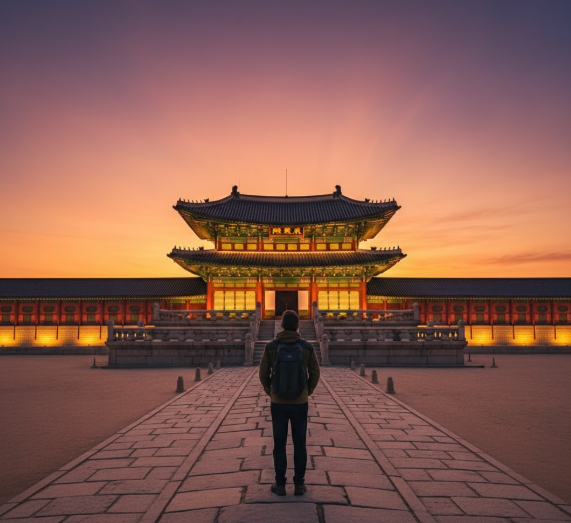
Conclusion: Your Journey to Palace Mastery
You’ve now unlocked the secrets that transform Gyeongbokgung Palace from a tourist checkbox into a profound cultural experience. You understand which hidden quarters to explore when everyone else is crowding the throne hall. You know the precise viewpoints where morning light creates photographic magic. You’ve learned seasonal strategies, timing windows, route optimizations, and insider knowledge that took me years of repeated visits to discover.
But here’s what matters most: this knowledge is worthless unless you use it.
Too many travelers read guides, save articles, bookmark tips, and then visit palaces exactly the way everyone else does – arriving at noon, following tour group crowds, snapping the same photos from the same angles, and leaving within 90 minutes feeling vaguely unsatisfied. They had access to better information but lacked the courage or commitment to actually implement it.
Don’t be that traveler. Set your alarm for early morning. Walk to the side entrance instead of following the crowds. Visit the museum first even when the beautiful courtyards are calling. Rent the hanbok even if it feels touristy. Return during different seasons. Spend four hours instead of ninety minutes. Do the things that separate meaningful experiences from forgettable ones.
Gyeongbokgung Palace has survived wars, fires, colonization, and centuries of change. It has stories to tell about Korean resilience, cultural sophistication, and the eternal human struggles with power, love, jealousy, and hope. But it will only tell those stories to visitors who come prepared to listen – who bring not just cameras but curiosity, not just time but attention, not just presence but engagement.
If you haven’t yet read Part 1 of this guide, go back and understand the historical foundation that makes these hidden corners meaningful. Know why Gyeongbokgung matters to Koreans before you explore where queens once walked. Understand the tragedy and triumph embedded in these walls before you photograph their beauty.
Then return here, review the seasonal strategies, memorize the golden hour routes, download the palace map, plan your multi-hour visit, and experience Gyeongbokgung the way it deserves – as a masterpiece of architecture, a monument to history, and a window into a culture that created something extraordinary and refuses to let it be forgotten.
The palace is waiting. The gates open at 9:00 AM. Will you be there when they do?
Ready for More Palace Secrets?
This guide covered Gyeongbokgung Palace’s hidden depths, but Seoul has four other major palaces, each with unique stories and secrets:
- Changdeokgung Palace & Secret Garden – Stay tuned for Part 3!
- Deoksugung’s Modern History – Coming soon
- Temple Stay Experiences – Coming soon
- UNESCO Heritage Walking Routes – Coming soon
Subscribe to never miss a guide and join thousands discovering the real Korea beyond tourist trails.
Questions? Comments? Share your Gyeongbokgung experiences below! 👇