
Korea’s Palace of Tragedy and Resilience
Have you ever wanted to visit a Korean palace that tells not ancient Joseon Dynasty stories but the painful birth of modern Korea? Where Western neo-classical architecture sits beside traditional Korean throne halls as physical evidence of Korea’s struggle between tradition and forced modernization? Where you can witness the famous Changing of the Guard ceremony that has become one of Seoul’s most popular cultural performances? Where autumn leaves along the iconic stone wall pathway create scenes that Koreans associate with romance, nostalgia, and the passage of time? Deoksugung Palace offers exactly this experience – but only if you understand its tragic role in Korea’s loss of independence, appreciate why its architectural mix tells important historical stories, and know how to experience both its solemn history and its vibrant contemporary cultural programming.
Most visitors approach Deoksugung with confusion and questions. They wonder why this palace looks so different from other Korean palaces, with Western buildings prominently featured rather than hidden away. They’re puzzled by the palace’s small size and urban setting, surrounded by skyscrapers and busy streets rather than spacious grounds. They watch the Changing of the Guard ceremony without understanding what historical reality it represents or whether such ceremonies actually occurred during the Joseon Dynasty. They walk the famous Deoksugung Stone Wall Path without knowing its significance in Korean popular culture and romantic imagination. They sense the palace’s importance but struggle to grasp exactly what makes it historically significant when it seems so unlike the grander, more traditionally Korean palaces elsewhere in Seoul.
I understand that confusion completely. When I first visited Deoksugung years ago, I expected another traditional Korean palace experience. What I encountered instead was something far more complex and emotionally heavy – a place that witnessed Korea’s desperate attempts to modernize and maintain independence, the forced abdication of Korea’s last emperor, and the slow death of Korean monarchy as Japanese control tightened. The palace’s Western architecture, which initially seemed out of place and disappointing, gradually revealed itself as crucial historical evidence of Korea’s impossible position between tradition and forced modernization in the early 20th century.
That’s why this comprehensive guide exists. I’m going to share everything you need to transform Deoksugung from a confusing architectural hodgepodge into a meaningful window into modern Korean history’s most painful period. You’ll learn the full story of how Deoksugung became Korea’s last imperial palace and witnessed the end of Korean monarchy. You’ll understand why the Western-style Seokjojeon Hall matters as much as traditional Korean throne halls for understanding Korean history. You’ll discover how to time your visit for the Changing of the Guard ceremony and what this performance represents. You’ll learn about the famous stone wall pathway and why it resonates so deeply in Korean cultural consciousness.
By the end of this guide, you’ll know how to visit Deoksugung with historical understanding that transforms architectural details into evidence of Korea’s tragic modern history. You’ll appreciate why this palace, despite its small size and unusual mix of architectural styles, deserves recognition as one of Korea’s most historically significant sites. You’ll understand what happened here between 1897 and 1919 and why those events still matter to contemporary Korean identity.
The Last Palace of the Korean Empire
Understanding Deoksugung’s Role in Modern Korean History
Deoksugung Palace occupies a unique and tragic position in Korean history as the primary residence of Emperor Gojong during the brief Korean Empire period from 1897 to 1910, and the site where Korean monarchy effectively ended. Unlike the ancient palaces built during early Joseon Dynasty, Deoksugung’s significance comes entirely from its role in Korea’s modern history – specifically the painful period when Korea struggled desperately to maintain independence while facing overwhelming pressure from Japan, Russia, and Western powers.
The palace began as a private residence for a Joseon Dynasty prince in the 15th century, not originally intended as a royal palace at all. It became an emergency royal residence in 1593 after Japanese invasions destroyed the main palaces. For the next 300 years, it served various secondary functions, never achieving the status or grandeur of primary palaces like Gyeongbokgung or Changdeokgung. This secondary status would change dramatically in 1897 when King Gojong, facing threats to his safety and sovereignty, moved here and declared himself Emperor of the Great Korean Empire, attempting to assert Korean independence and equality with neighboring China and Japan.
Gojong’s choice of this relatively modest palace rather than grander options reflected the political reality of his position. He had fled to the Russian Legation in 1896 for protection after his wife, Empress Myeongseong, was assassinated by Japanese agents. When he returned to Korean palace grounds in 1897, he chose Deoksugung partly because of its proximity to foreign diplomatic legations in the Jeongdong area, hoping that closeness to Western powers might provide some protection against Japanese aggression. The palace’s location in what was becoming Seoul’s international district made it strategically positioned for the diplomatic efforts that Gojong desperately hoped might preserve Korean independence.
The period from 1897 to 1910 witnessed Gojong’s increasingly futile attempts to maintain Korean sovereignty through diplomatic appeals to Western powers, modernization efforts, and symbolic assertions of imperial status equal to Japan and China. The construction of Western-style buildings within the palace grounds represented both genuine attempts to demonstrate Korean capacity for modernization and desperate efforts to appeal to Western powers by adopting their architectural forms. Every Western-style structure built at Deoksugung told a story about Korea’s impossible position – needing to modernize to maintain independence while lacking the time, resources, or international support to accomplish this before Japanese control became irreversible.
The Forced Abdication and End of Korean Monarchy
The palace witnessed one of Korean history’s most tragic moments in 1907 when Emperor Gojong was forced to abdicate in favor of his son Sunjong after Japanese authorities used Gojong’s secret diplomatic appeals to the Hague Peace Conference as pretext for demanding his removal. This forced abdication occurred within Deoksugung’s walls, transforming the palace into a physical monument to Korean loss of sovereignty and the effective end of meaningful Korean monarchy.
Gojong remained confined to Deoksugung after his abdication, living as a powerless former emperor while Japanese control over Korea tightened systematically. In 1910, Japan formally annexed Korea, ending even the pretense of Korean sovereignty. Gojong continued living at Deoksugung, a prisoner in his own palace, until his death in 1919. His death sparked the March 1st Independence Movement, with many Koreans believing he had been poisoned by Japanese authorities, though this was never proven. The palace that had witnessed Korea’s last desperate attempts to maintain independence became a monument to the failure of those attempts and the beginning of 35 years of colonial rule.
Emperor Sunjong, the last Korean emperor, lived at Changdeokgung rather than Deoksugung after his father’s abdication, but the transition of power occurred at Deoksugung, making this palace the site where Korean monarchy effectively ended. Walking through Deoksugung today means walking through spaces where these final tragic chapters of Korean royal history played out – not the glorious foundation of the Joseon Dynasty but its painful, humiliating end.
Why This History Makes Deoksugung Uniquely Important
Deoksugung matters precisely because it witnessed failure rather than success, tragedy rather than triumph. While other palaces represent Korean cultural achievement and royal power at their height, Deoksugung represents the brutal reality of how even sophisticated civilizations can lose sovereignty when overwhelmed by more powerful neighbors and abandoned by potential allies. This makes visiting Deoksugung emotionally heavier than visiting other palaces, but also more historically revealing about the forces that shaped modern Korea.
The palace’s architecture, mixing traditional Korean buildings with Western-style structures, physically embodies Korea’s impossible position between tradition and forced modernization. Each Western building tells a story about desperate attempts to demonstrate modernity and appeal to Western powers. Each traditional Korean building tells a story about maintaining cultural identity and continuity even under overwhelming pressure to westernize. The architectural tension between these styles isn’t aesthetic confusion but rather honest representation of historical reality.
Understanding this history transforms how you see contemporary Korea. The country’s remarkable economic and cultural achievements since the 1960s represent recovery from the colonial period that began with events at Deoksugung. Korean sensitivity about sovereignty and independence issues stems from the actual historical experience of losing sovereignty that played out at this palace. The determination to preserve and honor Korean cultural heritage reflects consciousness that this heritage was genuinely threatened with erasure, starting with the events that occurred here.
Personal Story: The Weight of History
I’ll never forget a visit to Deoksugung during which I encountered an elderly Korean man, probably in his 80s, standing silently in front of Junghwajeon Hall with tears streaming down his face. After standing respectfully nearby for several minutes, I approached and asked (through a younger Korean visitor who offered to translate) if he was okay. He explained that his grandfather had been a palace official during Emperor Gojong’s final years and told stories about the emperor’s desperation, his futile appeals to foreign powers, his depression as Japanese control tightened, and his final years as a powerless prisoner in his own palace.
The old man said: “Every Korean my age grew up hearing stories about Emperor Gojong from grandparents who remembered. They told us how he tried everything to save Korea’s independence. How he sent secret envoys to foreign countries begging for help that never came. How he cried when forced to abdicate. How he died knowing he had failed to protect his country. When I stand here, I’m not just seeing old buildings. I’m seeing where my grandfather worked, where the emperor he served lived through Korea’s darkest time, where our nation lost its independence. This palace is why Korea spent the next 35 years under colonial rule.”
His words completely changed how I saw not just Deoksugung but all of Korean history and contemporary Korean identity. The palace isn’t just a historical curiosity or architectural oddity – it’s a monument to actual lived experience of national trauma that living Koreans learned about from grandparents who personally witnessed these events. The emotions that Koreans bring to Deoksugung aren’t abstract historical sentiment but connections to family members who lived through and remembered what happened here.
Pros of Understanding Deoksugung’s Modern History
- Historical Relevance: Unlike ancient palaces, Deoksugung’s events occurred in modern times with photographs, detailed records, and living memory through grandparents, making the history tangible rather than distant.
- Contemporary Context: Understanding Deoksugung’s history provides crucial context for contemporary Korean attitudes toward sovereignty, independence, and relations with Japan that continue shaping East Asian politics.
- Emotional Depth: The tragic history adds profound emotional resonance that transforms palace visiting from pleasant sightseeing into genuinely moving historical education and reflection.
- Architectural Evidence: The mix of Korean and Western architecture provides physical evidence of historical forces and choices rather than requiring visitors to imagine historical circumstances from traditional buildings alone.
- Cultural Insight: The palace reveals crucial period of Korean modernization attempts, helping visitors understand how Korea evolved from traditional Confucian kingdom to modern nation through painful, traumatic transition.
Cons of Deoksugung’s Tragic History
- Emotional Heaviness: The painful history can make visiting feel somber and depressing rather than the pleasant cultural outing that visitors might expect from palace tourism.
- Complex Narrative: The history involves complicated international politics, diplomatic failures, and contested interpretations that are difficult for casual visitors to fully grasp without extensive background knowledge.
- Disappointment vs Expectations: Visitors expecting grand traditional Korean palace architecture like Gyeongbokgung may feel disappointed by Deoksugung’s smaller size and Western building emphasis.
- Sensitive Topics: The history involves Korean-Japanese relations and colonial period issues that remain politically and emotionally sensitive, potentially creating discomfort for Japanese visitors or those unfamiliar with this history.
- Incomplete Restoration: Some destroyed buildings have not been reconstructed, and the modern city surrounds the palace grounds, making it harder to imagine historical atmosphere compared to palaces with more complete traditional settings.
STELLA’S LOCAL SECRET
The “Historical Context Pre-Visit Study”
Deoksugung rewards preparation more than any other Seoul palace. Spend 30-60 minutes before visiting reading about Emperor Gojong, the 1907 forced abdication, the Hague Secret Emissary Affair, and the 1910 annexation. Wikipedia articles on these topics provide sufficient background. This preparation transforms your visit from confused wandering through unfamiliar buildings into informed historical witnessing.
Recommended focus: Read specifically about Emperor Gojong’s personality, his desperate diplomatic efforts, his relationship with Empress Myeongseong who was assassinated, and his final years after forced abdication. Understanding him as an actual person rather than abstract historical figure makes the palace come alive as the space where this person lived through these traumatic events.
Why this matters: Without historical context, Deoksugung seems like a small, architecturally confused palace. With context, every building becomes evidence of specific historical events and choices. The Western buildings aren’t random architectural mistakes but desperate attempts to demonstrate modernity. The small size isn’t poor planning but reflects the palace’s originally secondary status. The urban setting isn’t unfortunate location but deliberate choice for proximity to foreign legations. Knowledge transforms confusion into understanding.
Seokjojeon Hall: Korea’s Neo-Classical Paradox
Understanding Seokjojeon’s Architectural and Historical Significance
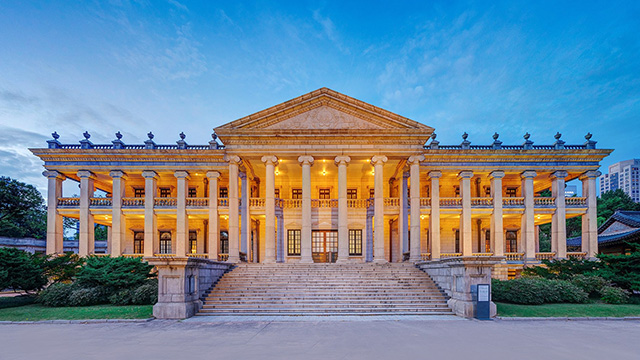
Seokjojeon Hall, whose name literally means “Stone Hall,” stands as Deoksugung’s most visually striking and historically complex building – a Western neo-classical palace that looks like it belongs in Vienna or Paris rather than Seoul. Completed in 1910, the very year Korea lost its independence to Japan, Seokjojeon embodies the tragic irony of Korean modernization attempts: built to demonstrate that Korea could adopt Western modernity and therefore deserved recognition as an equal modern nation, but completed too late to serve its intended purpose as Korea was already falling under complete Japanese control.
The building’s design follows European neo-classical architectural principles with perfect bilateral symmetry, Ionic columns supporting a classical pediment, stone construction replacing traditional Korean wood, and interior spaces arranged according to Western palace conventions rather than Korean spatial principles. British architect John Reginald Harding designed the building based on European palace models, creating a structure that would not look out of place in any major European capital of the early 20th century.
Emperor Gojong commissioned Seokjojeon as part of broader palace modernization plans that included installing electricity, telephone systems, and Western-style reception halls suitable for hosting foreign diplomats according to Western protocols. The building was specifically intended to provide venues for diplomatic reception and negotiation conducted according to Western rather than traditional Korean or Confucian ceremonial practices, reflecting Gojong’s hope that adopting Western forms might gain Western diplomatic support for Korean independence.
The building’s completion in 1910, the year of annexation, meant it never served its intended diplomatic purpose for an independent Korean Empire. Instead, it became a monument to failed modernization and the cruel timing that saw Korea’s modernization efforts consistently arriving too late to prevent loss of sovereignty. Walking through or viewing Seokjojeon means witnessing physical evidence of what might have been if Korea had been given time and international support to modernize on its own terms rather than being forced into Japanese colonial control.
Why Seokjojeon Divides Opinion
Seokjojeon generates more diverse reactions from visitors than any other structure in Korean palace complexes. Some see it as magnificent architecture demonstrating Korean capacity for adopting and mastering Western building technology and design. Others see it as tragic evidence of Korea’s desperate, ultimately futile attempts to gain Western respect and support through cultural mimicry. Still others see it as unfortunate architectural colonization of Korean aesthetic space, introducing Western forms that clash with and devalue traditional Korean architecture.
All these interpretations have validity, and the building’s significance lies precisely in this complexity and ambiguity. Seokjojeon isn’t simply beautiful Western architecture nor simply tragic evidence of failed diplomacy nor simply regrettable architectural colonization – it’s all of these simultaneously. The building’s meaning shifts depending on which historical narrative you prioritize and what emotional response you bring to Korean modern history.
For architectural enthusiasts, Seokjojeon provides rare opportunity to see well-executed Western neo-classical architecture in Korea. The building demonstrates sophisticated understanding of European architectural principles, quality stone construction, and careful attention to classical proportions and details. From purely architectural perspective, it’s an impressive building that would receive appreciation anywhere in Europe or North America.
For historians and those focused on Korean political history, Seokjojeon embodies the desperate political maneuvering and ultimately failed diplomatic strategy of Emperor Gojong’s final years. The building’s Western style represented calculated political choice intended to send specific messages to Western powers about Korean modernity and suitability for independence. That this strategy failed makes the building poignant rather than triumphant.
For Korean cultural nationalists and those who prioritize traditional Korean aesthetic values, Seokjojeon represents troubling displacement of Korean architectural traditions by foreign forms. The prominence given to this Western building within a Korean palace complex can feel like acceptance of cultural colonization and implicit devaluation of traditional Korean architecture that served Korean needs successfully for centuries.
The Building’s Post-Liberation Use and Contemporary Function
After Korean liberation from Japan in 1945, Seokjojeon served various governmental and cultural functions. For a period, it housed Korean art collections and functioned as a national art museum before those collections moved to purpose-built facilities. This museum function gave the building new purpose unrelated to its original diplomatic intentions, transforming it from symbol of failed independence preservation into venue for celebrating Korean cultural achievements.
Currently, Seokjojeon functions as an exhibition space and museum focusing on modern Korean history and the Korean Empire period. The interior has been restored to approximate its appearance during the imperial period, allowing visitors to see Western-style reception halls, living quarters, and ceremonial spaces that Emperor Gojong intended for diplomatic purposes. These restored interiors provide rare glimpses of how Korean royal family attempted to live according to Western conventions while maintaining Korean identity.
The building requires separate admission beyond basic Deoksugung palace ticket, and interior access is limited to guided tours at scheduled times. This restricted access reflects conservation concerns about allowing unlimited visitor traffic through historically significant interior spaces, but also means that many Deoksugung visitors only view Seokjojeon’s exterior without experiencing the interior spaces that complete the building’s historical narrative.
Pros of Experiencing Seokjojeon
- Architectural Uniqueness: The building provides opportunity to see Western neo-classical architecture executed to European standards in Korean context, offering architectural variety impossible at purely traditional palaces.
- Historical Evidence: Seokjojeon offers tangible physical evidence of Korean modernization attempts and diplomatic strategy during the Korean Empire period, making abstract history concrete and visible.
- Interior Spaces: The restored Western-style interior rooms show how Korean royalty adapted to Western diplomatic and social conventions, revealing cultural hybridity impossible to understand from exterior architecture alone.
- Photographic Interest: The contrast between Seokjojeon’s Western neo-classical form and surrounding traditional Korean buildings creates striking visual juxtapositions valuable for photography and visual understanding of historical complexity.
- Educational Value: The building prompts important questions about modernization, cultural identity, architectural colonization, and Korean responses to Western power that enrich understanding of modern Korean history beyond simple narratives.
Cons of Seokjojeon
- Aesthetic Clash: The Western building disrupts Deoksugung’s traditional Korean aesthetic coherence, creating visual discord that can feel uncomfortable for visitors seeking harmonious traditional Korean architecture.
- Limited Access: Interior viewing requires separate tickets, scheduled tour times, and sometimes additional reservation, making it inaccessible to visitors on tight schedules or who arrive without advance planning.
- Cultural Ambiguity: The building’s meaning is complex and contested, creating confusion for visitors who prefer clear positive historical narratives rather than ambiguous evidence of failed strategies and cultural compromise.
- Overshadows Korean Buildings: Seokjojeon’s visual prominence and size can overshadow smaller traditional Korean palace buildings, potentially leaving visitors with impression that Western architecture dominates the palace rather than understanding Korean buildings as equally or more significant.
- Incomplete Historical Understanding: Viewing only the exterior without accessing interior exhibits means missing crucial historical context needed to understand why this building exists and what it represents about Korean modern history.
STELLA’S LOCAL SECRET
The “Architectural Contrast Photography”
Position yourself to capture both Seokjojeon and traditional Korean palace buildings in the same frame, deliberately emphasizing the architectural clash rather than trying to photograph each style separately. The visual contradiction tells important historical truth about Korean modern history that pristine traditional architecture images alone cannot convey.
Best angle: Stand at the south end of the palace grounds where you can frame Seokjojeon’s Western columns with traditional Korean throne hall visible to the side or background. This composition visually represents Korea’s position between tradition and forced modernization, between Asian and Western cultural systems, between independence and colonization.
Historical interpretation: When you share these contrast images, explain that the architectural discord isn’t aesthetic mistake but historical evidence. Korea didn’t choose architectural harmony – it faced impossible political situation that required building Western-style structures to demonstrate modernity while maintaining traditional buildings to preserve cultural identity. The discord in your photograph represents discord in Korean historical experience.
Pro tip: Black and white photography works particularly well for Seokjojeon contrast shots, stripping away color that might distract from pure architectural forms and emphasizing the structural clash between Western symmetrical neo-classical design and asymmetrical flowing Korean traditional architecture.
Junghwajeon Hall and Traditional Korean Architecture
Understanding Junghwajeon’s Role as Main Throne Hall
Junghwajeon Hall, whose name translates to “Hall of Central Harmony,” serves as Deoksugung’s main traditional Korean throne hall where Emperor Gojong conducted state ceremonies and received officials according to Korean rather than Western protocols. Built in 1906 to replace an earlier throne hall destroyed by fire, Junghwajeon represents conscious choice to maintain traditional Korean ceremonial architecture even while building Western-style structures elsewhere in the palace complex.
The hall demonstrates classic Korean throne hall architecture with raised platform foundation, curved tile roof supported by elaborate bracket systems, and decorative dancheong painting in traditional five colors. The building sits on a two-level stone platform creating elevation that symbolically separates the emperor from his subjects while maintaining the dignified proportion and refined elegance characteristic of late Joseon Dynasty palace architecture.
What makes Junghwajeon particularly significant historically is its construction timing. Built in 1906, just one year before Emperor Gojong’s forced abdication in 1907, the hall represents one of the last major traditional Korean palace buildings constructed before Korean sovereignty ended. The building embodies the paradox of Korean Empire period – maintaining traditional Korean ceremonial forms even while desperately pursuing Western-style modernization in other areas.
The throne inside Junghwajeon follows traditional Korean design with elaborate canopy decorations, symbolic colors and patterns, and positioning that places the emperor at the cosmic center according to Confucian cosmological principles. This traditional arrangement contrasts sharply with Western-style reception rooms in Seokjojeon where the emperor sat in Western-style chairs in spaces arranged according to European palace conventions.
The Coexistence of Traditional and Modern Architecture
The fact that Deoksugung contains both traditional Korean buildings like Junghwajeon and Western structures like Seokjojeon isn’t architectural confusion but rather deliberate strategy reflecting Emperor Gojong’s attempt to maintain Korean cultural identity while adopting Western modernity. The traditional buildings asserted continuity with Joseon Dynasty legitimacy and Korean cultural heritage. The Western buildings demonstrated capacity for modernization and suitability for recognition as modern nation according to Western standards.
This architectural dualism reflected broader Korean Empire ideology that sought to be simultaneously traditional Korean kingdom maintaining Confucian legitimacy and modern empire adopting Western technology, administration, and diplomatic practices. The architectural mix that seems confusing to contemporary visitors made perfect sense within the political logic of Emperor Gojong’s desperate attempts to preserve independence through being both sufficiently traditional to maintain domestic legitimacy and sufficiently modern to gain Western diplomatic support.
Walking through Deoksugung and moving between traditional Korean buildings and Western structures, visitors physically experience the contradictions and impossible choices that Gojong faced. Every architectural style shift represents actual historical decision about cultural identity, political strategy, and diplomatic messaging. The palace becomes a physical record of these decisions and their ultimate failure to preserve Korean sovereignty.
Other Significant Traditional Buildings
Beyond Junghwajeon, several other traditional Korean buildings within Deoksugung deserve visitor attention. Hamnyeongjeon Hall served as Emperor Gojong’s residential quarters where he lived daily life away from ceremonial and diplomatic functions. The building demonstrates traditional Korean residential architecture adapted for royal use, with ondol underfloor heating, adjustable door panels, and spatial organization following Korean principles of privacy gradation from public to private spaces.
Jeonggwanheon Pavilion, a beautiful octagonal pavilion, represents Korean adaptation of Western architectural influences within traditional Korean structural forms. The building combines traditional Korean wood construction, curved roof, and bracket systems with Russian-influenced octagonal plan and Western decorative elements, creating hybrid style that attempts to blend rather than segregate Korean and Western design principles.
Deokshongjeon Hall showcases elegant restraint and refined proportions characteristic of late Joseon Dynasty architecture. The building served various administrative and ceremonial functions, providing space for activities that didn’t require the formal grandeur of the main throne hall but still needed appropriate royal architectural settings.
Pros of Traditional Korean Buildings at Deoksugung
- Cultural Continuity: The traditional buildings demonstrate Korean determination to maintain cultural identity and architectural heritage even under extreme political pressure to westernize.
- Architectural Quality: The buildings showcase sophisticated late Joseon Dynasty craftsmanship and design principles, representing Korean traditional architecture at its mature development stage.
- Historical Balance: The presence of substantial traditional architecture prevents Seokjojeon from dominating the palace entirely, creating architectural dialogue between Korean and Western forms rather than total displacement.
- Ceremonial Authenticity: Buildings like Junghwajeon show where actual Korean traditional ceremonies occurred during the Korean Empire period, providing authentic historical settings rather than reconstructed approximations.
- Comparative Understanding: Experiencing both traditional Korean and Western-style buildings within the same palace complex helps visitors understand the architectural and cultural choices that Emperor Gojong faced in trying to balance tradition with modernization.
Cons of Traditional Buildings at Deoksugung
- Overshadowed by Western Architecture: Seokjojeon’s size and visual drama can overshadow the more subtle beauty of traditional Korean buildings, potentially causing visitors to focus disproportionately on Western architecture.
- Limited Explanation: English signage explaining the traditional buildings’ architectural features and historical functions is minimal, leaving international visitors without context to appreciate their significance.
- Smaller Scale: Compared to throne halls at Gyeongbokgung or other major palaces, Deoksugung’s traditional buildings are more modest, potentially disappointing visitors seeking grand traditional Korean architecture.
- Fire Reconstructions: Many buildings are early 20th century reconstructions after fires rather than original structures, giving them less historical authenticity than similar buildings at other palaces.
- Modern Intrusions: Views from traditional buildings often include modern Seoul skyscrapers and urban infrastructure, making it harder to imagine historical atmosphere compared to palaces with more protected settings.
STELLA’S LOCAL SECRET
The “Traditional Architecture Focus Strategy”
Many visitors spend most time photographing and examining Seokjojeon because its Western style stands out dramatically, then rush through traditional Korean buildings. Reverse this priority. Spend time carefully examining Junghwajeon, Hamnyeongjeon, and other traditional buildings first, appreciating their refined proportions, sophisticated bracket systems, and elegant dancheong painting.
Why this works: You can see Western neo-classical architecture in many countries worldwide, but you can only see traditional Korean palace architecture in Korea. After understanding and appreciating the traditional buildings thoroughly, Seokjojeon becomes more interesting because you have the architectural comparison that makes its Western style meaningful rather than just unusual.
Photography strategy: Shoot traditional buildings during the first hour of your visit when morning light is optimal for Korean architecture’s colors and details. Save Seokjojeon for later when its stone construction looks good even in harsher midday light that would flatten traditional Korean buildings’ colors.
Cultural respect: Prioritizing traditional architecture shows respect for Korean cultural heritage and the deliberate choice that Emperor Gojong made to maintain traditional buildings even while adopting Western architecture elsewhere. This balanced attention honors both aspects of Deoksugung’s dual architectural identity rather than treating Western buildings as the “real” attraction and Korean buildings as secondary features.
The Changing of the Guard Ceremony
Understanding the Ceremony’s Historical Basis and Modern Revival
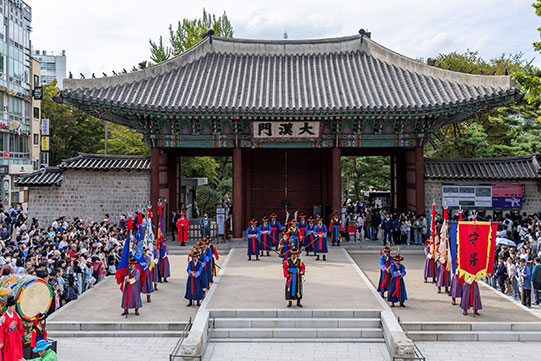
The Changing of the Guard ceremony at Deoksugung’s Daehanmun Gate has become one of Seoul’s most photographed tourist attractions, with performances occurring multiple times daily drawing crowds of both Korean and international visitors. The ceremony recreates Joseon Dynasty royal guard protocols with performers wearing historically accurate military uniforms, carrying traditional weapons, and conducting elaborate guard change rituals accompanied by traditional drums and military music.
The ceremony represents modern cultural performance based on historical research into Joseon Dynasty palace guard procedures rather than continuous tradition maintained since that period. During Japanese colonial rule and the post-war decades, these ceremonies didn’t occur at all. The revival began in 1996 as part of broader efforts to restore and showcase Korean traditional culture, with historians and cultural specialists researching historical records to reconstruct how guard changes actually occurred at Joseon Dynasty palaces.
This modern revival status doesn’t diminish the ceremony’s value or authenticity – it simply means understanding that what visitors witness is educated historical recreation rather than unbroken tradition passed down through generations. The ceremony provides genuine insight into historical palace guard culture while serving contemporary purposes of cultural education, tourism attraction, and Korean cultural identity celebration.
The guards’ uniforms follow Joseon Dynasty military design with vibrant colors, distinctive hats, traditional weapons like spears and swords, and decorative elements that indicated rank and function within palace guard hierarchies. The ceremony’s choreography, commands, drum patterns, and movements all derive from historical records describing actual palace guard procedures, though adapted for modern performance contexts.
What the Ceremony Reveals About Joseon Palace Life
Beyond providing colorful photo opportunities, the guard ceremony educates visitors about practical realities of palace security and ceremonial protocol during the Joseon Dynasty. The elaborate ritual procedures weren’t just decorative performance but reflected serious security concerns. Kings faced genuine threats from political rivals, foreign invasions, and internal instability, making palace guards crucial for royal safety.
The ceremony demonstrates the rigid hierarchy and formal protocol that governed every aspect of Joseon Dynasty palace life. Even something as routine as changing guards required elaborate ceremony with specific roles, precise movements, proper commands, and appropriate musical accompaniment. This formality reflected Confucian emphasis on proper ritual, hierarchical order, and ceremonial correctness that characterized all Joseon Dynasty institutions.
The different guard types and ranks visible during the ceremony reveal sophisticated palace security organization. Different guards protected different palace areas, gates, and buildings according to security importance hierarchies. The colors, weapons, and positions of various guards during the ceremony reflect these functional differences, though modern performances necessarily simplify what were much more complex actual palace guard systems.
How to Experience the Ceremony Effectively
The ceremony occurs at Daehanmun Gate, Deoksugung’s main entrance, multiple times daily except Mondays when the palace is closed. Typical performance times are 11:00 AM, 2:00 PM, and 3:30 PM, though visitors should confirm current schedules as timing can vary seasonally. The ceremony lasts approximately 20-30 minutes from beginning preparations through the complete guard change process.
Arriving 15-20 minutes before scheduled start time allows securing good viewing positions near the gate where guards perform. The best photography spots are directly in front of the gate at moderate distance allowing wide-angle shots capturing multiple guards and architectural context. Closer positions provide dramatic detail shots but can feel crowded and restrict compositional options.
The ceremony is free and doesn’t require palace admission tickets since it occurs at the main gate outside paid admission areas. This accessibility makes it popular with both serious palace visitors and casual tourists who watch the ceremony without necessarily entering the palace grounds, contributing to sometimes substantial crowds during peak tourism seasons.
Photography during the ceremony is permitted and encouraged, though visitors should be mindful not to obstruct others’ views or interfere with performers. Guards maintain character throughout the performance and don’t typically break role for photo requests during the ceremony, though some guards remain available after performances for tourist photos in less formal contexts.
Pros of Watching the Guard Ceremony
- Cultural Education: The ceremony provides engaging, visually rich introduction to Joseon Dynasty military culture, palace security, and ceremonial protocols that would be difficult to understand from text or static displays alone.
- Photography Opportunities: The colorful traditional uniforms, dramatic weapons, synchronized movements, and architectural backdrop create exceptional photography opportunities with natural cultural content.
- Free Entertainment: The ceremony provides substantial cultural value without requiring palace admission fees, making it accessible to all visitors regardless of budget constraints.
- Family Friendly: The ceremony’s visual drama, music, and movement engage children and family members who might find palace architecture touring less immediately interesting.
- Historical Research Quality: The ceremony represents serious historical research and reconstruction rather than invented tradition, providing reasonably accurate representation of actual Joseon Dynasty palace guard practices.
Cons of the Guard Ceremony
- Tourist Performance Nature: The ceremony is designed for tourist consumption rather than serving functional security purpose, creating somewhat artificial cultural experience that differs from how these practices would have actually occurred historically.
- Crowd Management: Popular performance times attract hundreds of tourists creating crowded conditions, photography challenges, and reduced opportunities for quiet cultural appreciation.
- Limited English Explanation: While the visual performance is self-explanatory to some degree, the minimal English explanation of what specific movements, commands, and elements represent means international visitors miss important context.
- Weather Dependency: The outdoor ceremony is canceled during heavy rain or extreme weather, potentially disappointing visitors who planned specifically to see this performance.
- Repetitive for Multiple Visits: Unlike palace architecture which rewards repeated viewing from different angles and seasons, the ceremony follows the same script each performance, making it less interesting for visitors who have seen it previously.
STELLA’S LOCAL SECRET
The “Pre-Ceremony Gate Photography”
Arrive 30 minutes before the ceremony when Daehanmun Gate is quiet and photograph the gate architecture without crowds or ceremony distractions. The gate itself is historically and architecturally significant – it’s where Emperor Gojong passed through daily, where the imperial proclamation establishing the Korean Empire was announced, and where Korean sovereigns’ final imperial-era ceremonies occurred.
Why this matters: The gate becomes merely backdrop during ceremonies when everyone focuses on guards. Photographing it beforehand allows appreciating the structure’s architecture, historical significance, and design details that crowds and ceremonial activity obscure. You’ll capture images that most tourists never get because they arrive only for ceremony viewing.
Best approach: Photograph the gate from multiple angles showing its architectural details, stone foundation, decorative elements, and proportions. Research and photograph the specific architectural features that identify this as an imperial-era gate built for Korean Empire rather than earlier Joseon Dynasty period – subtle differences that casual visitors miss.
Historical context: Daehanmun Gate was originally named Daeanmun until renamed in 1906 to reflect Korean Empire status. The name change from simple “Big Gate” to “Gate of the Great Han Empire” represented Emperor Gojong’s assertion of imperial sovereignty equal to neighboring empires. Understanding this naming history transforms the gate from mere entrance structure into political statement and evidence of Korean independence aspirations.
Deoksugung Stone Wall Path: Korea’s Most Romantic Walk
Understanding the Path’s Cultural Significance
The stone wall pathway running along Deoksugung’s western side has achieved iconic status in Korean popular culture as Seoul’s most romantic autumn walking course, featured in countless Korean dramas, films, music videos, and as popular date destination for Korean couples. The approximately 900-meter path follows the palace’s exterior stone wall with large plane trees (sycamores) creating a natural canopy overhead that transforms into spectacular golden-yellow foliage display each autumn.
The path’s cultural significance goes beyond its aesthetic beauty to represent something particular in Korean romantic and cultural imagination – a perfect blend of historical architecture, natural beauty, urban setting, and temporal change (through seasons) that Koreans associate with romance, nostalgia, and life’s poignant beauty. Walking this path, particularly during autumn, has become a cultural ritual that Koreans perform to experience and affirm connection to Korean aesthetic sensibility and emotional life.
Korean dramas and films frequently use this path for crucial romantic scenes, breakup scenes, or moments of emotional reflection, reinforcing its cultural associations with love, loss, and memory. These media representations create feedback loop where real couples visit because they’ve seen the path in dramas, and dramas continue using the path because it’s culturally recognized as a romantic location. The path has become self-reinforcing symbol of Korean romance itself.
The path also represents Seoul’s ability to maintain human-scaled, aesthetically pleasing historical environment within an intensely modern, high-rise urban context. Walking along the stone wall with palace grounds on one side and modern office buildings on the other, pedestrians experience direct physical contrast between Seoul’s historical heritage and contemporary metropolitan identity – a contrast that Korean urban life constantly navigates.
Best Times and Seasons for Walking the Path
Autumn from mid-October through early November represents the path’s most famous season when the plane trees’ leaves turn brilliant golden-yellow creating a glowing canopy that filters sunlight into warm tones that seem designed for romantic contemplation. This peak autumn period attracts enormous crowds of both Korean couples on romantic dates and tourists seeking to photograph Seoul’s most instagrammable autumn scene.
Weekend afternoons during peak autumn see such heavy pedestrian traffic that the path becomes crowded to the point where romantic atmosphere somewhat diminishes beneath the reality of hundreds of people all seeking the same romantic experience simultaneously. Early mornings during autumn weekdays, particularly around 7:00-9:00 AM, provide optimal conditions with beautiful autumn colors, soft morning light, and minimal crowds allowing the contemplative walking experience that Koreans associate with this path.
Spring offers different but equally pleasant walking with fresh green leaves emerging on the trees and comfortable temperatures after winter’s cold. Spring on the stone wall path lacks autumn’s iconic status but provides lovely walking with fewer crowds and seasonal beauty that feels more private and less stage-managed than autumn’s famous displays.
Winter transforms the path entirely with bare tree branches creating intricate natural geometric patterns against the stone wall and sky. Winter snow along the path creates stark, minimalist beauty completely different from autumn’s warmth. Winter walking requires proper cold-weather clothing but rewards with solitude and a completely different aesthetic that helps understand why Koreans value seasonal change as fundamental to experiencing beauty rather than seeking eternal spring.
Summer’s lush green canopy provides welcome shade during hot weather but lacks the seasonal drama of autumn colors or spring’s freshness. Summer walking is pleasant for escaping heat but doesn’t provide the distinctive seasonal beauty that makes this path culturally significant.
Photography Strategies for the Stone Wall Path
Photographing the stone wall path effectively requires understanding that countless Korean and international photographers have captured this location thousands of times, making truly original images challenging. The most successful photographs either find new angles and perspectives or embrace the location’s iconic nature and focus on capturing the essential emotional quality that makes Koreans love this path.
During autumn peak season, early morning light (7:00-9:00 AM) provides warm, low-angle illumination that makes the yellow leaves glow while long shadows create depth and texture. Midday light flattens the scene and creates harsh contrasts that diminish the golden quality that makes autumn here special. Late afternoon light (3:00-5:00 PM) can work well but brings heavy tourist crowds that complicate composition.
Compositional strategies include using the tree canopy to frame the stone wall and path creating natural leading lines, capturing individual couples or solitary figures walking for human scale and narrative, shooting through the trees toward the wall to emphasize the layered natural and architectural elements, or using the wall’s repetitive pattern as graphic element with seasonal foliage providing organic contrast.
Pros of the Stone Wall Path Experience
- Cultural Immersion: Walking the path provides genuine participation in Korean cultural ritual and aesthetic experience rather than just tourist observation, connecting visitors to Korean emotional and romantic culture.
- Seasonal Beauty: The dramatic seasonal changes, particularly autumn’s golden canopy, create genuine natural beauty within urban setting that rewards timing visits to seasonal peaks.
- Accessibility: The path is free, easily accessible from subway, and requires no tickets or reservations, making it available to all visitors regardless of budget or advance planning.
- Photographic Interest: The combination of historical stone wall, seasonal trees, urban context, and cultural significance creates rich photographic opportunities with clear narrative and emotional content.
- Integration with Palace Visit: The path provides excellent transition or conclusion to Deoksugung palace touring, connecting palace historical content with contemporary Korean cultural practices.
Cons of the Stone Wall Path
- Extreme Autumn Crowds: Peak autumn weekends see such heavy pedestrian traffic that romantic contemplative atmosphere becomes impossible beneath the reality of mass tourism.
- Limited Length: The 900-meter path takes only 15-20 minutes to walk at normal pace, making it brief experience that can feel anticlimactic after significant travel to reach it.
- Overhyped Expectations: The path’s fame and cultural significance can create expectations that actual experience doesn’t quite meet, particularly if visiting during crowded periods or less optimal seasons.
- Urban Intrusions: Modern buildings, traffic noise, and contemporary urban infrastructure visible throughout the walk remind visitors this is city pathway rather than isolated natural environment.
- Weather Dependency: The path’s appeal relies heavily on good weather – rain, snow, or extreme temperatures make the outdoor walking significantly less pleasant or even unpleasant.
STELLA’S LOCAL SECRET
The “Reverse Direction Strategy”
Most people walk the stone wall path from north to south (starting at Jeongdong intersection near Deoksugung’s main entrance, ending near Seoul Museum of Art). Walk the opposite direction, south to north, particularly during autumn afternoons.
Why this works: The crowds generally flow north to south following the natural walking direction from Deoksugung main entrance. Walking opposite direction means facing fewer people in your photographs, encountering less congestion, and experiencing the path with different light angles and perspectives than the standard experience.
Best timing: Walk south to north during mid-to-late afternoon (3:00-5:00 PM) during autumn when sunlight illuminates the yellow leaves from an angle that makes them glow when walking northward, while southward walkers have the sun behind the trees creating flatter light.
Cultural note: Walking slowly while deliberately absorbing the autumn atmosphere and stopping frequently to appreciate details rather than rushing to complete the path reflects Korean approach to seasonal beauty appreciation. Quality of presence matters more than efficiently “covering” the route. Many Korean couples walk this path extremely slowly, pausing frequently, because the walk’s purpose is experiencing seasonal beauty and each other’s company, not reaching the endpoint efficiently.
Practical Planning for Your Deoksugung Visit
Operating Hours and Admission
Deoksugung operates on year-round hours from 9:00 AM to 9:00 PM, making it unique among Seoul palaces for offering evening access. Last admission is 8:00 PM, giving visitors until 9:00 PM to explore the grounds. The palace closes on Mondays for maintenance, though if Monday falls on a public holiday, the palace opens Monday and closes Tuesday instead.
Regular admission costs 1,000 won for adults, making Deoksugung the least expensive of Seoul’s five grand palaces. This low admission fee reflects the palace’s smaller size but provides exceptional cultural value given the historical significance and regular guard ceremony performances. Senior citizens over 65, children under 6, and people wearing traditional hanbok enter free.
Combination tickets covering multiple Seoul palaces are available for 10,000 won and valid for one month, including admission to Gyeongbokgung, Changdeokgung, Changgyeonggung, and Deoksugung. However, given Deoksugung’s minimal individual admission cost, combination tickets only provide value if visiting at least three other palaces during your Seoul stay.
Free admission occurs on the last Wednesday of each month, though these free days attract large crowds of Korean domestic visitors making the experience more congested than the minimal paid admission fee justifies avoiding. The 1,000 won admission is so reasonable that paying it for a better experience on a regular day makes sense for most visitors.
Seokjojeon Hall requires separate admission beyond the basic palace ticket, costing an additional 1,000 won. Interior access is only available through guided tours at scheduled times (typically 10:00 AM, 11:00 AM, 2:00 PM, and 3:00 PM), though visitors should confirm current schedules. The guided tours last approximately 30 minutes and are available in Korean with limited English-language tours at specific times.
Getting to Deoksugung
Deoksugung sits in central Seoul’s Jeongdong neighborhood, directly across from Seoul City Hall and easily accessible by public transportation. The most convenient subway access is City Hall Station, served by both Line 1 and Line 2, using Exit 2 which brings you directly to the palace’s Daehanmun Gate entrance within a one-minute walk.
The palace’s central location means it’s also easily reached from many major Seoul hotels and tourist areas by foot, taxi, or bus. From Myeongdong, the palace is a pleasant 10-15 minute walk. From Gwanghwamun, it’s a 15-minute walk. The central positioning makes Deoksugung ideal for combining with other central Seoul activities like visiting Namdaemun Market, Seoul City Hall area, or the nearby Jeongdong area’s foreign embassies and historical sites.
Taxi access is straightforward as drivers know the location well – simply saying “Deoksugung” suffices. From major tourist areas, taxi rides typically cost 5,000-8,000 won and take 10-15 minutes depending on traffic. However, Seoul traffic can be severe during rush hours, making subway usually faster and more predictable for daytime visits.
The palace’s proximity to multiple tourist attractions enables efficient cultural touring. The Jeongdong neighborhood itself contains Seoul Museum of Art, British Embassy gardens, and several historically significant churches. Namdaemun Market sits about 10 minutes away on foot. Insadong and Gwanghwamun are both easily reachable by foot or single subway stops.
What to Bring and Wear
Comfortable walking shoes are recommended though Deoksugung’s compact size and flat terrain make it the least physically demanding of Seoul’s major palaces. Casual sneakers or comfortable walking shoes work fine – you’ll walk perhaps 1-1.5 kilometers total during a thorough visit.
Camera equipment matters significantly if photographing the guard ceremony or visiting during autumn for stone wall path photography. However, given the small palace size, heavy professional equipment isn’t necessary – smartphone cameras or compact mirrorless cameras handle Deoksugung’s photography opportunities well.
Evening visits during summer months benefit from light jacket as temperatures can cool after sunset despite warm days. Deoksugung’s evening accessibility makes it valuable option for escaping daytime heat, but bring layers for temperature changes as evening progresses.
For autumn stone wall path visits, consider bringing a small tripod if photographing during early morning or evening when lower light levels benefit from slower shutter speeds. However, compact handheld cameras or smartphones produce good results with modern image stabilization technology.
Combining Deoksugung with Other Attractions
Deoksugung’s compact size and central location make it perfect for combining with other Seoul activities in a single day. A typical efficient itinerary might include Deoksugung in the morning (2-3 hours including guard ceremony), lunch in nearby Myeongdong or Jeongdong, afternoon at Gyeongbokgung or other cultural sites, and evening shopping or entertainment.
The palace’s 9:00 PM closing time creates opportunities for evening visits that other palaces don’t offer. Summer evening visits after 6:00 PM provide comfortable temperatures and sunset lighting that enhances photography while avoiding daytime heat and crowds.
The stone wall path serves as excellent transition between Deoksugung and other Jeongdong neighborhood attractions. After visiting the palace, walk the stone wall path, then continue into the nearby foreign embassy area with its historical buildings, churches, and cultural institutions representing Korea’s late 19th and early 20th century international engagement.
For visitors interested in Korean modern history, combining Deoksugung with nearby modern historical sites creates coherent thematic touring: visit Deoksugung for Korean Empire history, Seoul Museum of Art for early 20th century art, Anglican Church for missionary history, and Jeongdong area generally for understanding Seoul’s international district during the critical modernization period.
Pros of Strategic Planning
- Evening Access: Deoksugung’s unique evening hours allow visiting during cooler, less crowded times that other palaces don’t offer, creating flexibility for scheduling around weather, crowds, and personal preferences.
- Central Location: The palace’s position near major tourist areas, hotels, and transportation hubs makes it easy to incorporate into broader Seoul itineraries without significant travel time.
- Guard Ceremony Timing: Knowing ceremony schedules allows planning arrival to catch performances without wasting time waiting, or alternatively scheduling visits to avoid ceremony crowds if preferring quieter exploration.
- Seasonal Optimization: Understanding seasonal attractions (autumn stone wall path, evening summer visits, winter solitude) allows timing visits to maximize whatever aspects interest you most.
- Efficient Combination: The compact size allows thorough palace visiting in 2-3 hours, leaving ample time for other attractions in a single day without exhausting palace touring.
Cons of Visit Planning
- Limited Size: Visitors expecting grand palace experience comparable to Gyeongbokgung may complete Deoksugung faster than anticipated, potentially feeling disappointed by the relatively brief visit duration.
- Seokjojeon Scheduling: The separate ticketing and scheduled tour times for Seokjojeon interior viewing creates timing constraints that require advance schedule coordination.
- Monday Closures: Weekly closures create scheduling complications for visitors with limited Seoul time whose available days might not align with palace operating schedule.
- Guard Ceremony Weather: The outdoor ceremony’s weather dependency means visitors planning specifically for this performance might miss it entirely due to rain or other adverse conditions.
- Autumn Crowds: Popular stone wall path autumn period attracts such heavy crowds that optimal visiting requires very specific timing (early morning weekdays) that many visitors can’t or won’t accommodate.
STELLA’S LOCAL SECRET
The “Modern History Thematic Day”
Create a focused modern Korean history themed day combining Deoksugung, nearby modern historical sites, and the War Memorial of Korea. Start with Deoksugung in the morning to understand Korean Empire period and loss of independence, walk through Jeongdong area examining early 20th century international architecture, have lunch at a traditional restaurant, then visit the War Memorial of Korea in the afternoon to understand Japanese colonial period, Korean War, and development of modern Korea.
Why this works: You’ll develop coherent understanding of Korean modern history from 1897 through the present, seeing how the events that began at Deoksugung led to colonization, war, division, and eventual recovery and development. The thematic coherence makes each site more meaningful because you understand how they connect in broader historical narrative.
Practical execution: Deoksugung 9:00 AM – 11:30 AM, Jeongdong area walking 11:30 AM – 1:00 PM, lunch 1:00 PM – 2:00 PM, War Memorial 2:30 PM – 5:30 PM. This pacing allows thorough engagement with each site without exhausting rushing. The emotional journey from Deoksugung’s imperial tragedy through colonial and war periods to contemporary recovery creates powerful educational experience that casual scattered palace tourism can’t achieve.
Frequently Asked Questions
Q: How long should I allocate for visiting Deoksugung?
Allocate 2-3 hours for a thorough visit including the Changing of the Guard ceremony and basic palace grounds exploration. Add one hour if you plan to tour Seokjojeon interior. If walking the stone wall path before or after the palace visit, add 30-45 minutes. Combined with nearby Jeongdong area exploration, allocate 4-5 hours total.
Q: Is Deoksugung worth visiting if I’ve already seen Gyeongbokgung?
Yes, but for completely different reasons. Gyeongbokgung represents traditional Joseon Dynasty glory and architectural grandeur. Deoksugung represents modern Korean history, the tragic end of Korean monarchy, and the architectural evidence of Korea’s impossible position between tradition and forced modernization. The two palaces tell different historical stories that together create fuller understanding of Korean history.
Q: When is the best time to visit for the stone wall path?
Mid-October through early November offers the most famous autumn foliage display. For optimal experience with fewer crowds, visit on weekday mornings (7:00-9:00 AM) during this period. Spring in April-May offers pleasant walking with green leaves and flowers. Winter provides stark beauty with minimal crowds. Summer is least distinctive seasonally but offers shade during hot weather.
Q: Can I watch the Changing of the Guard ceremony without entering the palace?
Yes. The ceremony occurs at Daehanmun Gate outside the paid admission area. You can watch the ceremony without buying a palace ticket. However, the minimal 1,000 won admission cost makes entering the palace worthwhile if you have time to explore the grounds beyond just watching the ceremony.
Q: Is Deoksugung suitable for children?
Yes, particularly for the Changing of the Guard ceremony which engages children with colorful costumes, music, and movement. The palace’s compact size works well for children with limited attention spans. However, the complex modern historical significance is best appreciated by older children, teenagers, and adults who can understand the historical context.
Q: How do I tour Seokjojeon’s interior?
Seokjojeon requires separate ticket (additional 1,000 won beyond palace admission) and is only accessible through guided tours at scheduled times. Purchase the Seokjojeon ticket at the palace ticket office, then arrive at Seokjojeon at your scheduled tour time. Tours are primarily in Korean with limited English tours at specific times.
Q: Can I visit Deoksugung in the evening?
Yes, Deoksugung is unique among Seoul palaces for staying open until 9:00 PM (last admission 8:00 PM). Evening visits during summer provide comfortable temperatures and sunset lighting. However, the Changing of the Guard ceremony only occurs during daytime hours, and Seokjojeon interior tours typically end by late afternoon.
Q: What’s the significance of the Victorian greenhouse at Deoksugung?
This appears to be confusion with Changgyeonggung Palace which has the colonial-era Victorian greenhouse. Deoksugung has the Western neo-classical Seokjojeon Hall but not a Victorian greenhouse. The Western architecture at Deoksugung represents Emperor Gojong’s attempts to demonstrate Korean modernization rather than Japanese colonial period construction.
Q: Is the stone wall path part of the palace grounds?
No. The stone wall path runs along the exterior of the palace wall, accessible to everyone without palace admission. You can walk the path before, after, or instead of visiting the palace interior. However, combining both experiences provides fuller understanding of Deoksugung’s significance in both historical and contemporary Korean culture.
Q: How crowded does Deoksugung get?
Significantly less crowded than Gyeongbokgung overall. The Changing of the Guard ceremony attracts substantial crowds during performances, and autumn weekends see heavy traffic along the stone wall path. However, regular weekday visits to the palace grounds offer peaceful exploration. Early mornings and evenings (after 6:00 PM) provide quietest conditions.
Witnessing Modern Korea’s Birth
You now have comprehensive knowledge to visit Deoksugung Palace with deep understanding of what makes this often-underestimated palace one of Korea’s most historically significant sites. You’ve learned the full story of how Deoksugung became the last palace of Korean monarchy, Emperor Gojong’s desperate attempts to maintain independence, and the tragic events of 1907-1910 that ended Korean sovereignty.
You understand why Seokjojeon Hall’s Western architecture matters as much as traditional Korean buildings for understanding Korean modern history, representing not aesthetic confusion but evidence of impossible choices between tradition and forced modernization. You know how to experience the Changing of the Guard ceremony as both cultural performance and historical education. You’ve gained insight into why the stone wall path resonates so deeply in Korean romantic and cultural imagination.
Most importantly, you’ve learned that Deoksugung’s significance lies not in architectural grandeur but in historical witness. This palace saw the beginning of modern Korean history’s most painful period – loss of independence, colonial rule, war, and division. Yet the palace also represents Korean determination to remember this history honestly, preserve cultural heritage despite trauma, and educate new generations about the forces that shaped modern Korea.
Deoksugung may be smaller and less traditionally impressive than Gyeongbokgung, but it offers something those grander palaces cannot provide – direct connection to the birth of modern Korea through all its tragedy and resilience. The palace stands in the heart of contemporary Seoul as permanent reminder that Korea’s current independence, prosperity, and cultural vitality emerged from genuine historical trauma that living Koreans remember through family stories.
The palace buildings are waiting. The stone wall path’s trees change with seasons as they have for over a century. The guard ceremony reenacts protocols from the last days of Korean monarchy. Your journey into modern Korean history’s birthplace is about to begin.