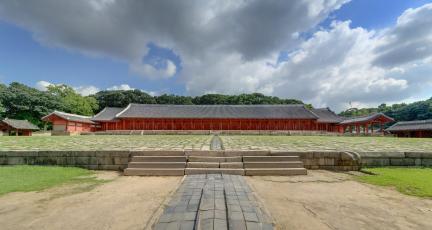
Korea’s Most Sacred Space
Have you ever wanted to experience a place where Korean Confucian culture reaches its most solemn and sacred expression? Where the spirits of 49 Joseon Dynasty kings and queens are honored in ceremonies that have continued for over 600 years? Where UNESCO recognized not just the architecture but the living ritual practices as irreplaceable world heritage? Where you can witness traditional Korean music and dance performed exactly as they were five centuries ago? Jongmyo Shrine offers exactly this experience – but only if you understand its profound significance in Korean culture, appreciate the unique architectural principles that make it unlike any palace or temple, and know how to witness the extraordinary annual ritual ceremony that brings this sacred space to life.
Most visitors approach Jongmyo with confusion and uncertainty. They wonder why this place looks so different from colorful Buddhist temples or elaborate palace buildings, with its stark simplicity and lack of decorative painting. They’re puzzled by the long, low buildings that seem architecturally plain compared to ornate structures elsewhere. They hear that Jongmyo is important but struggle to understand exactly what makes a royal ancestral shrine significant when Korea no longer has monarchy. They visit on ordinary days and miss the spectacular Jongmyo Jerye ceremony that occurs only once annually. They walk through the shrine grounds without grasping the Confucian philosophical principles that make every architectural detail meaningful rather than merely austere.
I understand that confusion completely. When I first visited Jongmyo years ago, I expected something visually impressive like Buddhist temples with their colorful decorations and elaborate sculptures. What I encountered instead was something far more subtle and philosophically sophisticated – a place where architectural restraint, ritual precision, and Confucian cosmology combined to create Korea’s most sacred cultural space. The shrine’s apparent simplicity gradually revealed itself as conscious philosophical choice valuing dignity, respect, and proper relationship with ancestors over sensory stimulation or aesthetic display.
That’s why this comprehensive guide exists. I’m going to share everything you need to transform Jongmyo from a confusing austere building into a profound window into Korean Confucian culture and ritual practices. You’ll learn what royal ancestral shrines meant in Confucian kingdoms and why they were considered more sacred than palaces or temples. You’ll understand the architectural principles that make Jongmyo’s design perfect for its spiritual function despite appearing plain to untrained eyes. You’ll discover how to experience the annual Jongmyo Jerye ceremony – one of the world’s most extraordinary surviving royal rituals. You’ll gain insight into why UNESCO designated both the shrine buildings and the ritual ceremonies as world heritage.
By the end of this guide, you’ll know how to visit Jongmyo with understanding that transforms apparent austerity into philosophical sophistication. You’ll appreciate why this shrine represents Korean Confucian culture at its purest expression. You’ll understand what makes Jongmyo architecturally unique among Korean heritage sites. Most importantly, you’ll grasp why preserving this shrine and its rituals matters for world cultural heritage, not just Korean national pride.
Understanding Jongmyo’s Sacred Significance
What Makes Jongmyo Different from Palaces and Temples
Jongmyo Shrine occupies a unique category in Korean cultural heritage, fundamentally different from both royal palaces and Buddhist temples despite superficial similarities to each. While palaces housed living kings and conducted political governance, Jongmyo housed the spirit tablets of deceased kings and queens, serving as the eternal dwelling place for royal ancestors. While Buddhist temples focused on achieving enlightenment and escaping worldly suffering, Jongmyo focused on maintaining proper relationships between living descendants and deceased ancestors through precise ritual observance.
In Confucian political philosophy that governed the Joseon Dynasty for 500 years, the royal ancestral shrine held higher spiritual status than the palace itself. Kings were temporary occupants of royal authority, holding power in trust from ancestors and heaven. The shrine represented continuity across generations, connecting past, present, and future rulers in an unbroken chain of legitimate succession. Neglecting ancestral rituals at the shrine was considered more serious violation of royal duty than failures in palace administration.
This elevated spiritual status meant that Jongmyo’s architecture, location, and ritual practices followed different principles than palaces or temples. The shrine was built east of the main palace according to Confucian geomantic principles derived from Chinese classical texts. The buildings avoided decorative painting and elaborate ornamentation that characterized palace buildings, instead employing austere simplicity that expressed reverence and solemnity appropriate for ancestral dwelling places. The rituals performed here followed precise choreography, music, and offerings detailed in Confucian ritual texts and modified only after careful deliberation by ritual specialists.
Understanding this sacred status helps explain why Jongmyo seems architecturally underwhelming compared to visually spectacular Buddhist temples or grand palaces. The shrine wasn’t designed to impress living visitors with beauty or power but to provide dignified dwelling place for ancestral spirits and appropriate setting for ritual communication between living descendants and deceased ancestors. Aesthetic restraint wasn’t poverty or lack of artistic skill but conscious philosophical choice expressing Confucian values.
The Historical Foundation and UNESCO Recognition
Jongmyo was established in 1394, just two years after the founding of the Joseon Dynasty, demonstrating how central ancestral worship was to Joseon political legitimacy. The shrine predates most of Seoul’s famous palaces and was considered so important that construction began immediately after the dynasty’s founding rather than waiting for palaces and government offices to be completed first.
The main shrine hall, Jeongjeon, originally contained seven chambers for seven generations of ancestors following classical Confucian principles. As the dynasty continued and more kings died, the building was expanded multiple times, eventually reaching 19 chambers making it the longest traditional Korean wooden building in existence. This architectural expansion physically represents the dynasty’s continuation across centuries, with each addition marking another generation of rulers joining their ancestors in the shrine.
A second hall, Yeongnyeongjeon (Hall of Eternal Peace), was added in 1421 to house spirit tablets of kings and queens judged less meritorious or of collateral royal lines who couldn’t be accommodated in the main shrine. This dual-hall system reflected sophisticated Confucian thinking about degrees of ancestral merit and proper hierarchical distinctions even among deceased royalty.
UNESCO designated Jongmyo as a World Heritage Site in 1995, recognizing both the shrine buildings’ architectural significance and their role as setting for living ritual practices. The designation cited Jongmyo as “an exceptional example of a Confucian royal shrine that has been preserved in its original form” and praised how “the shrine has been used continuously for ancestral worship ceremonies for over 600 years.”
In 2001, UNESCO separately designated Jongmyo Jerye (the annual ancestral ritual) and Jongmyo Jeryeak (the ritual music) as Masterpieces of the Oral and Intangible Heritage of Humanity, later incorporated into the Representative List of the Intangible Cultural Heritage of Humanity. This dual designation of both physical shrine and ritual practices as world heritage is rare, reflecting UNESCO’s recognition that Jongmyo’s significance lies in the living cultural practice as much as the architectural heritage.
Why Jongmyo Matters to Contemporary Korea
For modern Koreans, Jongmyo represents cultural continuity despite massive social transformations. Korea evolved from Confucian monarchy to Japanese colony to war-torn divided nation to modern industrial democracy within a single century. Throughout these wrenching changes, Jongmyo remained – a physical anchor connecting contemporary Korea to its pre-modern cultural foundations.
The shrine also embodies Korean Confucian heritage distinct from Chinese Confucianism. While Korea adopted Confucian philosophy from China, Jongmyo represents uniquely Korean interpretation and practice of Confucian principles. The architectural solutions, ritual procedures, and musical traditions developed specifically for Korean conditions rather than merely copying Chinese models. This makes Jongmyo important for understanding Korean cultural identity as both influenced by Chinese civilization and distinctly Korean.
For international visitors, Jongmyo provides rare opportunity to witness authentic Confucian ritual culture that has largely disappeared elsewhere in East Asia. China’s Confucian temples and ancestral shrines were destroyed or abandoned during 20th-century upheavals. Japan’s royal ancestral rituals follow Shinto rather than Confucian practices. Only at Jongmyo can visitors see Confucian ancestral worship performed with continuity from pre-modern traditions, making it invaluable for understanding East Asian cultural history.
Personal Story: Understanding Through Ceremony
I first visited Jongmyo on an ordinary Tuesday morning, walking through the shrine grounds with other tourists, photographing the austere buildings, and feeling somewhat disappointed by what seemed like architecturally plain structures. I appreciated the historical significance intellectually but felt no emotional connection. The shrine seemed more like a museum than a living spiritual space.
Two years later, I returned for the annual Jongmyo Jerye ceremony held the first Sunday of May. The transformation was stunning. The shrine grounds filled with hundreds of participants wearing traditional ceremonial robes. The air filled with ancient ritual music played on traditional instruments according to 600-year-old scores. Ritual dancers moved with deliberate, precise choreography that looked nothing like typical performance dance. Ceremonial officials presented food offerings to ancestral spirits with movements so exact and formal they seemed almost mechanical.
What struck me most powerfully was the absolute seriousness with which participants approached the ceremony. This wasn’t performative cultural display for tourists but genuine ritual observance that participants treated as sacred duty. Elderly Korean men and women watching from the crowd stood in respectful silence, many visibly moved. Some cried quietly, whether from national pride, spiritual feeling, or memories of deceased family members I couldn’t know.
After the ceremony, I spoke with a middle-aged Korean woman who explained that her grandfather had participated in these ceremonies during the final years of the Korean Empire before Japanese annexation. He told her that maintaining these rituals connected Koreans to ancestors and demonstrated that Korean culture survived despite colonization and war. She said: “When I see this ceremony continuing, exactly as my grandfather described it, I feel like our culture is still alive. We’re not just a modern country that forgot where we came from. We remember.”
That experience taught me that Jongmyo’s significance isn’t primarily architectural or historical but cultural and spiritual. The shrine matters because people still care about what happens here, still invest emotional energy in maintaining these traditions, still find meaning in connecting with ancestors through ritual practices that modern rational thought might dismiss as superstition.
Pros of Understanding Jongmyo’s Significance
- Cultural Depth: Jongmyo provides profound insight into Confucian philosophy’s practical application in Korean culture, showing how abstract ideas about ancestors and filial piety translated into actual architectural and ritual practices.
- Unique Heritage: As the world’s only functioning Confucian royal ancestral shrine with continuous ritual practices, Jongmyo offers irreplaceable window into cultural traditions largely disappeared elsewhere.
- Living Tradition: Unlike purely historical reconstructions, Jongmyo maintains living ritual practices connecting contemporary Korea to pre-modern cultural foundations in tangible, observable ways.
- UNESCO Recognition: The dual world heritage designation validates Jongmyo’s global significance beyond Korean national importance, marking it as belonging to world cultural heritage.
- Philosophical Sophistication: Understanding Jongmyo requires engaging with sophisticated Confucian thought about death, ancestors, continuity, and proper social relationships that enriches visitors’ cultural knowledge.
Cons of Jongmyo’s Cultural Complexity
- Difficult Access: The shrine’s significance is largely intellectual and philosophical rather than immediately visually impressive, requiring substantial background knowledge to appreciate fully.
- Cultural Distance: For visitors from non-Confucian cultural backgrounds, the concepts of ancestor worship and ritual precision may seem foreign or even uncomfortable rather than meaningful.
- Visual Austerity: The deliberate architectural simplicity and lack of decoration can seem boring or disappointing to visitors expecting visually spectacular traditional Korean architecture.
- Infrequent Ceremony: The main Jongmyo Jerye ceremony occurs only once annually, meaning most visitors experience only the empty shrine buildings without the ritual practices that give them meaning.
- Translation Limits: The profound cultural and philosophical significance of Jongmyo is difficult to communicate through English signage or basic tour guide explanations, leaving international visitors with incomplete understanding.
STELLA’S LOCAL SECRET
The “Confucian Philosophy Pre-Study”
Before visiting Jongmyo, spend 30 minutes reading about Confucian concepts of filial piety, ancestor worship, and the relationship between living descendants and deceased ancestors. Wikipedia articles on these topics provide sufficient background. This preparation transforms your visit from confused wandering through austere buildings into informed appreciation of sophisticated cultural philosophy made physical.
Key concepts to understand: Filial piety (효/孝) as fundamental Confucian virtue requiring children to honor and serve parents both living and dead. Ancestor worship as maintaining relationship with deceased family members through ritual offerings. The belief that deceased ancestors remain spiritually present and concerned with living descendants’ welfare, requiring proper ritual respect.
Why this matters: With philosophical context, Jongmyo’s architecture reveals sophisticated design solutions to philosophical questions about how living descendants should provide dwelling places for ancestral spirits. The long hall accommodating multiple generations represents the Confucian belief in continuity across time. The austere simplicity expresses reverence and humility appropriate before ancestors. The precise ritual spaces reflect belief that proper ceremony requires proper architectural setting.
Jeongjeon Hall: The Longest Traditional Korean Building
Understanding Jeongjeon’s Architectural Significance
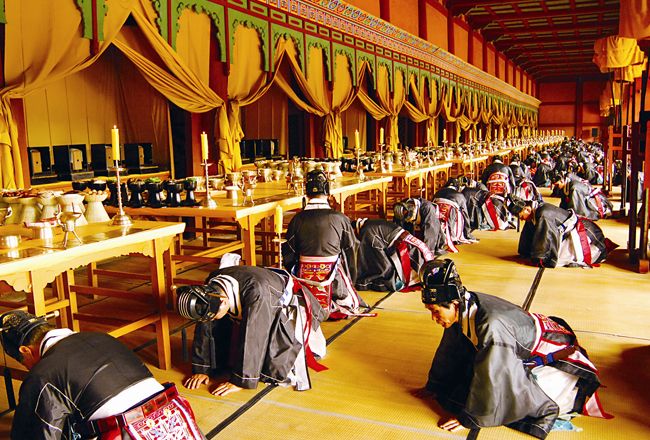
Jeongjeon Hall, whose name translates to “Hall of Rectitude,” serves as Jongmyo’s main shrine building and holds the extraordinary distinction of being the longest traditional Korean wooden building in existence, stretching approximately 101 meters in length. This remarkable dimension didn’t result from aesthetic ambition or architectural showmanship but from functional necessity – the building needed to house spirit tablets for 49 Joseon Dynasty kings and their queens, requiring 19 separate chambers connected in a single continuous structure.
The building’s architecture embodies Confucian principles of dignity, restraint, and respect through deliberately austere design that contrasts sharply with the elaborate decorative painting and ornate details characteristic of palace buildings and Buddhist temples. Jeongjeon uses no dancheong (traditional Korean decorative painting), no elaborate bracket systems beyond functional necessity, and no decorative carvings or sculptural elements. The wood remains natural or painted simple colors, the roof tiles are plain, and the overall aesthetic is one of solemn simplicity.
This architectural restraint wasn’t poverty or lack of artistic skill but conscious philosophical choice. Confucian ritual texts specified that ancestral shrine architecture should prioritize dignity and solemnity over beauty or grandeur, expressing proper reverence for ancestors rather than displaying wealth or artistic virtuosity. The plainness that might seem boring to casual visitors represents sophisticated cultural values that placed ethical propriety above aesthetic pleasure.
The building sits on a raised stone platform that elevates the ancestral dwelling place while the courtyard in front provides space for ritual ceremonies conducted by living descendants approaching the shrine to make offerings. This spatial relationship – elevated ancestral dwelling above, descendants in courtyard below – physically expresses the hierarchical relationship between honored ancestors and respectful descendants that Confucian thought considered fundamental to proper social order.
The Spirit Tablet Chambers and Their Arrangement
Inside Jeongjeon’s long hall, 19 separate chambers each house wooden spirit tablets inscribed with the names of specific kings and their queens. These tablets, called “sin-wi” in Korean, are believed to provide dwelling places for ancestral spirits, allowing deceased rulers to receive offerings and maintain connection with living descendants and the continuing dynasty.
The chambers are arranged chronologically from west to east, with the earliest Joseon Dynasty kings at the west end and later kings progressively eastward. This arrangement creates a physical timeline of the dynasty’s 500-year history, with each chamber representing a generation of royal ancestors. Walking along the building’s length means literally walking through time, chamber by chamber marking the succession of rulers across centuries.
Not all Joseon Dynasty kings are enshrined in Jeongjeon. Confucian ritual principles limited the main shrine to kings judged most meritorious and their direct line of succession. Kings of lesser achievement or collateral royal lines were housed in the separate Yeongnyeongjeon hall, creating hierarchical distinction even among deceased royalty. This selection process involved careful deliberation by Confucian ritual specialists and reflected sophisticated thinking about merit, legitimacy, and appropriate honors.
The spirit tablets themselves are simple wooden plaques inscribed with the kings’ and queens’ posthumous ritual names – lengthy formal titles describing their virtues and achievements rather than the simple names they used during life. These ritual names, often 20 or more Chinese characters long, transform the individuals into idealized Confucian rulers embodying specific virtues worthy of ancestral reverence.
Why Jeongjeon’s Architecture Appears So Different
Visitors familiar with colorful Korean Buddhist temples or elaborate palace buildings often find Jeongjeon disappointing or confusing because its austere architecture seems to lack the aesthetic richness they associate with Korean traditional building. Understanding why Jeongjeon looks so different requires appreciating that it serves completely different functions and expresses different cultural values than temples or palaces.
Buddhist temples use elaborate decoration, colorful painting, and sculptural art to create visually rich environments supporting meditation, teaching Buddhist concepts through imagery, and inspiring spiritual feeling through sensory experience. Palace buildings use grandeur, decorative elaboration, and impressive scale to display royal power, provide appropriate settings for ceremonies, and demonstrate the dynasty’s wealth and cultural sophistication.
Jongmyo serves neither of these functions. The shrine isn’t trying to inspire spiritual feeling through beauty, teach philosophical concepts through imagery, or display power through grandeur. Its sole purpose is providing dignified dwelling place for ancestral spirits and appropriate setting for ritual communication between descendants and ancestors. Confucian thought held that proper reverence required restraint, simplicity, and focus on ethical relationship rather than aesthetic pleasure.
This functional difference creates architectural difference. The long, low building provides necessary chambers for multiple generations of ancestors while maintaining human scale appropriate for ritual approach. The lack of decoration focuses attention on ritual actions and ancestral presence rather than distracting with visual stimulation. The simple materials and construction express humble respect appropriate when approaching those who held ultimate authority and deserve highest honor.
Pros of Experiencing Jeongjeon
- Architectural Uniqueness: As Korea’s longest traditional wooden building, Jeongjeon offers architectural experience unavailable anywhere else, demonstrating Korean traditional construction at extraordinary scale.
- Philosophical Depth: The building embodies sophisticated Confucian thought about ancestors, respect, and proper ritual that provides profound cultural education for visitors willing to understand the underlying principles.
- Historical Continuity: The 19 chambers housing 500 years of Joseon rulers create tangible connection across centuries, making Korean history physically present rather than abstract.
- Aesthetic Restraint: For visitors who appreciate minimalism and austere beauty, Jeongjeon’s simple elegance offers profound aesthetic experience different from elaborate decorative architecture.
- Sacred Atmosphere: The building’s austere dignity creates genuinely solemn atmosphere rare in modern tourism, providing space for contemplation and respect regardless of visitors’ personal spiritual beliefs.
Cons of Jeongjeon Hall
- Visual Plainness: Visitors expecting colorful temples or elaborate palaces may find the austere architecture boring or disappointing despite its philosophical sophistication.
- Limited Interior Access: On ordinary days, visitors cannot enter the chambers or closely approach the spirit tablets, limiting ability to see interior details and understand the spatial arrangements.
- Minimal Explanation: English signage explaining the architectural principles and chamber arrangements is limited, leaving international visitors without context to appreciate what they’re seeing.
- Requires Background Knowledge: Without understanding Confucian concepts of ancestor worship and ritual propriety, the building seems merely plain rather than philosophically sophisticated.
- One-Dimensional Experience: Viewing the empty building on ordinary days without ritual activities misses the ceremonies that give the architecture its meaning and purpose.
STELLA’S LOCAL SECRET
The “Length Appreciation Walk”
Most visitors photograph Jeongjeon from the front courtyard, getting standard view of the long building’s facade. Instead, walk slowly along the entire length of the building on the side pathway, pausing to look at each chamber’s entrance and appreciating the building’s extraordinary length through direct physical experience rather than just visual impression.
Why this works: Walking 101 meters along the building while counting 19 separate chambers makes the scale tangible in a way that photographs cannot capture. You physically experience what “longest traditional Korean wooden building” means rather than just intellectually knowing the statistic.
Architectural detail: As you walk, notice how each chamber is identical in basic structure but with slight variations in door positioning, stone foundation details, and roof lines. This repetition with variation creates rhythm and harmony while serving the practical function of providing 19 equivalent dwelling spaces for ancestral spirits of equal status.
Cultural insight: The building’s length represents the Joseon Dynasty’s longevity and the Confucian belief in continuity across generations. Each chamber added over centuries marked another generation joining their ancestors, physically expanding the building as the dynasty continued. The length isn’t excessive ambition but accumulated result of 500 years of history.
Yeongnyeongjeon Hall: The Hall of Eternal Peace
Understanding the Second Shrine’s Purpose
Yeongnyeongjeon Hall, built in 1421, serves as Jongmyo’s secondary shrine housing spirit tablets of kings and queens not enshrined in the main Jeongjeon Hall. This dual-hall system reflects Confucian hierarchical thinking that made distinctions even among deceased royalty, providing separate honors based on merit, legitimacy, and relationship to the main royal line.
The hall originally contained chambers for 16 kings and their queens but was expanded over time to accommodate more tablets as the dynasty continued and more rulers were deemed worthy of shrine enshrinement. Like Jeongjeon, Yeongnyeongjeon follows austere architectural principles with simple wooden construction and minimal decoration, creating solemn atmosphere appropriate for ancestral dwelling place.
The distinction between Jeongjeon and Yeongnyeongjeon wasn’t about disrespecting certain kings but about maintaining proper hierarchical order that Confucian thought considered essential to social and cosmic harmony. Kings enshrined in Jeongjeon were those judged most meritorious or representing the direct succession line. Those in Yeongnyeongjeon might have been competent rulers but lacked the exceptional achievements or direct succession status that warranted main shrine enshrinement.
This hierarchical distinction continued into ritual practices. The main Jongmyo Jerye ceremony focused primarily on honoring ancestors in Jeongjeon, with supplementary ceremonies for those in Yeongnyeongjeon. Even in death and spirit form, Confucian propriety maintained distinctions reflecting achievements and relationships during life.
Architectural Similarities and Differences
Yeongnyeongjeon follows the same basic architectural principles as Jeongjeon – austere wooden construction, simple roof forms, raised platform foundation, and lack of decorative painting. However, the building is shorter than Jeongjeon, reflecting its secondary status and smaller number of enshrined spirits. The architectural similarity expresses that both buildings serve the same function and deserve equal construction quality, while the size difference maintains appropriate hierarchical distinction.
The building’s layout uses a similar chamber system with each chamber housing specific kings and queens, though the arrangement principles differ slightly from Jeongjeon’s strict chronological ordering. Some chambers were added at different times as various kings were posthumously honored with shrine enshrinement, creating less linear arrangement than Jeongjeon’s clear west-to-east timeline.
The courtyard in front of Yeongnyeongjeon provides space for ritual ceremonies specific to this hall, with stone markers indicating positions for various participants during ritual observances. These spatial markers demonstrate how Confucian ritual required precise physical positioning, with every participant’s location expressing their relationship to ancestors and their role in the ceremony.
Why Two Separate Halls Matter
The dual-hall system reveals important aspects of Confucian political philosophy and Korean historical memory. The existence of two separate halls shows that Joseon Dynasty didn’t treat all kings equally after death but made careful judgments about merit, achievement, and historical significance. This selection process involved serious deliberation by Confucian scholars and ritual specialists who debated each king’s worthiness for main shrine enshrinement versus secondary hall placement.
These decisions weren’t final or unchangeable. Some kings were initially enshrined in Yeongnyeongjeon but later promoted to Jeongjeon as later generations reassessed their achievements and significance. Others remained in the secondary hall despite ruling for many years, their limited accomplishments or problematic reigns disqualifying them from highest honors. The shrine system thus reflects ongoing historical interpretation and judgment about which rulers deserved greatest reverence.
For contemporary visitors, the dual-hall system demonstrates that even in cultures emphasizing ancestor worship and filial respect, critical historical judgment remained important. Not all ancestors received equal honor – merit, achievement, and moral character mattered even when dealing with deceased kings. This balance between respectful remembrance and honest assessment feels sophisticated and mature rather than merely sentimental.
Pros of Visiting Yeongnyeongjeon
- Complete Understanding: Visiting both halls provides fuller understanding of Jongmyo’s dual-shrine system and Confucian hierarchical thinking about ancestral honors.
- Quieter Experience: Yeongnyeongjeon typically receives fewer visitors than Jeongjeon, providing more peaceful contemplative atmosphere for those seeking quiet reflection.
- Architectural Comparison: Comparing the two halls’ similarities and differences helps visitors understand Confucian architectural principles and how building design expresses philosophical concepts.
- Historical Depth: The kings enshrined in Yeongnyeongjeon have their own interesting stories, often involving political struggles, tragic circumstances, or complicated reigns worth understanding.
- Complete Shrine Experience: Seeing both halls allows appreciating the full scope of Jongmyo’s ritual and architectural system rather than just the most famous main building.
Cons of Yeongnyeongjeon
- Secondary Status: The hall’s designation as “secondary shrine” can make visitors feel it’s less important or worth less attention than Jeongjeon despite its own significant heritage.
- Limited Information: English explanations about which kings are enshrined here and why they’re in the secondary hall rather than main shrine are minimal.
- Similar Architecture: The architectural similarity to Jeongjeon means the building might feel repetitive rather than offering new aesthetic or cultural experiences.
- Smaller Scale: The shorter length and fewer chambers create less impressive visual impact than Jeongjeon’s extraordinary 101-meter length.
- Visitor Neglect: Many visitors focus solely on Jeongjeon and skip Yeongnyeongjeon entirely, missing the educational value of understanding the dual-hall system.
STELLA’S LOCAL SECRET
The “Historical Research Preparation”
Before visiting Yeongnyeongjeon, research which specific Joseon Dynasty kings are enshrined here and learn their basic stories. Wikipedia’s list of Joseon rulers provides sufficient background. Knowing that the hall houses specific historical individuals with real life stories transforms it from abstract ancestral dwelling into memorial for people you understand.
Recommended kings to research: King Danjong (tragic child king deposed and murdered), King Yeonsangun (tyrannical ruler whose reign ended in overthrow), King Gyeongjong (weak king whose short reign left limited achievements). Understanding their stories helps appreciate why Confucian ritual specialists judged them worthy of shrine enshrinement but not main hall placement.
Why this matters: With historical context, standing before Yeongnyeongjeon becomes standing before memorial to specific people whose complicated lives and often tragic deaths deserve remembrance despite their limited achievements or problematic reigns. The hall stops being just another austere building and becomes monument to human complexity and the difficulty of making just historical judgments about complicated individuals.
Jongmyo Jerye: The Living Ritual
Understanding the Ceremony’s Significance
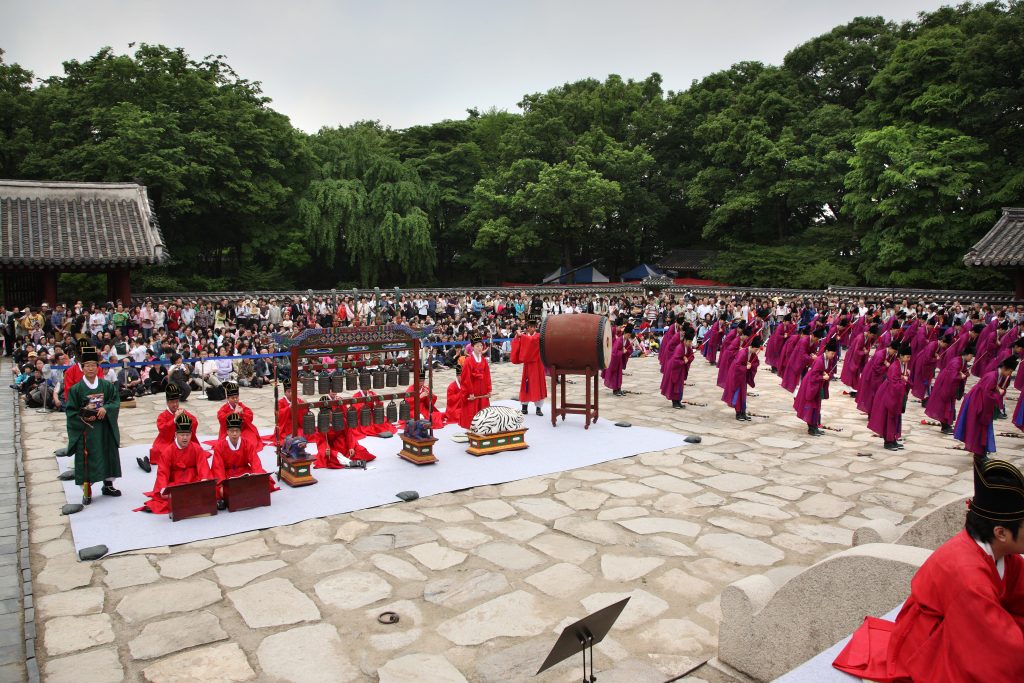
Jongmyo Jerye represents one of the world’s most extraordinary surviving royal ritual ceremonies, maintaining practices that began in 1394 with only minimal changes over 630 years. The ceremony honors deceased Joseon Dynasty kings and queens through elaborate ritual procedures involving hundreds of participants, traditional music and dance, formal offerings of food and drink, and precise choreography detailed in classical Confucian ritual texts.
UNESCO designated Jongmyo Jerye as Masterpiece of the Oral and Intangible Heritage of Humanity in 2001, recognizing it as “an exceptional example of Confucian ancestral worship that has been performed for over six centuries” and praising how “the ritual has been handed down almost unchanged through the ages.” This recognition places Jongmyo Jerye alongside other extraordinary world cultural practices like Noh theatre, flamenco, and Balinese dance as irreplaceable living traditions deserving protection and honor.
The ceremony occurs annually on the first Sunday of May, though historically it was performed five times yearly during the Joseon Dynasty when the shrine actively functioned as royal ancestral worship site rather than cultural heritage monument. The reduction from five yearly ceremonies to one reflects modern Korea’s transformation from Confucian monarchy to secular democracy, but the ceremony’s continuation demonstrates determination to preserve cultural heritage even when original religious and political context has disappeared.
The ritual lasts approximately five hours from preparation through completion, making it one of the longest continuously performed traditional ceremonies in the world. Participants include ritual specialists who have trained for years to learn precise movements and procedures, musicians playing traditional instruments according to ancient scores, dancers performing choreography unchanged for centuries, and descendants of Joseon royal family who maintain ceremonial roles despite the dynasty’s end in 1910.
The Ritual’s Components and Meaning
Jongmyo Jerye consists of multiple distinct ritual phases, each with specific purposes and procedures. The ceremony begins with preparatory rituals including purification of participants and presentation of ritual implements. The main ceremony includes formal announcements to ancestral spirits that offerings will be presented, elaborate food and drink offerings arranged with precise attention to symbolic meanings, musical and dance performances honoring the ancestors, and formal prayers and communications directed to the spirits.
The food offerings follow strict protocols detailed in Confucian ritual texts, with specific dishes, arrangements, and presentation methods considered necessary for proper ancestral honor. The offerings include rice, soup, meat, fish, vegetables, fruits, rice wine, and other items that ancestors would have consumed during life, presented in specific bronze and wooden ritual vessels with each vessel type and position carrying symbolic meaning.
The ritual music, called Jongmyo Jeryeak, uses traditional Korean instruments playing melodies composed specifically for ancestral worship. The music differs fundamentally from entertainment music, designed not to please human listeners but to create solemn atmosphere appropriate for communicating with spiritual beings. The slow tempo, sparse instrumentation, and austere melodies express reverence and dignity rather than aesthetic pleasure.
The ritual dance, called Ilmu, involves rows of dancers moving with extremely slow, deliberate gestures while holding symbolic implements. The dance doesn’t tell stories or display technical virtuosity but creates formal, precise movements that express respect and establish proper ritual atmosphere. The dancers’ synchronized motions and serious demeanor transform human movement into ritual gesture connecting living participants with ancestral spirits.
How to Experience the Ceremony
The annual Jongmyo Jerye ceremony is free and open to the public, attracting thousands of Korean and international visitors who line the shrine courtyards to witness this extraordinary cultural performance. The ceremony occurs on the first Sunday of May regardless of weather, proceeding even during rain (though participants use umbrellas and some logistical adjustments occur).
Arriving early is crucial because prime viewing positions fill hours before the ceremony begins. Visitors who arrive 2-3 hours early secure positions near the ritual action where they can see participants’ faces, hear music clearly, and observe detailed movements. Late arrivals stand at the back of crowds with obstructed views, missing much of the ceremony’s visual richness.
The ceremony provides no seating – all viewing is standing only throughout the five-hour duration. This physical demand means visitors should prepare appropriately with comfortable shoes, weather protection (sun hats or umbrellas depending on conditions), water and portable snacks, and realistic assessment of whether they can stand for extended periods. Many visitors stay for only portions of the ceremony, which is perfectly acceptable.
Photography is permitted and encouraged, though visitors should be respectful about camera noise, flash use (prohibited), and not obstructing others’ views. The ceremony provides extraordinary photographic opportunities with traditional costumes, ritual implements, formal choreography, and ancient architecture creating visually rich cultural documentation.
English explanations during the ceremony are minimal, though some printed programs with basic explanations may be available. However, the visual richness and solemn atmosphere communicate effectively even without full understanding of ritual symbolism and procedures. The ceremony’s significance becomes apparent through participants’ seriousness, the elaborate preparation, and the enormous cultural investment in maintaining these 630-year-old practices.
Pros of Experiencing Jongmyo Jerye
- Unique Cultural Experience: The ceremony offers rare opportunity to witness authentic Confucian royal ritual performed almost exactly as it was centuries ago, an experience available nowhere else in the world.
- UNESCO Heritage: The ceremony’s designation as Intangible Cultural Heritage validates its global significance and irreplaceable value for world culture.
- Living Tradition: Unlike historical reenactments or museum displays, Jongmyo Jerye represents living cultural practice maintained continuously for over 600 years with only minimal changes.
- Extraordinary Visual Richness: The traditional costumes, ritual implements, formal movements, traditional architecture, and hundreds of participants create spectacular visual experience.
- Profound Cultural Insight: Witnessing the ceremony provides deep understanding of Confucian values, Korean cultural continuity, and the serious respect that Koreans maintain for ancestral traditions.
Cons of Jongmyo Jerye
- Single Annual Occurrence: The ceremony occurs only once yearly, meaning visitors must specifically plan Seoul visits for early May or miss this experience entirely.
- Extreme Crowds: The ceremony attracts thousands of spectators creating crowded conditions, difficulty seeing, and loss of the intimate atmosphere that smaller cultural performances provide.
- Physical Demands: Standing for five hours without seating challenges many visitors’ endurance, particularly elderly visitors, those with mobility issues, or families with young children.
- Limited Comprehension: Without deep understanding of Confucian ritual symbolism and procedures, international visitors may find the ceremony visually interesting but fail to grasp its profound cultural and spiritual significance.
- Weather Dependency: May weather in Seoul can be unpredictable, with potential for rain or excessive heat creating uncomfortable conditions during the long outdoor ceremony.
STELLA’S LOCAL SECRET
The “Preparation Phase Photography”
Arrive 3-4 hours before the ceremony’s official start to photograph the ritual preparation activities that most visitors miss. Participants arrive early to don ceremonial robes, arrange ritual implements, position food offerings, and conduct preliminary purification rituals. These preparatory activities provide intimate, less crowded photography opportunities showing the serious work behind the public ceremony.
Best positions: Near the preparation areas where participants put on robes and arrange ritual implements. Early arrival means these areas aren’t yet crowded, allowing clear shots of interesting activities that reveal how much effort the ceremony requires.
Photography advantage: The preparation phase shows participants as real people engaged in complex practical work rather than just ceremonial performers, adding human dimension to your documentation. You’ll capture images of elderly ritual specialists carefully arranging offerings, musicians tuning traditional instruments, dancers practicing movements, and family members helping each other with elaborate costumes.
Cultural respect: When photographing preparation activities, maintain respectful distance and avoid interfering with participants’ work. They’re conducting sacred ritual preparation, not performing for photographers. Quiet observation and photography from reasonable distance shows appropriate respect while documenting these fascinating activities.
Practical Planning for Your Jongmyo Visit
Operating Hours and Admission
Jongmyo operates on year-round hours from Tuesday through Sunday, 9:00 AM to 6:00 PM from February through May and September through October, and 9:00 AM to 6:30 PM from June through August. Winter hours from November through January are 9:00 AM to 5:30 PM. The shrine closes every Monday for maintenance, except when Monday is a public holiday (then it opens Monday and closes Tuesday instead).
Regular admission costs 1,000 won for adults, making Jongmyo extremely affordable compared to international heritage sites of similar significance. This minimal fee reflects Korean cultural policy of making heritage accessible rather than treating it as tourism revenue source. Senior citizens over 65, children under 6, and people wearing traditional hanbok enter free.
IMPORTANT: On ordinary days (not during Jongmyo Jerye ceremony), visitors can only tour Jongmyo’s grounds and buildings through guided tours at scheduled times. You cannot independently wander through the shrine. Korean-language tours run frequently throughout the day, while English tours typically occur at 10:00 AM, 12:00 PM, 2:00 PM, and 4:00 PM (confirm current schedules as they may vary seasonally).
Free admission occurs on the last Wednesday of each month, attracting larger crowds of Korean domestic visitors. However, the already minimal 1,000 won admission makes these free days less valuable than at more expensive heritage sites – paying the small fee for a less crowded experience on a regular day makes sense for most visitors.
On the day of Jongmyo Jerye ceremony (first Sunday of May), the shrine opens to the public without guided tour requirements, allowing free exploration of all areas. This annual open access draws massive crowds but provides rare opportunity to see the shrine fully activated for its original ritual purpose.
Getting to Jongmyo
Jongmyo sits in central Seoul near the eastern end of Jongno district, easily accessible by subway. The most convenient access is Jongno 3-ga Station on Lines 1, 3, and 5, using Exit 11 which brings you to the shrine’s main entrance within a 5-minute walk. Clear English signage guides visitors from the subway exit to the shrine.
The shrine’s central location makes it easily reachable from major tourist areas and easily combined with other central Seoul attractions. From Insadong, Jongmyo is about a 10-minute walk. From Gyeongbokgung or other palaces, it’s 15-20 minutes by foot or one subway stop. The location allows efficient cultural touring combining multiple heritage sites in a single day.
Taxi access is straightforward as drivers know the location well – simply saying “Jongmyo” suffices. From major tourist areas like Myeongdong, taxi rides typically cost 6,000-8,000 won and take 10-15 minutes depending on traffic. However, Seoul traffic can be severe, making subway usually faster and more predictable for daytime visits.
What to Bring and Wear
Comfortable walking shoes are essential though Jongmyo’s relatively flat terrain makes it less physically demanding than palaces with hillside sections. Casual sneakers or walking shoes work fine – you’ll walk perhaps 1-2 kilometers total during a standard guided tour.
Camera equipment choices should consider that you’re joining a guided group tour that doesn’t wait for photographers to set up elaborate shots. Smartphone cameras or compact mirrorless cameras work better than heavy professional gear that slows you down and annoys other tour participants.
For Jongmyo Jerye ceremony attendance, bring portable seating (small folding stool or cushion) despite the technical standing-only policy – after 2-3 hours, most visitors discreetly sit on whatever they brought. Bring water, snacks, sun protection (hat and sunscreen), and rain gear as backup since the ceremony proceeds regardless of weather.
Modest clothing is appropriate given Jongmyo’s sacred character as ancestral shrine. While there’s no strict dress code, tank tops, very short shorts, or other revealing clothing feels disrespectful in this solemn religious setting. The shrine isn’t a temple with monks enforcing modesty, but visitors who dress conservatively show cultural sensitivity and respect.
Combining Jongmyo with Other Attractions
Jongmyo’s compact size and guided tour format mean visits typically last only 1-1.5 hours, leaving ample time for other activities in a single day. The shrine’s location near several major Seoul attractions enables efficient cultural touring.
Changdeokgung and Changgyeonggung palaces sit within 10-15 minutes walking distance, allowing a combined itinerary of Jongmyo in the morning and one or both palaces in the afternoon. The thematic connection between royal palaces (where living kings governed) and royal shrine (where deceased kings were honored) creates coherent cultural narrative.
Insadong traditional culture district sits about 10 minutes away by foot, offering art galleries, traditional tea houses, craft shops, and cultural experiences that complement Jongmyo’s solemn heritage with more commercial but still culturally-focused tourism.
For visitors interested in comprehensive Korean royal heritage, combining Jongmyo with the Royal Palace combination ticket covering Gyeongbokgung, Changdeokgung, Changgyeonggung, and Deoksugung provides excellent value and creates a full day or two of palace and shrine touring.
Pros of Strategic Planning
- Guided Tour Understanding: Joining the guided tour provides essential explanations about Confucian philosophy, architectural principles, and ritual practices that independent visiting cannot offer.
- Affordable Access: The minimal admission cost and free tour guidance makes Jongmyo accessible to all visitors regardless of budget constraints.
- Central Location: Proximity to other major attractions enables efficient cultural touring seeing multiple significant sites without wasted transportation time.
- Jongmyo Jerye Planning: Visitors who plan Seoul trips specifically for early May can experience both the ordinary shrine visit and the extraordinary annual ceremony for complete understanding.
- Combined Heritage Experience: Visiting both royal palaces and royal shrine provides fuller understanding of Joseon Dynasty royal culture than experiencing either palaces or shrine alone.
Cons of Visit Planning
- Tour Time Constraints: The mandatory guided tour format eliminates flexibility to linger at interesting spots or skip areas that don’t interest you.
- Language Limitations: English tours provide basic information but miss cultural nuances and philosophical depth that Korean-language tours include.
- Limited Access: On ordinary days, the guided tour restrictions mean you cannot freely photograph, examine details, or experience the shrine at your own contemplative pace.
- Monday Closures: Weekly closures create scheduling complications for visitors with limited Seoul time whose available days might not align with shrine operating schedule.
- Single Annual Ceremony: The restriction of Jongmyo Jerye to one day yearly means most visitors experience only the empty shrine without the ritual practices that give it meaning.
STELLA’S LOCAL SECRET
The “Korean Tour Plus English Audio Guide”
If you understand even basic Korean, join the more frequent Korean-language guided tours rather than waiting for limited English tour times. Korean tours run every 30-60 minutes versus English tours only 3-4 times daily, giving you much more flexibility. Before the tour, download or read English explanations about Jongmyo from the official website or cultural heritage resources.
Why this works: You see all the same buildings and spaces but with better scheduling flexibility. You’ll catch some Korean explanations through basic comprehension or context, while your pre-visit English reading provides the background that tour guides would cover.
Practical advantage: Korean tours often have smaller groups than English tours which attract all international visitors, creating more manageable group sizes where you can see and hear better.
Cultural observation: Watch how Korean visitors react during tours – their questions, areas of interest, and emotional responses reveal what Jongmyo means to Koreans in ways that international tour groups cannot demonstrate. You’ll learn about contemporary Korean relationship with Confucian heritage through observing Korean visitors’ engagement.
Frequently Asked Questions
Q: How long should I allocate for visiting Jongmyo?
Allocate 1.5 to 2 hours for the guided tour and basic shrine exploration. If you’re visiting specifically for Jongmyo Jerye ceremony in May, allocate the entire day – arrive early for good positioning, experience the 5-hour ceremony, and allow time for arrival and departure through crowds.
Q: Can I visit Jongmyo without joining a guided tour?
No, except on the day of Jongmyo Jerye ceremony (first Sunday of May) when the shrine opens freely to all visitors. On ordinary days, guided tours are mandatory to access the shrine buildings and grounds beyond the entrance area.
Q: When is the Jongmyo Jerye ceremony?
The annual ceremony occurs on the first Sunday of May every year. Historically, the ceremony was performed five times yearly, but modern Korea maintains only this single annual ceremony. The event is free, open to the public, and attracts thousands of visitors.
Q: Is Jongmyo worth visiting if I’ve already seen Korean palaces?
Yes, absolutely. Jongmyo serves completely different functions than palaces and embodies different architectural and philosophical principles. The shrine provides essential context for understanding Confucian culture and Korean royal heritage that palaces alone cannot offer. The combination of palaces (where living kings governed) and shrine (where deceased kings are honored) creates fuller cultural understanding.
Q: Why does Jongmyo look so plain compared to temples and palaces?
The austere architecture reflects Confucian values that prioritize dignity, restraint, and proper respect over aesthetic beauty. Confucian ritual texts specified that ancestral shrine architecture should avoid decorative elaboration, expressing reverence through simplicity rather than through visual richness. The plainness is conscious philosophical choice, not poverty or lack of artistic skill.
Q: Can I take photos inside Jongmyo?
Photography is permitted in most areas during guided tours, though guides may request no photos in certain particularly sacred spaces. Photography is encouraged during Jongmyo Jerye ceremony, though flash photography is prohibited and visitors should avoid obstructing others’ views.
Q: What is the difference between Jeongjeon and Yeongnyeongjeon?
Jeongjeon is the main shrine hall housing the most meritorious kings and their direct succession line. Yeongnyeongjeon is the secondary hall housing kings of lesser achievement or collateral royal lines. The distinction reflects Confucian hierarchical thinking that made careful judgments about merit and appropriate honors even among deceased royalty.
Q: Is Jongmyo suitable for children?
Jongmyo works better for older children, teenagers, and adults who can appreciate philosophical and historical significance. Young children may find the austere architecture boring and the solemn atmosphere restrictive. The mandatory guided tour format and prohibition on running or playing makes Jongmyo challenging for very young children.
Q: How crowded does Jongmyo get?
On ordinary days, crowd levels are very manageable with small guided tour groups providing peaceful contemplative experience. During Jongmyo Jerye ceremony in May, crowds are enormous with thousands of visitors creating genuinely crowded conditions.
Q: What should I know about Confucian culture before visiting?
Understanding basic Confucian concepts improves your experience significantly. Key concepts: filial piety (children’s duty to respect and honor parents both living and dead), ancestor worship (maintaining relationship with deceased family members through ritual), and the belief that proper ritual observance maintains cosmic and social harmony. Even superficial understanding of these ideas helps appreciate what Jongmyo represents.
Witnessing Korea’s Confucian Soul
You now have comprehensive knowledge to visit Jongmyo Shrine with deep understanding of what makes this austere complex one of Korea’s most culturally significant heritage sites. You’ve learned why royal ancestral shrines held higher spiritual status than palaces in Confucian kingdoms. You understand the architectural principles that make Jongmyo’s apparent plainness actually sophisticated philosophical choice expressing Confucian values. You know how to experience or plan for the extraordinary Jongmyo Jerye ceremony that brings these ancient buildings to life with 630-year-old ritual practices.
Most importantly, you’ve gained insight into what Jongmyo reveals about Korean culture’s Confucian foundations that continue influencing contemporary Korean society despite massive modernization. The shrine demonstrates Korean commitment to maintaining ancestral connections, preserving cultural continuity, and honoring the past even while embracing rapid change and technological development.
Jongmyo may lack the immediate visual appeal of colorful Buddhist temples or grand palace architecture, but it offers something those more spectacular sites cannot provide – direct connection to the philosophical and spiritual foundations of traditional Korean civilization. The shrine represents Korean culture at its most solemn, dignified, and philosophically sophisticated.
The shrine buildings are waiting. The spirit tablets of 49 kings and queens reside in their austere wooden chambers. Once yearly, the ancient ritual awakens the shrine with music, dance, and offerings unchanged across centuries. Your journey into Korea’s Confucian soul is about to begin.