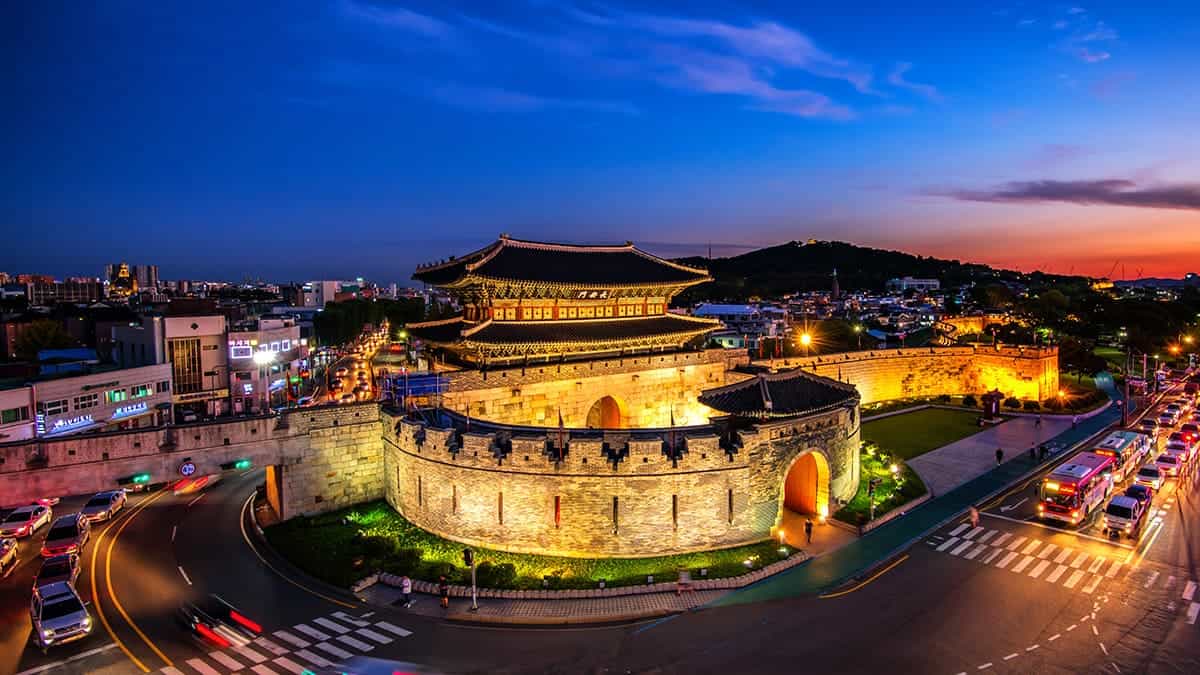
Korea’s Enlightened Fortress
Have you ever wanted to experience a place where an 18th-century enlightened king’s vision of reform, filial piety, and scientific innovation became stone reality? Where UNESCO recognizes not just historical significance but revolutionary architectural and engineering achievements that transformed Korean fortress design? Where you can walk 5.7 kilometers along fortress walls experiencing both 200-year-old military architecture and spectacular modern city views? Where Korean traditional culture meets cutting-edge construction technology in a structure that has become symbol of both Joseon Dynasty achievement and contemporary Suwon’s identity? Hwaseong Fortress offers exactly this experience – but only if you understand King Jeongjo’s profound motivations for building this fortress city, appreciate the innovative construction techniques that made Hwaseong revolutionary rather than merely traditional, know how to navigate the extensive fortress wall circuit strategically, and grasp why this relatively young fortress (by Korean standards) earned UNESCO recognition over older, larger fortifications.
Most visitors approach Hwaseong with limited understanding beyond “UNESCO fortress” and leave with mixed impressions. They’re impressed by the well-preserved walls and gates but struggle to understand what makes Hwaseong special compared to other Korean fortresses. They walk portions of the wall without grasping the emotional story of a grieving king honoring his tragically murdered father. They photograph the beautiful gates without knowing the scientific innovations underlying their construction. They visit on weekends fighting crowds rather than experiencing the fortress during quiet times when its scale and beauty fully reveal themselves. They see impressive architecture but miss the human drama, political intrigue, and revolutionary spirit that gave birth to this fortress city.
I understand that superficial engagement completely. My first Hwaseong visit was rushed weekend afternoon, quickly walking a small section of wall, photographing Hwaseomun Gate, then leaving without emotional connection or deep appreciation. The fortress seemed pleasant but not particularly special or moving. Only on my third visit, after reading extensively about King Jeongjo and walking the complete wall circuit during a quiet weekday, did I begin to grasp Hwaseong’s profound significance as monument to filial devotion, political reform, and enlightened governance.
That’s why this comprehensive guide exists. I’m going to share everything you need to transform Hwaseong from a pleasant fortress visit into a meaningful encounter with Korean history’s most progressive monarch and his vision for ideal governance. You’ll learn the tragic story of Crown Prince Sado’s death and how his son King Jeongjo built this entire fortress city as act of filial devotion while pursuing political reform. You’ll understand the revolutionary construction techniques including Korea’s first use of pulleys, cranes, and wheeled carts in fortress building. You’ll discover how to walk the complete wall circuit efficiently or which shorter sections provide optimal experience for limited time. You’ll gain insight into why Hwaseong represents Korean Confucianism at its most humane and progressive.
By the end of this guide, you’ll know how to visit Hwaseong with understanding that transforms stone walls into evidence of love, loss, political courage, and technological innovation. You’ll appreciate why UNESCO designated this 18th-century fortress as World Heritage despite Korea having older fortifications. You’ll understand what makes Hwaseong architecturally unique even among Asian fortress cities. Most importantly, you’ll grasp why modern Koreans, particularly those interested in progressive politics and enlightened governance, revere King Jeongjo and view Hwaseong as monument to what Korean monarchy could have achieved if given more time before colonization.
King Jeongjo’s Vision: Filial Devotion and Political Reform
The Tragic Story of Crown Prince Sado
To understand Hwaseong Fortress, you must first understand the tragedy that motivated its construction. King Jeongjo’s father, Crown Prince Sado, suffered from severe mental illness that manifested in violent, erratic behavior creating crisis for the royal court. In 1762, after Crown Prince Sado murdered several palace servants during psychotic episodes, King Yeongjo (Jeongjo’s grandfather) made the agonizing decision to execute his own son by trapping him in a rice chest where he died after eight days of suffocating heat and starvation.
This horrific execution method reflected Korean political reality where direct execution of royal family members was prohibited, requiring indirect methods that technically avoided regicide while achieving the same result. The young Prince Jeongjo, only 11 years old, witnessed his father’s slow death, creating psychological trauma that shaped his entire life and reign.
After Crown Prince Sado’s death, political factions formed around whether the execution was justified or represented factional murder disguised as mental health crisis. These political divisions would dominate Jeongjo’s eventual reign, with some factions viewing him as son of dangerous madman who shouldn’t have inherited the throne, while others supported him as legitimate heir wrongfully tainted by his father’s tragedy.
When Jeongjo ascended to the throne in 1776 at age 24, he faced enormous political opposition from court factions who had supported his father’s execution. Rather than accepting their dominance, Jeongjo launched ambitious reform program weakening factional power, promoting merit-based appointments, and attempting to create more enlightened governance less controlled by aristocratic factions pursuing self-interest over national welfare.
Building Hwaseong: Filial Devotion as Political Statement
In 1789, King Jeongjo moved his father’s tomb to Suwon, approximately 30 kilometers south of Seoul, and began planning a new fortress city around the tomb. This decision served multiple purposes – honoring his father with grand filial gesture, creating new political center outside Seoul where factional elites dominated, and demonstrating his vision for enlightened governance through model city incorporating latest political and technological thinking.
The fortress construction began in 1794 and was completed in 1796, remarkably fast for such massive undertaking. The speed reflected Jeongjo’s determination and his use of innovative construction techniques including Korea’s first systematic use of cranes, pulleys, and wheeled vehicles for moving heavy materials – revolutionary approaches that Korean construction had previously avoided due to Confucian preference for human labor over mechanical devices.
Jeongjo named the new city Hwaseong (華城), meaning “Brilliant Fortress” or “Flowering Fortress,” reflecting his vision of this place as model for enlightened governance where his political reforms could flourish without interference from Seoul’s entrenched factionalism. The fortress would protect not just against military threats but also serve as symbolic and actual space for new political order.
The king made regular trips from Seoul to Hwaseong visiting his father’s tomb and overseeing the new city’s development. These royal processions, called Hwaseong Haenghaeng, involved thousands of participants and demonstrated royal power while allowing Jeongjo to escape Seoul’s political pressures. The most famous procession in 1795 celebrating his mother’s 60th birthday became symbol of Jeongjo’s filial devotion and his vision for harmonious, prosperous governance.
Jeongjo’s Political Reform Vision
Hwaseong represented more than memorial to dead father – it embodied Jeongjo’s comprehensive vision for reformed Korean governance. The king planned Hwaseong as model city demonstrating enlightened administration, economic development through commerce rather than just agriculture, and more equitable social order reducing yangban aristocratic dominance.
Jeongjo recruited commoners and lower-class soldiers to build the fortress, paying fair wages rather than using corvee labor that typically forced commoners to work without compensation. This revolutionary approach both sped construction (paid workers are more motivated than forced laborers) and demonstrated Jeongjo’s belief that government should serve all people, not just aristocratic elites.
The city plan incorporated commercial areas, markets, and infrastructure supporting economic development – unusual emphasis for Confucian kingdom that traditionally viewed commerce with suspicion compared to agriculture and scholarship. Jeongjo understood that national prosperity required robust commerce and that government should actively support economic activity rather than merely tolerating it.
The fortress itself embodied progressive military thinking incorporating latest defensive technologies while using innovative construction methods. Jeongjo consulted widely with scholars and technical experts, synthesizing traditional Korean fortress design with Chinese military architecture and new engineering approaches, creating hybrid system representing best available knowledge rather than merely copying old patterns.
The Tragedy of Unfulfilled Reform
Jeongjo’s reforms and Hwaseong’s potential as model for Korean modernization ended abruptly with his sudden death in 1800 at age 48, likely from poisoning though this was never proven. After his death, conservative factions regained control, reversed many reforms, and Hwaseong declined from progressive model city to ordinary provincial town.
The fortress survived but Jeongjo’s vision died with him. His successor was child easily manipulated by conservative elites who had opposed Jeongjo’s reforms. The political and social innovations Jeongjo attempted to implement through Hwaseong disappeared, and Korea returned to factional politics and conservative governance that would eventually prove unable to resist foreign pressures in the 19th century.
This historical tragedy gives Hwaseong profound emotional resonance for modern Koreans. The fortress represents not just architectural achievement but lost potential – the Korea that might have been if Jeongjo had lived longer and his reforms had succeeded. Walking Hwaseong’s walls means confronting questions about historical possibility and the fragility of progressive reform in conservative society.
Personal Story: Understanding Through History
During my third Hwaseong visit, I hired a guide who specialized in Jeongjo’s life and political context. As we walked the fortress wall, she explained the full tragedy – the murdered father, the traumatized son, the political opposition, the ambitious reforms, and the crushing defeat when Jeongjo died too young.
Standing at one of the fortress’s command posts overlooking the city, she said: “Jeongjo built this fortress with love for his dead father and hope for Korea’s future. He tried to create something better than what Seoul’s aristocrats would allow. When I walk these walls, I’m not just seeing old fortress. I’m seeing evidence of what one enlightened king tried to accomplish against impossible political opposition.”
Her emotional connection transformed my understanding. Hwaseong stopped being merely impressive architecture and became monument to human aspiration, political courage, and tragic loss. The fortress walls literally embody a king’s love for his father, his anger at the system that killed his father, and his determination to build something better.
Pros of Understanding Jeongjo’s Story
- Emotional Depth: The tragic history adds profound emotional resonance transforming pleasant fortress visit into encounter with human drama and historical tragedy.
- Political Context: Understanding Jeongjo’s reform vision helps appreciate why Hwaseong represents progressive Korean thought rather than merely traditional fortress architecture.
- Contemporary Relevance: The story of reformist leader facing conservative opposition resonates with modern Korean politics, making 200-year-old history feel immediately relevant.
- Filial Devotion Understanding: The fortress as expression of son’s love for father demonstrates Confucian filial piety at its most profound and touching level.
- Historical Counterfactual: Contemplating what Korea might have become if Jeongjo lived longer creates fascinating historical speculation about alternative Korean modernization.
Cons of Historical Complexity
- Tragic Heaviness: The story of Crown Prince Sado’s horrific death and Jeongjo’s unfulfilled reform can feel emotionally heavy and depressing rather than uplifting.
- Political Complexity: The factional politics and reform attempts require substantial Korean history knowledge to fully understand and appreciate.
- Idealization Risk: Modern progressive Koreans sometimes idealize Jeongjo beyond historical reality, creating romanticized narrative that obscures more complex truth.
- Translation Challenges: The nuances of Confucian filial piety, Korean factional politics, and court intrigue don’t translate easily for international visitors without deep cultural context.
STELLA’S LOCAL SECRET
The “Jeongjo Historical Context Pre-Visit Study”
Before visiting Hwaseong, watch the Korean historical drama “The Red Sleeve” or “Yi San” which dramatize King Jeongjo’s life and reign. While historical dramas take liberties with facts for entertainment, they provide emotional context and basic narrative understanding that makes fortress visiting far more meaningful.
Why this works: You’ll arrive at Hwaseong already knowing who Jeongjo was, understanding his father’s tragedy, and grasping his reform vision. The fortress walls stop being mere architecture and become physical manifestation of character you’ve already connected with emotionally.
Educational supplement: After watching drama for emotional engagement, read Wikipedia articles on King Jeongjo, Crown Prince Sado, and Hwaseong Fortress for historical facts separated from dramatic embellishment. The combination of emotional engagement (drama) and factual knowledge (reading) creates optimal preparation.
Cultural note: Many Korean visitors approach Hwaseong with this historical knowledge already from school education and popular media. International visitors who invest time in pre-visit preparation gain access to emotional and cultural dimensions that casual fortress touring misses entirely.
Architectural Innovation and Scientific Construction
Revolutionary Construction Techniques
Hwaseong Fortress represents revolution in Korean construction methodology through systematic use of mechanical devices that traditional Korean building practices had largely avoided. King Jeongjo consulted with scholars and engineers to incorporate pulleys, cranes, wheeled carts, and other mechanical aids that dramatically increased construction efficiency and worker safety.
The most famous innovation was the geojunggi (거중기), a type of crane using pulley system to lift heavy stones that would have required dozens of workers using traditional methods. Jeongjo promoted this device despite Confucian conservatives’ objections that mechanical devices replaced honest human labor with soulless machinery. His practical focus on results over ideological purity demonstrated enlightened pragmatism.
Another innovation was the nokro (녹로), wheeled cart for transporting materials – seemingly obvious technology but rarely used in Korean construction which relied on human carriers or pack animals. The systematic use of wheels for moving fortress stones represented conceptual breakthrough in Korean engineering practice.
These mechanical innovations allowed completing the massive fortress in only 34 months despite using paid workers rather than forced corvee labor. The construction speed demonstrated that progressive methods could achieve better results faster than traditional approaches – practical vindication of Jeongjo’s reform philosophy.
Integration of Korean and Chinese Fortress Design
Hwaseong synthesizes traditional Korean mountain fortress principles with Chinese city wall design, creating hybrid architecture incorporating strengths of both approaches. Korean mountain fortresses typically followed ridgelines creating defensible positions but leaving flat land outside walls. Chinese city walls enclosed flat urban areas providing protection for commerce and daily life but lacking mountain fortress’s defensive advantages.
Hwaseong combines both approaches, with walls following terrain contours including hills while also enclosing flat commercial and residential areas. This hybrid design created fortress that was both militarily strong and economically functional – defending against attacks while supporting urban development.
The fortress incorporates 48 different architectural structures including four main gates, various sentry posts, command centers, bastions, and water gates. This structural diversity reflects comprehensive military thinking about different defensive needs rather than one-size-fits-all approach. Each structure type served specific tactical purpose in integrated defense system.
The architectural details show sophisticated understanding of defensive requirements. The walls average 4-6 meters tall with walkways on top allowing soldiers to move quickly to threatened sections. Regular sentry posts provided observation and communication points. Bastions projecting from walls allowed defenders to fire along wall faces catching attackers in crossfire. Every design element served practical military function.
The Hwaseong Seongyeok Uigwe: Scientific Documentation
One reason Hwaseong received UNESCO recognition was the Hwaseong Seongyeok Uigwe (화성성역의궤), detailed construction record documenting every aspect of fortress building including plans, methods, materials, costs, and workers employed. This comprehensive documentation represents unusual commitment to scientific record-keeping unprecedented in Korean construction history.
The Uigwe contains detailed architectural drawings, engineering specifications, financial accounting, and even records of individual workers’ wages and work assignments. This obsessive documentation reflected Jeongjo’s enlightened governance philosophy emphasizing transparency, accountability, and systematic knowledge preservation.
The survival of this document allowed accurate 20th-century restoration after Korean War damage. When restoration began in 1970s, architects and engineers could reference original plans rather than guessing about destroyed sections. This precise restoration based on contemporary documents gave Hwaseong unusual authenticity compared to reconstructed heritage sites relying on incomplete historical knowledge.
UNESCO World Heritage Recognition
UNESCO designated Hwaseong Fortress as World Heritage Site in 1997, citing it as “an outstanding example of early modern military architecture” and praising how “the fortress represents a pinnacle of scientific and technological achievements in the construction of fortifications during the Joseon Dynasty.” The designation recognized both architectural excellence and the innovative construction methods.
The UNESCO citation specifically highlighted Hwaseong’s synthesis of Eastern and Western military architecture, the use of scientific construction techniques, and the comprehensive documentation in the Hwaseong Seongyeok Uigwe. The recognition validated Hwaseong as representing not just Korean achievement but global architectural and engineering significance.
The designation brought international attention and tourism but also created preservation challenges. The fortress walls must accommodate both heritage protection and the reality that modern Suwon city has grown around and through the fortress, creating tensions between authentic preservation and contemporary urban needs.
Pros of Architectural Appreciation
- Innovation Recognition: Understanding the revolutionary construction techniques adds intellectual appreciation beyond simple aesthetic response to beautiful walls and gates.
- Engineering Interest: The mechanical devices, hybrid design approaches, and scientific documentation appeal to visitors interested in technology and engineering history.
- Restoration Authenticity: Knowing the restoration was based on comprehensive original documents creates confidence that what you’re seeing closely approximates original 18th-century construction.
- UNESCO Validation: World Heritage designation confirms Hwaseong’s global significance beyond just Korean national importance.
Cons of Restoration Reality
- Damaged Original: Much of the fortress was damaged during Korean War and Japanese colonial period, meaning significant portions are 20th-century reconstructions rather than original 1790s construction.
- Modern Intrusions: Roads cut through fortress walls, modern buildings crowd up against fortifications, and urban infrastructure creates visual disruption of historical atmosphere.
- Maintenance Ongoing: Continuous conservation work means scaffolding, closed sections, and construction activity that disrupts photography and visitor experience.
- Tourist Infrastructure: Gift shops, restaurants, and tourist facilities around main gates create commercialized atmosphere disconnected from fortress’s military and historical character.
STELLA’S LOCAL SECRET
The “Construction Innovation Appreciation Walk”
When walking fortress walls, specifically look for evidence of the innovative construction techniques – look at how large stones are precisely fitted (possible because mechanical cranes allowed careful placement), observe the regular spacing of structural elements (systematic planning rather than ad hoc building), notice the quality of stonework (possible because paid workers took pride in craftsmanship versus rushed forced labor).
Education strategy: Visit Hwaseong Museum before or after walking the fortress to see models and explanations of the geojunggi crane and nokro cart. Understanding the actual devices makes recognizing their impact on construction quality more concrete when examining the walls.
Comparison perspective: If you’ve visited other Korean fortresses like Namhansanseong, compare Hwaseong’s precise, systematic construction to older fortresses’ more irregular stonework. The difference reveals how Jeongjo’s innovations created distinctly different construction quality.
Walking the Fortress Wall: Complete Circuit Guide
Understanding the 5.7-Kilometer Wall Circuit
Hwaseong Fortress walls form 5.7-kilometer circuit that can be walked completely in 2-3 hours at moderate pace with stops for photography and observation. Walking the complete circuit provides comprehensive understanding of fortress scale, architectural variety, and relationship between fortress and modern Suwon city. However, most visitors walk only sections rather than complete circuit due to time constraints, physical stamina limitations, or lack of awareness that complete circuit is possible.
The wall circuit includes steep climbs over hills, level sections through flat areas, stairs and ramps connecting different elevations, and several points where modern roads cut through requiring brief street crossing. The varied terrain creates constantly changing views and experiences rather than monotonous repetitive walking.
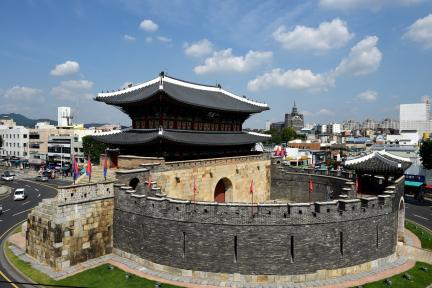
The fortress has four main gates oriented to cardinal directions – Janganmun (North Gate), Paldalmun (South Gate), Hwaseomun (West Gate), and Changryongmun (East Gate). Walking between these gates while observing the various bastions, command posts, and sentry posts provides comprehensive fortress architecture education.
Section-by-Section Breakdown
Northern Section (Janganmun to Hwahongmun):
This section includes the impressive Janganmun Gate, the largest of four main gates and designated National Treasure. The wall follows hills providing elevated views over northern Suwon. The terrain includes moderate climbs and descents with stone stairs. This section is relatively quiet with fewer tourists than southern areas.
Eastern Section (Hwahongmun to Changryongmun):
The eastern wall includes Hwahongmun, a beautiful water gate where stream flows through fortress. This area features some of Hwaseong’s most photographed architecture. The wall follows relatively level terrain making this section accessible for visitors avoiding steep climbs. The eastern section passes through more wooded areas providing shade during hot weather.
Southern Section (Changryongmun to Paldalmun):
This section includes steep climbs to Seojangdae command post, offering spectacular views but requiring good fitness. The southern wall showcases impressive stone construction and military architecture. Paldalmun Gate sits in the middle of busy traffic circle in central Suwon, creating dramatic contrast between historical fortress and modern urban life.
Western Section (Paldalmun to Hwaseomun to Janganmun):
The western wall includes Hwaseomun Gate and continues through both flat sections and moderate hills. This area has been most disrupted by modern development with roads cutting through at several points. The western section sees fewer tourists providing quieter walking despite occasional urban intrusions.
Optimal Walking Strategies
Complete Circuit (2.5-3 hours):
Start at Paldalmun (South Gate) accessible by subway, walk counter-clockwise (easier climbing direction), allowing extra time at Janganmun (North Gate) and Hwahongmun (Water Gate) for photography and rest. This strategy completes circuit during single visit providing comprehensive fortress experience.
Half Circuit – Eastern Highlight (90-120 minutes):
Walk from Paldalmun to Janganmun along eastern wall, experiencing Hwahongmun water gate, Changryongmun gate, and several scenic sections. Return via city streets or taxi rather than walking complete circuit. This provides substantial fortress experience without full circuit’s time and stamina demands.
Highlights Only (45-60 minutes):
Visit Paldalmun Gate and nearby Hwaseong Haenggung Palace, then taxi or bus to Janganmun and Hwahongmun in northern section for photography. This hits major highlights quickly but misses the wall-walking experience that reveals fortress’s scale and military design.
Physical Demands and Accessibility
The complete circuit includes approximately 400 meters of elevation change through climbs and descents, requiring moderate to good fitness. The steepest section between Paldalmun and Seojangdae challenges even fit visitors, with stairs and steep ramps that may be difficult for elderly visitors or those with knee problems.
The wall surface varies from smooth paved sections to stone paths and stairs, with some areas uneven enough to require careful footing. During rain or snow, stone surfaces become slippery creating safety hazards. The wall lacks guardrails in some sections meaning edges should be avoided during wet or icy conditions.
Accessibility for wheelchair users or those with severe mobility limitations is poor for wall walking. However, the main gates can be approached and viewed from street level, and Hwaseong Haenggung Palace is partially accessible, allowing limited fortress experience without wall walking.
Pros of Wall Walking
- Comprehensive Experience: Complete circuit provides full understanding of fortress scale, architectural variety, and integration with landscape impossible from visiting just main gates.
- Exercise Combined with Culture: The 5.7-kilometer walk provides substantial exercise while experiencing cultural heritage, appealing to fitness-minded travelers wanting active touring.
- Changing Perspectives: The varied terrain creates constantly changing views and photographic opportunities showing fortress from countless angles and elevations.
- Fewer Crowds: Sections away from main gates see far fewer tourists, providing peaceful contemplative walking rare at famous heritage sites.
- Sense of Achievement: Completing the circuit creates satisfying sense of accomplishment and comprehensive engagement with the fortress.
Cons of Wall Walking
- Time Requirement: The 2.5-3 hours needed for complete circuit exceeds many visitors’ available time or tolerance for extended walking.
- Physical Demands: The climbs, stairs, and distance challenge less fit visitors, elderly people, those with mobility issues, or families with young children.
- Weather Exposure: The wall circuit offers limited shade during summer heat and no protection from rain or winter cold, making weather conditions crucial to comfort.
- Monotony Risk: Some visitors find the continuous wall walking repetitive and tedious despite changing terrain, preferring to focus on specific architectural highlights.
- Safety Concerns: The uneven surfaces, stairs, steep sections, and occasional lack of guardrails create fall risks requiring constant attention that tires some visitors.
STELLA’S LOCAL SECRET
The “Early Morning Complete Circuit Strategy”
Walk the complete circuit starting at 7:00-7:30 AM on weekday mornings, completing before midday heat and crowds. Early morning provides cool temperatures, beautiful light for photography, and nearly solitary fortress experience impossible during normal tourist hours.
Why this works: You’ll often be alone or with only handful of other early walkers (usually fitness enthusiasts treating fortress as exercise course). You can stop freely for photography without people in frames, pause to appreciate details, and experience the fortress at contemplative pace rather than fighting crowds.
Practical preparation: Bring water, comfortable walking shoes, and light snacks for energy. Start at Paldalmun (served by subway opening early), walk counter-clockwise completing at Hwaseong Haenggung Palace when it opens at 9:00 AM, tour palace to complete fortress area experience.
Photography advantage: Morning light from the east illuminates walls beautifully, creating long shadows emphasizing architectural details. Early morning often has clearer atmosphere making distant views sharper for landscape photography.
Hwaseong Haenggung Palace: The Temporary Royal Residence
Understanding Haenggung’s Purpose and Significance
Hwaseong Haenggung (화성행궁) served as temporary palace where King Jeongjo stayed during visits from Seoul to his father’s tomb in Suwon. Unlike permanent royal palaces in Seoul, haenggung were smaller, more intimate residences serving specific purposes – in this case, providing appropriate royal accommodations during tomb visits and administration of the fortress city.
The palace complex originally contained 576 rooms making it largest haenggung among numerous temporary palaces throughout Korea. The scale reflected Jeongjo’s serious intentions for Hwaseong as alternative power center, not merely occasional visiting spot. Jeongjo envisioned potentially making this permanent royal residence if his political reforms successfully created new governing center outside Seoul’s factional politics.
The palace served both residential and administrative functions. While Jeongjo stayed here, he conducted governmental business, received officials, and exercised royal authority just as he would in Seoul’s primary palaces. This dual function demonstrated Haenggung’s importance beyond mere sleeping quarters into functional governing seat.
The most famous event at Haenggung was the 1795 eight-day celebration for Jeongjo’s mother’s 60th birthday, combining tomb visit with massive filial demonstration. The celebration involved elaborate ceremonies, performances, banquets, and processions documented in historical records as pinnacle of Jeongjo’s demonstration of Confucian filial virtue and royal magnificence.
Palace Destruction and Modern Reconstruction
During Japanese colonial period (1910-1945), much of Hwaseong Haenggung was destroyed or converted to Japanese administration buildings, public schools, and police facilities. This deliberate destruction of Korean royal heritage exemplified Japanese colonial policy of erasing Korean historical and cultural identity. By independence in 1945, little remained of the original 576-room complex.
Modern restoration began in 1996, reconstructing major palace buildings based on historical records, archaeological evidence, and the Hwaseong Seongyeok Uigwe documentation. While the restoration created historically accurate reconstructions, they are 1990s buildings designed to look like 1790s originals rather than actual surviving 18th-century structures.
This reconstruction status creates philosophical questions about authenticity. Are these recreated buildings genuinely historical heritage or modern theme park replications? The debate reflects broader tensions in heritage conservation between preserving authentic remnants versus reconstructing destroyed heritage to make historical understanding more accessible.
Despite being reconstructions, the palace provides valuable educational experience and visual reference for understanding Joseon Dynasty royal life and architecture. The buildings demonstrate palace layout, architectural principles, and spatial organization that photographs or descriptions cannot fully convey.
What to See at Haenggung
Sinpungnu Pavilion:
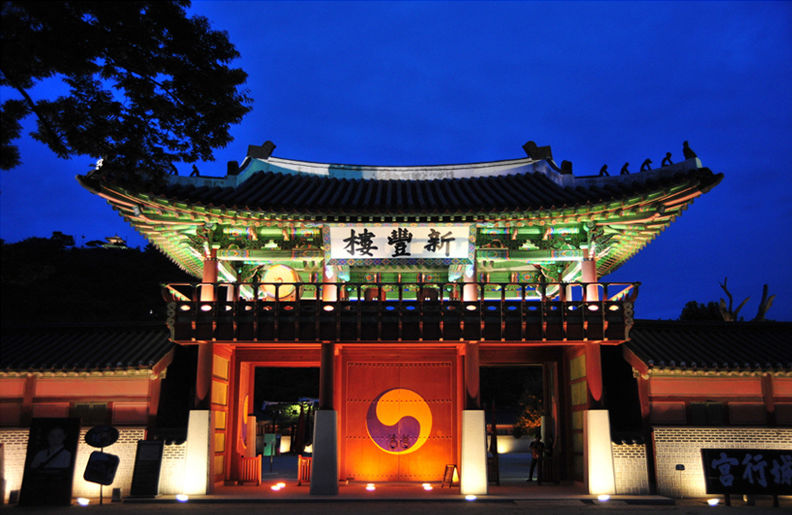
The main gate pavilion where visitors enter the palace grounds. This two-story structure demonstrates traditional Korean gate architecture with impressive curved roof and elegant proportions.
Junghwamun and Bongnamnheon:
The main throne hall area where Jeongjo conducted official business during Suwon visits. The restored throne and interior furnishings show how royal ceremonies and governance occurred during temporary palace residence.
Nangnamheon:
Residential area where Jeongjo actually stayed, demonstrating royal living quarters that are more intimate and comfortable than formal throne halls’ ceremonial grandeur.
Deokheongdang:
Performance and entertainment hall where the famous 1795 celebrations occurred, now hosting cultural performances continuing palace’s traditional function as venue for Korean performing arts.
Royal Performances and Cultural Programs
Hwaseong Haenggung regularly hosts cultural performances recreating traditional ceremonies and entertainments that would have occurred during Jeongjo’s time. The most famous is Muye24gi (무예24기), demonstration of 24 traditional Korean martial arts performed by practitioners in period costumes.
These performances occur regularly on weekends and during special cultural festivals, providing living cultural experience beyond static building viewing. The performances add educational value and entertainment while supporting practitioners maintaining traditional Korean martial arts and performance traditions.
The palace also hosts seasonal festivals recreating historical events like the Hwaseong Cultural Festival which dramatizes Jeongjo’s 1795 procession to Suwon with hundreds of participants in elaborate period costumes recreating the historical spectacle.
Pros of Visiting Haenggung
- Architectural Education: The reconstructed palace provides three-dimensional understanding of Joseon Dynasty palace architecture and spatial organization that photographs cannot convey.
- Historical Context: Visiting the palace where Jeongjo stayed creates tangible connection to his story and his emotional investment in Hwaseong as alternative governing center.
- Cultural Performances: Regular traditional performances add living cultural dimension beyond passive building observation.
- Central Location: The palace sits in central Suwon near Paldalmun Gate, making it easily combinable with fortress wall walking in single visit.
- Free or Minimal Admission: Entry costs only 1,500 won (approximately 1 USD), making it extremely affordable cultural experience.
Cons of Haenggung
- Reconstruction vs. Original: The buildings are 1990s reconstructions rather than historical originals, reducing authentic heritage value for visitors prioritizing genuine antiquity.
- Limited Interior Access: Most buildings can only be viewed from exteriors or through doorways without actual interior exploration or detailed examination.
- Modest Scale: Compared to Seoul’s grand palaces, Haenggung is smaller and less visually impressive, potentially disappointing visitors expecting spectacular architecture.
- Commercial Surroundings: Modern Suwon city crowds up against palace walls, with commercial development and urban infrastructure creating visual intrusions on historical atmosphere.
- Crowds During Performances: Popular performance times attract large crowds that fill the small palace grounds creating congestion and difficulty viewing.
STELLA’S LOCAL SECRET
The “Traditional Performance Strategy”
Check Hwaseong Haenggung’s performance schedule before visiting and time your visit to catch Muye24gi martial arts demonstration or other traditional performances. The performances transform the palace from static building display into living cultural venue demonstrating how these spaces functioned during Jeongjo’s time.
Schedule research: Visit the Suwon tourism website or Hwaseong Haenggung website before your trip to find current performance schedules. Muye24gi typically occurs on weekends at specific times (often 11:00 AM and 2:00 PM but confirm current schedule).
Photography strategy: Arrive 20-30 minutes before performances to secure good viewing position near the performance area. Early arrival allows photographing the palace buildings without crowds before people gather for performances.
Cultural enhancement: The martial arts demonstrations aren’t merely entertainment but educational experiences showing Korean military training methods from Joseon Dynasty period. Understanding this educational value rather than treating as mere tourist show increases appreciation and respect for practitioners preserving these traditions.
Practical Planning for Your Hwaseong Visit
Getting to Suwon and Hwaseong Fortress
Suwon sits approximately 30 kilometers south of Seoul, accessible by multiple convenient transportation options making fortress visiting realistic as day trip from Seoul or stopover during southern Korea travel.
Subway/Metro:
Seoul Metro Line 1 runs directly to Suwon Station with journey time approximately 60-70 minutes from Seoul Station. This represents the most economical option (approximately 2,500 won) and reliable choice avoiding traffic variability. From Suwon Station, Paldalmun Gate is 15-minute walk or short taxi ride.
KTX/High-Speed Train:
KTX trains from Seoul Station to Suwon Station take only 30 minutes but cost significantly more (approximately 8,000-10,000 won). This speed advantage works well for day trips minimizing travel time to maximize fortress visiting.
Bus:
Express and intercity buses run from various Seoul locations to Suwon, taking 40-80 minutes depending on traffic and departure point. Buses offer middle ground between subway economy and KTX speed.
Personal Vehicle:
Driving to Suwon via highway takes 40-60 minutes depending on traffic, but parking near fortress can be challenging during weekends and popular visiting times. Personal vehicle works best for visitors planning to explore beyond fortress area or continuing south after Suwon visit.
Operating Hours and Admission
Hwaseong Fortress walls and gates are accessible 24 hours daily, technically allowing sunrise to sunset walking or even night walking (though this is not recommended for safety reasons). Major gates and structures have lighting for night viewing, making evening visits atmospheric option.
Admission to walk fortress walls is free – no tickets required. However, visiting some structures like watchtowers or command posts may require small fee (typically 1,000-1,500 won). Hwaseong Haenggung Palace charges separate admission of 1,500 won for adults.
The fortress never technically “closes,” but practical visiting hours are daylight hours for safety and visibility. Summer allows extended evening visits while winter’s short daylight restricts practical visiting to midday hours.
What to Bring and Wear
Comfortable Walking Shoes:
Essential for wall walking with varied terrain including stairs, ramps, stone paths, and occasional uneven surfaces. Athletic shoes or hiking boots work well. The 5.7-kilometer circuit plus additional walking around gates and palace means substantial walking distance requiring proper footwear.
Weather Protection:
Summer requires sun protection including hat, sunscreen, and sunglasses as wall walking provides limited shade. Winter requires warm clothing including insulated coat, hat, and gloves as wall circuit exposes visitors to wind and cold for extended periods. Rain gear essential during uncertain weather as wall circuit offers no rain protection.
Water and Snacks:
Bring adequate water especially during summer when 2-3 hours of walking in heat creates significant dehydration risk. Small snacks provide energy for extended walking without relying on finding food vendors at specific locations.
Camera Equipment:
Hwaseong provides exceptional photography opportunities with dramatic gates, wall perspectives, city views, and architectural details. However, carry only equipment you’re willing to manage during extended walking – heavy professional gear becomes burdensome after an hour of walking uphill stairs.
Combining Hwaseong with Other Suwon Attractions
Korean Folk Village:
Located approximately 15 kilometers from central Suwon, this open-air museum recreates traditional Korean village life with historical buildings, artisan demonstrations, and cultural performances. Combining with Hwaseong creates comprehensive traditional culture day.
Suwon Hwaseong Museum:
Located near fortress, this museum explains Hwaseong’s history, construction techniques, and King Jeongjo’s vision through exhibits and models. Visiting museum before or after wall walking enhances understanding and appreciation.
Samsung Innovation Museum:
For contrast with traditional culture, this museum near Suwon showcases electronics and technology innovation representing modern Korean achievements. The combination creates interesting juxtaposition between traditional fortress and cutting-edge technology.
Best Times to Visit
Season:
Spring (April-May) brings cherry blossoms and azaleas creating beautiful fortress surroundings. Autumn (October-November) offers comfortable temperatures and autumn foliage. Summer is hot and humid making extended wall walking uncomfortable. Winter is cold but offers uncrowded peaceful visiting.
Day of Week:
Weekdays see far fewer tourists than weekends, particularly Monday-Thursday. Weekend crowds especially during spring and autumn can make popular sections feel congested.
Time of Day:
Early morning (before 9:00 AM) provides cool temperatures, beautiful light, and smallest crowds. Late afternoon (4:00-6:00 PM) offers good photography light and smaller crowds than midday but risks running out of daylight during winter.
Pros of Strategic Planning
- Transportation Efficiency: Multiple transport options allow choosing approach matching your budget, time, and travel style.
- Cost Control: Free fortress access and minimal palace admission make Hwaseong extremely affordable compared to many heritage sites.
- Combined Efficiency: Suwon’s compact size allows visiting fortress, palace, and museums in single day without excessive transportation time.
- Seasonal Optimization: Understanding seasonal beauty and crowds allows timing visits for optimal experience.
Cons of Visit Planning
- Distance from Seoul: 30 kilometers means dedicated half-day or full-day commitment rather than quick 1-2 hour visit.
- Time Requirements: Complete circuit plus palace and museums requires 5-6 hours, challenging for visitors with limited Seoul area time.
- Weather Dependency: Extended outdoor walking makes weather crucial to comfort, requiring flexible planning or accepting potential discomfort.
- Complexity: Multiple sites and options create planning burden determining optimal routing and timing.
STELLA’S LOCAL SECRET
The “Suwon Overnight Strategy”
Instead of day-tripping from Seoul, stay overnight in Suwon allowing morning fortress visit, afternoon rest, and evening return for illuminated fortress night photography. This relaxed two-day approach creates superior experience compared to rushed day trip.
Why this works: You can visit during optimal morning hours without commuting from Seoul, rest during midday heat or explore museums/palace, then photograph illuminated gates at night when they’re spectacularly lit creating dramatic images impossible during day visits.
Accommodation: Suwon hotels near station are economical and convenient. Rates often lower than Seoul despite good quality because Suwon is business/industrial city rather than primary tourist destination.
Culinary benefit: Suwon is famous for galbi (grilled ribs). Staying overnight allows trying authentic Suwon galbi for dinner at restaurants near fortress – local specialty that makes overnight stay more than just practical strategy but culinary experience.
Frequently Asked Questions
Q: How long should I allocate for visiting Hwaseong Fortress?
Allocate minimum 3-4 hours for basic visit including partial wall walking and Haenggung Palace. For complete wall circuit plus palace and museum, allocate 6-7 hours. Most visitors do half-day visit (4-5 hours) providing substantial experience without full circuit commitment.
Q: Can I walk the complete fortress wall circuit?
Yes, the complete 5.7-kilometer circuit is walkable in 2.5-3 hours at moderate pace. However, the circuit includes significant elevation changes with stairs and steep sections requiring moderate fitness. Many visitors walk only sections rather than complete circuit.
Q: Is Hwaseong suitable for children?
Older children interested in history and able to walk several kilometers will enjoy fortress visiting. Young children may find extended walking boring and tiring. The palace performances and night illumination appeal more to children than wall walking alone.
Q: What’s the best way to reach Hwaseong from Seoul?
Subway Line 1 to Suwon Station provides economical reliable transport (60-70 minutes, ~2,500 won). KTX train is faster (30 minutes) but costs more. From Suwon Station, Paldalmun Gate is 15-minute walk or short taxi.
Q: Is Hwaseong worth visiting if I’ve already seen Seoul’s palaces?
Yes, Hwaseong is fortress rather than palace, providing completely different architectural and historical experience. The fortress walls, military structures, and King Jeongjo’s story differ entirely from palace visiting.
Q: Can I visit Hwaseong at night?
The fortress is technically accessible 24 hours, and major gates are illuminated at night creating dramatic viewing opportunities. However, night wall walking isn’t recommended for safety reasons. Night visits work best for photographing illuminated gates from street level.
Q: What makes Hwaseong special compared to other Korean fortresses?
Hwaseong’s innovative construction techniques, comprehensive historical documentation, King Jeongjo’s emotional motivations, and the synthesis of Korean and Chinese military architecture distinguish it from older traditional Korean fortresses.
Q: Is there English signage and information?
Basic English signage exists at major gates and structures, but detailed historical and architectural explanations are minimal. Audio guides and English guidebooks are available for purchase but pre-visit research significantly enhances understanding.
Q: Can I bring food and drinks to the fortress?
Yes, visitors can bring food and drinks. However, litter disposal is visitor responsibility. Water is essential for extended wall walking, especially during summer.
Q: How does Hwaseong compare to the Great Wall of China?
While both are fortress walls, they’re completely different in scale, purpose, and experience. Great Wall is thousands of kilometers of wilderness mountain wall. Hwaseong is 5.7-kilometer urban fortress circuit. Both are impressive but not comparable in scale or visiting experience.
Walking in a King’s Footsteps
You now have comprehensive knowledge to visit Hwaseong Fortress with deep understanding of what makes this 18th-century fortification one of Korea’s most significant heritage sites. You’ve learned the tragic story of Crown Prince Sado’s death and how his son King Jeongjo built this entire fortress city as monument to filial devotion while pursuing political reform. You understand the revolutionary construction techniques and architectural innovations that made Hwaseong unique among Korean fortresses.
You know how to walk the fortress walls strategically – whether completing the full circuit for comprehensive experience or focusing on highlight sections for limited time. You’ve gained insight into why Hwaseong represents not just military architecture but enlightened governance, technological innovation, and unfulfilled political potential that makes it resonate deeply with modern Koreans.
Most importantly, you understand that Hwaseong is more than impressive walls and beautiful gates. Every stone in these fortifications represents an enlightened king’s love for his murdered father, his anger at corrupt politics, and his vision for reformed governance. Walking Hwaseong’s walls means following in the footsteps of Korea’s most progressive monarch and contemplating both what he achieved and what died with him when conservative forces prevailed.
The fortress awaits in Suwon. The walls still stand as Jeongjo designed them. The gates still proclaim his vision of brilliant, flowering governance. Your encounter with Korean Enlightenment’s brightest moment and its tragic end is about to begin.