
Korea’s Temple of Dharma Treasure
Have you ever wanted to experience a place where the world’s most comprehensive Buddhist scripture carved on 80,000 wooden blocks has survived 800 years through wars, invasions, and fires? Where UNESCO recognizes not just religious significance but extraordinary architectural innovation in buildings designed with scientific precision to preserve fragile wooden artifacts? Where you can witness one of Buddhism’s Three Jewels (the Dharma) made physical in the world’s oldest complete set of Buddhist scriptures? Where medieval Korean craftsmen created printing blocks so accurate and complete that modern scholars still use them as definitive Buddhist text references? Haeinsa Temple offers exactly this experience – but only if you understand the Tripitaka Koreana’s profound significance in Buddhist culture, appreciate the architectural genius of Janggyeong Panjeon storage halls, know how to navigate the temple’s mountain location and access restrictions, and grasp why this remote mountain temple ranks among Korea’s most spiritually and culturally significant sites.
Most visitors approach Haeinsa with limited understanding beyond “UNESCO temple with old wooden blocks” and leave with mixed reactions. They’re impressed by the beautiful mountain temple setting but frustrated by restrictions preventing close examination of the actual Tripitaka blocks. They photograph the Janggyeong Panjeon buildings from outside without understanding the sophisticated ventilation and moisture control systems that allowed wooden blocks to survive eight centuries. They walk through the temple grounds without grasping the profound Buddhist significance of housing the Dharma Jewel. They see historical artifacts but miss the human stories of desperate prayer during Mongol invasions, the political and spiritual motivations behind creating this massive scripture collection, and the architectural brilliance underlying deceptively simple storage buildings.
I understand that superficial engagement completely. My first Haeinsa visit was rushed afternoon stop during Gayasan hiking trip, quickly photographing temple buildings, peering through Janggyeong Panjeon’s grilles at distant wooden blocks, then leaving without emotional connection or deep appreciation. The temple seemed pleasant and historically significant but not personally meaningful or spiritually moving. Only after reading extensively about the Tripitaka’s creation during Mongol invasions and returning for contemplative early morning visit did I begin to grasp Haeinsa’s profound significance.
That’s why this comprehensive guide exists. I’m going to share everything you need to transform Haeinsa from a pleasant mountain temple visit into a meaningful encounter with Korean Buddhism’s greatest treasure and the desperate faith that created it. You’ll learn the full story of how 13th-century Koreans, facing devastating Mongol invasions, carved 80,000 wooden printing blocks as spiritual defense against military catastrophe. You’ll understand the architectural and engineering sophistication of buildings that preserved fragile wooden artifacts for 800 years without modern climate control. You’ll discover how to visit this remote mountain temple efficiently while respecting its continuing function as active Buddhist monastery. You’ll gain insight into why Haeinsa is designated one of Korea’s Three Jewel Temples representing the Dharma.
By the end of this guide, you’ll know how to visit Haeinsa with understanding that transforms wooden blocks into evidence of faith, determination, and the Buddhist belief that spiritual truth provides ultimate protection against worldly suffering. You’ll appreciate why UNESCO designated these medieval buildings and their contents as World Heritage despite Korea having older temples and larger Buddhist complexes. You’ll understand what makes the Tripitaka Koreana unique even among Asia’s many Buddhist scripture collections. Most importantly, you’ll grasp why Korean Buddhists revere Haeinsa as one of their most sacred sites and why protecting the Tripitaka remains cultural priority 800 years after its creation.
The Tripitaka Koreana: Buddhism’s Most Complete Scripture
Understanding the Tripitaka and Its Buddhist Significance
The Tripitaka (삼장/三藏), meaning “Three Baskets,” represents the complete collection of Buddhist scriptures containing the Buddha’s teachings (Sutras), monastic rules (Vinaya), and philosophical treatises (Abhidharma). Creating complete Tripitaka was enormous undertaking requiring decades of work by hundreds of scholar-monks collecting, translating, editing, and organizing thousands of texts into coherent canonical collection.
The Haeinsa Tripitaka Koreana (팔만대장경/八萬大藏經), also called Palman Daejanggyeong meaning “Eighty Thousand Tripitaka,” consists of 81,258 wooden printing blocks carved between 1236 and 1251 during Korea’s Goryeo Dynasty. Each block measures approximately 70cm x 24cm and contains Buddhist texts carved in Classical Chinese characters on both sides, creating over 52 million characters total – representing the most complete collection of Buddhist scriptures in existence.
What makes Haeinsa’s Tripitaka special isn’t merely completeness but accuracy and preservation. The texts were meticulously edited by leading Buddhist scholars who compared multiple Chinese, Korean, and other Asian versions, correcting errors and creating definitive versions. Modern Buddhist scholars worldwide still reference Haeinsa’s Tripitaka as the most accurate and reliable Buddhist scripture source, demonstrating that 13th-century Korean scholarship achieved standards exceeding many later attempts.
The creation required extraordinary organization and dedication. Teams of scholar-monks researched and edited texts. Master craftsmen carved characters with precision ensuring clarity and consistency across 80,000 blocks. Quality control systems verified accuracy. The entire project represented medieval Korea’s largest collaborative intellectual and religious undertaking.
The Mongol Invasions and Spiritual Defense
The Tripitaka Koreana’s creation was motivated by desperate circumstances. Beginning in 1231, Mongol armies invaded Korea repeatedly, devastating the peninsula with extraordinary brutality. Korean military resistance proved ineffective against Mongol cavalry tactics, and the kingdom faced potential complete destruction. The royal court and many Koreans fled to Ganghwa Island seeking protection while Mongol forces ravaged the mainland.
Faced with military catastrophe, Korean Buddhist leaders proposed spiritual solution – create perfect complete Tripitaka as act of faith and devotion that would invoke Buddhist protection against the Mongol threat. This wasn’t naive superstition but profound Buddhist conviction that spiritual merit accumulated through massive scriptural project would create karmic force protecting Korea from destruction.
An earlier Tripitaka created during 11th century Khitan invasions had been destroyed by Mongols, ironically demonstrating that previous spiritual defense had failed. The new Tripitaka would be even more complete, more accurate, and represent even greater spiritual merit, creating sufficient karmic protection to end Mongol aggression.
The 16-year carving project (1236-1251) occurred during ongoing Mongol invasions, making the achievement even more remarkable. While Korea suffered military devastation, scholar-monks and craftsmen worked methodically creating this massive scripture collection. The dedication required to maintain such intellectual and spiritual focus during national catastrophe demonstrates extraordinary commitment to Buddhist faith.
Ultimately, the Tripitaka didn’t provide magical military defense – Mongols eventually forced Korean submission in 1259. However, Korean kingdom survived as vassal state rather than being completely destroyed like many other Mongol conquest targets. Korean Buddhists interpreted this survival as proof that Tripitaka creation had worked spiritually even if it hadn’t prevented military defeat.
Why the Tripitaka Survived 800 Years
The remarkable survival of wooden printing blocks for over 800 years represents one of cultural preservation’s greatest achievements. Wooden artifacts normally deteriorate through insect damage, rot, fire, and simple aging, making multi-century survival exceptional. That 80,000 wooden blocks survived largely intact demonstrates both fortunate circumstances and brilliant preservation architecture.
The blocks survived multiple existential threats. During Japanese invasions (1592-1598), Buddhist monks protected the Tripitaka, moving it to safety while many other Korean cultural treasures were destroyed. During Joseon Dynasty (1392-1910) when Neo-Confucianism suppressed Buddhism, the Tripitaka’s cultural significance protected it from destruction that befell many Buddhist institutions. During Japanese colonial period (1910-1945) and Korean War (1950-1953), the blocks again survived while countless other heritage sites were destroyed.
The Janggyeong Panjeon buildings housing the blocks incorporate sophisticated ventilation and moisture control systems that created stable environment preserving wood for centuries. The architectural solutions – which we’ll explore in detail later – represent scientific understanding of material preservation that modern conservation experts still admire.
The cultural reverence for the Tripitaka also protected it. Even during anti-Buddhist periods, Korean authorities recognized the Tripitaka’s cultural and historical value transcending religious significance. This secular appreciation combined with Buddhist devotion created broad-based commitment to preservation that survived political and social changes.
UNESCO World Heritage Recognition
UNESCO designated the Tripitaka Koreana and Janggyeong Panjeon as World Heritage Site in 1995, recognizing both the scripture blocks’ Buddhist significance and the storage buildings’ architectural achievement. The citation praised the Tripitaka as “the most complete collection of Buddhist texts, laws, and treatises extant, as well as the oldest” and called the Janggyeong Panjeon “a unique repository of Buddhist culture and one of the most important historical monuments in Korea.”
The designation emphasized the Tripitaka’s outstanding universal value to world cultural heritage, not just Korean or Buddhist importance. UNESCO recognized that these blocks preserve knowledge and spiritual wisdom belonging to all humanity regardless of religious belief.
The recognition brought international attention and tourism but also created preservation challenges. Increased visitor numbers threatened the fragile blocks and disrupted temple life. Managing tourism while protecting sacred artifacts and maintaining active monastic community creates ongoing tensions that Haeinsa continues navigating.
Personal Story: Understanding Through Contemplation
During my rushed first Haeinsa visit, I took photos through Janggyeong Panjeon grilles, saw stacks of wooden blocks, thought “interesting old artifacts,” and left after 30 minutes. I felt no emotional connection or spiritual significance – just tourist obligation completed.
Years later, I returned on quiet weekday morning after reading about the Mongol invasions and Tripitaka creation. Standing before the Janggyeong Panjeon, I tried imagining 13th-century Koreans desperately carving these blocks while their country burned, believing that creating perfect scriptures would save their nation from annihilation.
Looking at the thousands of blocks visible through the grilles – each carved by hand, each representing hours of meticulous work, all created during national catastrophe – I felt profound emotion. These weren’t just historical artifacts but evidence of faith so strong that people invested decades of work in spiritual project while facing military devastation.
An elderly Buddhist monk approached and through limited English explained that for Korean Buddhists, the Tripitaka represents the Dharma (Buddhist teachings) made physical. “The Buddha’s words are here,” he said, gesturing to the blocks. “For 800 years, protected, preserved, still perfect. This is why Haeinsa is sacred.”
That moment transformed my understanding. The Tripitaka stopped being mere historical curiosity and became monument to the human capacity for faith, dedication, and spiritual commitment that transcends immediate material circumstances. Standing before these blocks means standing before evidence of belief so profound that it motivated one of history’s greatest cultural preservation achievements.
Pros of Understanding the Tripitaka
- Buddhist Insight: Understanding the Tripitaka’s significance in Buddhist culture and Korean history adds profound meaning to visiting what might otherwise seem like just old wooden blocks.
- Historical Context: The Mongol invasion backstory creates emotional narrative transforming abstract artifacts into evidence of specific human struggle and faith.
- Cultural Appreciation: Recognizing the scholarly achievement – accuracy, completeness, preservation – demonstrates medieval Korean intellectual sophistication.
- UNESCO Validation: World Heritage designation confirms significance transcending Korean or Buddhist importance, marking these blocks as belonging to world cultural heritage.
- Spiritual Depth: For Buddhist practitioners and spiritually-minded visitors, the Tripitaka provides tangible encounter with preserved Dharma teachings spanning centuries.
Cons of Tripitaka Visiting
- Limited Access: Visitors cannot enter Janggyeong Panjeon or examine blocks closely, viewing only from outside through protective grilles creating physical and psychological distance.
- Visual Disappointment: The blocks appear as stacks of wooden rectangles without obvious visual drama or beauty, potentially disappointing visitors expecting spectacular artifacts.
- Understanding Requirements: Without substantial background knowledge about Buddhism, Tripitaka significance, and Korean history, the blocks seem merely old printing technology rather than profound cultural treasure.
- Access Difficulty: Haeinsa’s remote mountain location requires significant travel effort that may seem disproportionate to brief viewing of artifacts seen only from distance.
- Active Temple Restrictions: As functioning monastery, Haeinsa restricts certain areas and behaviors, limiting visitors’ freedom to explore comprehensively.
STELLA’S LOCAL SECRET
The “Tripitaka Historical Context Pre-Study”
Before visiting Haeinsa, spend 30-45 minutes reading about the Mongol invasions of Korea (1231-1259), the Goryeo Dynasty’s crisis, and the decision to create the Tripitaka as spiritual defense. Wikipedia articles on these topics provide sufficient background. This preparation transforms wooden blocks from abstract artifacts into evidence of specific historical moment and human response to catastrophe.
Focus areas: Read specifically about how Mongols devastated Korea, why military defense failed, and how Buddhists proposed scripture creation as alternative protection strategy. Understanding the desperation and faith underlying the project makes the blocks emotionally resonant rather than merely historically interesting.
Why this matters: With historical context, standing before the Janggyeong Panjeon becomes standing before monument to faith tested by catastrophe. You’ll understand these blocks weren’t created during peaceful prosperous times but during national emergency when Koreans sought spiritual solution to military crisis that conventional means couldn’t solve.
Educational enhancement: If possible, read about Buddhist Tripitaka concept – what texts it contains, why completeness and accuracy matter, and how scripture collections function in Buddhist practice. This religious context complements the historical narrative, creating fuller appreciation of what Haeinsa preserves.
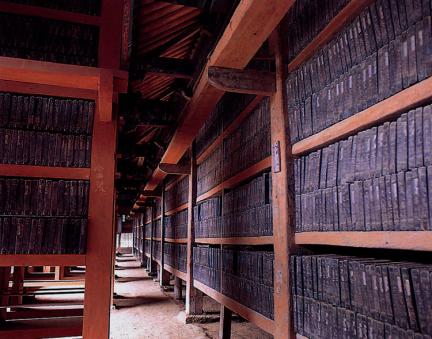
Janggyeong Panjeon: Architectural Preservation Genius
Understanding the Storage Buildings’ Scientific Design
The Janggyeong Panjeon (장경판전), meaning “Tripitaka Storage Halls,” consists of four buildings constructed in 15th century to house the Tripitaka blocks. The two main buildings – Sudarajang and Beopbojeon – demonstrate sophisticated understanding of material preservation through architectural design that modern conservation science admires.
The buildings appear deceptively simple – traditional Korean wooden structures with tiled roofs and wooden walls. However, every architectural detail serves the precise function of creating stable environment protecting wooden blocks from deterioration that would normally destroy organic materials over centuries.
The most remarkable features are the window systems incorporating different-sized openings creating natural ventilation that maintains consistent temperature and humidity without any mechanical systems. The windows on different walls have varying dimensions and positioning creating air circulation patterns that prevent moisture accumulation, moderate temperature extremes, and provide gentle continuous air movement preventing stagnation.
The north and south walls have different window designs creating pressure differentials that drive natural airflow. The southern wall has smaller, more numerous windows. The northern wall has larger, fewer windows. This asymmetry creates convection currents moving air through buildings in patterns that modern computational fluid dynamics analysis confirms as optimal for preservation.
The buildings sit on foundation designs preventing ground moisture from rising into structures. The floor uses layers of charcoal, salt, clay, and sand creating moisture barrier and dehumidification system. These traditional materials absorbed excess humidity while releasing it during dry periods, creating naturally regulated environment.
The roof design with generous eaves protects walls from direct sun and rain while allowing air circulation. The building orientation considers seasonal sun angles and prevailing wind patterns, demonstrating sophisticated environmental awareness applied to preservation needs.
Why Modern Technology Cannot Improve the Design
When Korea considered installing modern climate control systems in the 1990s to “improve” block preservation, scientific analysis revealed that the traditional building design already maintained nearly optimal conditions. Computer modeling showed the natural ventilation system created more stable temperature and humidity than mechanical HVAC systems could achieve.
Experts discovered that the buildings maintain remarkably consistent internal conditions despite extreme external weather variations. Summer heat and winter cold outside barely affect internal temperature. Monsoon humidity and winter dryness outside produce minimal internal humidity fluctuation. This stability results from centuries of careful observation and incremental design refinement creating empirical solutions that modern science can explain but cannot improve.
Installing mechanical climate control would actually worsen conditions by introducing temperature and humidity fluctuations when systems cycle on and off, disrupting the stable equilibrium that natural systems maintain continuously. The traditional design operates 24/7 without power, without maintenance, without failure points that mechanical systems inevitably develop.
This architectural achievement represents profound empirical knowledge about material preservation that Korean craftsmen developed through observation and experimentation over centuries. Modern preservation science can explain why the design works using contemporary physics and engineering principles, but cannot create superior solutions using modern technology.
The Preservation Mystery: Why Blocks Survived
Beyond architectural protection, the blocks themselves demonstrate remarkable durability raising questions about wood treatment and material selection. Analysis reveals the blocks were made from birch wood soaked in sea water for three years, then boiled in salt water, then dried slowly over several years before carving. This complex treatment process created wood resistant to insects, rot, and warping.
The carved surfaces were treated with natural lacquer providing additional protection while allowing wood to breathe preventing moisture accumulation inside blocks. The careful surface preparation and treatment represents sophisticated understanding of wood preservation chemistry achieved through traditional empirical methods.
The blocks are stored on racks allowing air circulation around all surfaces, preventing moisture accumulation and allowing blocks to expand and contract uniformly with humidity changes. This storage method prevents warping and cracking that occurs when wood dries or absorbs moisture unevenly.
The combination of building design, wood treatment, and storage methods created preservation system so effective that 800-year-old blocks show minimal deterioration and remain usable for printing – remarkable achievement demonstrating Korean medieval expertise in material preservation.
Viewing Restrictions and Preservation Priority
Visitors cannot enter Janggyeong Panjeon buildings or examine blocks closely, viewing only from outside through protective metal grilles installed to prevent theft and damage while allowing visual access. This restriction frustrates many visitors wanting close examination but reflects necessary preservation priority.
Opening buildings to tourist traffic would introduce moisture from breath, temperature fluctuations from body heat, dust and contaminants from clothing and shoes, and physical damage risks from accidental contact. The preservation system maintaining stability for 800 years cannot accommodate modern mass tourism without compromising long-term block survival.
The metal grilles were installed after theft concerns and accidental damage incidents demonstrated that visual access without physical barriers created unacceptable risks. While the grilles reduce viewing quality and create disappointing tourist experience, they represent responsible heritage management prioritizing preservation over visitor satisfaction.
Photography through grilles is technically prohibited though enforcement varies. The restriction aims to maintain sacred atmosphere and prevent flash damage to blocks and lacquer surfaces. However, the prohibition frustrates visitors who want documentation or detailed study of what they can only glimpse from distance.
Pros of Architectural Appreciation
- Scientific Interest: Understanding the sophisticated ventilation and preservation systems adds intellectual appreciation beyond simple aesthetic response to traditional buildings.
- Engineering Achievement: Recognition that medieval builders created solutions modern technology cannot improve demonstrates remarkable empirical knowledge and observation skills.
- Preservation Success: The 800-year block survival validates the architectural approach, demonstrating that traditional methods achieved extraordinary results deserving continued respect and use.
- UNESCO Recognition: The buildings’ architectural significance earned separate World Heritage consideration beyond the blocks themselves, validating preservation architecture as cultural achievement.
Cons of Access Restrictions
- Viewing Limitations: The grilles and distance prevent detailed block examination, close photography, or the intimate encounter that direct access would provide.
- Disappointing Experience: Many visitors feel frustrated investing travel effort to see artifacts they can barely see from distance through protective barriers.
- Limited Understanding: Without close access, appreciating the blocks’ detail – character carving precision, surface treatment, condition variations – becomes impossible.
- Photography Challenges: Grille interference, lighting restrictions, and prohibition on photography prevent documentation and detailed study through images.
STELLA’S LOCAL SECRET
The “Janggyeong Panjeon Ventilation Study Walk”
Instead of focusing frustrated attention on the distant blocks visible through grilles, examine the Janggyeong Panjeon buildings’ architectural details demonstrating the preservation system. Study the different window sizes, positions, and patterns. Observe the foundation design. Notice the roof structure and eaves. Understanding the preservation architecture provides intellectual satisfaction that compensates for inability to examine blocks closely.
Observation strategy: Walk around buildings’ perimeter (where permitted) noting how window designs differ on north versus south walls, east versus west walls. The variations aren’t random aesthetic choices but calculated features creating optimal air circulation. This systematic study reveals the scientific thinking underlying traditional construction.
Educational enhancement: Visit Haeinsa Museum or read displays explaining the ventilation system principles before viewing actual buildings. Understanding the theory makes observing physical implementation more meaningful. You’ll see not just old wooden buildings but sophisticated preservation technology disguised as traditional architecture.
Photographic approach: Photograph the building exteriors showing window patterns and architectural details rather than attempting to photograph blocks through grilles. These architectural images document important aspects tourists usually ignore while capturing genuine historical and scientific significance.
Haeinsa Temple Complex: Beyond the Tripitaka
Understanding Haeinsa as Complete Buddhist Temple
While the Tripitaka is Haeinsa’s most famous feature, the temple complex includes numerous significant buildings, Buddha statues, cultural artifacts, and beautiful mountain setting that together create comprehensive Korean Buddhist temple experience. Visiting only the Janggyeong Panjeon misses substantial cultural and spiritual richness that Haeinsa offers.
Haeinsa was founded in 802 CE, making it over 1,200 years old and predating the Tripitaka by four centuries. The temple’s original purpose was conventional Buddhist monastery practicing meditation, conducting ceremonies, and teaching Buddhist philosophy. The temple’s designation as Tripitaka repository occurred later, transforming it from ordinary temple into one of Korea’s Three Jewel Temples.
The Three Jewel Temples (삼보사찰/三寶寺刹) represent the Three Jewels of Buddhism – Buddha, Dharma, and Sangha (enlightened community). Tongdosa Temple in Yangsan represents Buddha through preserving relics. Haeinsa represents Dharma through preserving scripture. Songgwangsa Temple in Suncheon represents Sangha through producing many eminent monks. This theological designation elevates Haeinsa’s significance beyond architectural or historical interest into fundamental Buddhist spiritual importance.
Major Temple Buildings and Their Functions
Daejeokgwangjeon Hall:
The main worship hall containing a large Vairocana Buddha statue representing cosmic Buddha from whom all teaching flows. This hall serves as primary ceremonial space where monks conduct daily services and major Buddhist ceremonies occur.
Myeongjueon Hall:
Contains thousand-armed Avalokiteshvara (Bodhisattva of Compassion) demonstrating the deity’s infinite compassion reaching all beings in all directions simultaneously. The statue represents Mahayana Buddhist ideal of boundless compassion toward all sentient beings.
Haetalmun Gate:
The entrance gate with name meaning “Gate of Liberation from Suffering,” representing the Buddhist teaching that entering temple grounds means stepping from worldly suffering into spiritual refuge and potential enlightenment.
Three Story Stone Pagoda:
A traditional Korean stone pagoda demonstrating classic Silla Dynasty architectural style, containing Buddhist relics and symbolizing the Buddha’s presence and teaching spreading through three realms of existence.
The Temple’s Mountain Setting
Haeinsa sits within Gayasan National Park on the slopes of Gayasan Mountain, creating spectacular natural setting that enhances spiritual atmosphere. Korean Buddhism traditionally embraced mountain monasticism, with temples positioned in beautiful natural settings supporting meditation and spiritual practice away from worldly distractions.
The mountain approach to Haeinsa creates graduated spiritual transition from worldly realm to sacred space. Visitors drive or hike through increasingly forested mountain terrain, crossing streams and passing through gates, creating physical journey representing spiritual progression toward temple’s sacred center.
The changing seasons create dramatic transformation of temple surroundings. Spring brings cherry blossoms and azaleas. Summer creates lush green forest canopy. Autumn transforms mountains into spectacular red, orange, and yellow foliage displays. Winter brings snow-covered temple roofs and bare trees revealing underlying landscape forms. Each season offers different aesthetic experience while maintaining spiritual atmosphere.
The mountain location creates challenges for visitors requiring significant travel time and effort compared to urban temples, but provides the peaceful contemplative setting that Korean Buddhist tradition values and that enhances temple visiting from mere tourism into potential spiritual encounter.
Temple Stay Programs
Haeinsa offers temple stay programs allowing visitors to experience Buddhist monastic life for one or more nights, including meditation practice, Buddhist ceremonies, temple meals, and interaction with resident monks. These immersive programs provide cultural and spiritual depth impossible through brief day visits.
Temple stay participants wake early (around 3:30-4:00 AM) for morning service, practice meditation and Buddhist chanting, eat simple vegetarian temple meals, participate in work practice, and experience monastic daily rhythm. The schedule is demanding but provides genuine encounter with Korean Buddhist practice rather than tourist observation.
Temple stay requires advance reservation and commitment to following temple rules including no alcohol, no smoking, modest dress, respectful behavior, and participation in scheduled activities. The programs aren’t tourism entertainment but educational cultural immersion requiring serious engagement and respect for Buddhist practice.
Pros of Complete Temple Experience
- Comprehensive Buddhism: Experiencing the full temple complex provides balanced understanding of Korean Buddhism beyond just the Tripitaka, showing living religious practice rather than just historical artifacts.
- Natural Beauty: The mountain setting creates contemplative atmosphere and aesthetic pleasure enhancing spiritual and cultural dimensions of temple visiting.
- Active Monastery: Unlike some heritage sites that are essentially museums, Haeinsa functions as active monastery with resident monks practicing Buddhism, creating authentic religious atmosphere.
- Temple Stay Depth: The immersion programs offer profound cultural and spiritual experiences impossible through conventional tourism, appealing to visitors seeking deeper engagement.
Cons of Temple Visiting
- Remote Location: Gayasan’s mountain position requires substantial travel time from major cities, making Haeinsa challenging destination for visitors with limited time or mobility issues.
- Limited Explanations: English signage and information are minimal, leaving international visitors without essential context to understand buildings, ceremonies, and Buddhist symbolism.
- Religious Restrictions: As active monastery, Haeinsa restricts certain areas, behaviors, and times creating limitations frustrating for tourists accustomed to comprehensive access at heritage sites.
- Physical Demands: The mountain terrain includes stairs, slopes, and walking distances challenging for elderly visitors, those with mobility limitations, or families with young children.
STELLA’S LOCAL SECRET
The “Early Morning Ceremony Attendance”
If staying overnight in Haeinsa area (or through temple stay program), attend the early morning Buddhist ceremony around 4:00 AM when resident monks conduct daily chanting and meditation service. Visitors can observe quietly from back of the hall, experiencing authentic Buddhist practice in the same sacred space housing the Tripitaka.
Why this works: Early morning ceremonies show Haeinsa as living spiritual community rather than tourist attraction. The monks’ chanting, the incense, the formal movements, and the pre-dawn darkness create profound atmosphere impossible during daytime tourist visiting.
Cultural respect: Maintain complete silence, sit or stand in designated observer areas, avoid photography, and stay for the entire ceremony (usually 30-45 minutes) rather than arriving late or leaving early. Your respectful observation demonstrates appreciation for Buddhist practice rather than treating ceremony as tourist entertainment.
Spiritual benefit: Even for non-Buddhist visitors, witnessing sincere religious practice in ancient temple at dawn creates memorable experience connecting to centuries of monks who performed identical ceremonies in these same halls. The experience transcends religious boundaries into human appreciation for spiritual dedication and ritual beauty.

Practical Planning for Your Haeinsa Visit
Getting to Haeinsa from Major Cities
Haeinsa’s location in Gayasan National Park approximately 25 kilometers from Hapcheon town and 80 kilometers from Daegu creates access challenges requiring careful transportation planning. No direct public bus runs from major cities to the temple, requiring transfers and coordination.
From Seoul:
Take KTX train from Seoul to Daegu (approximately 1.5-2 hours), then intercity bus from Daegu to Haeinsa (approximately 1.5 hours), total journey time 3.5-4 hours. This represents the fastest public transportation option though it requires two transfers and coordination.
Alternative: Take intercity bus from Seoul Express Bus Terminal directly to Hapcheon (approximately 3.5-4 hours), then local bus to Haeinsa (30-40 minutes). This option has fewer transfers but longer total journey time.
From Busan:
Take intercity bus from Busan to Hapcheon (approximately 1.5 hours), then local bus to Haeinsa (30-40 minutes). Or take train/bus to Daegu, then bus to Haeinsa. Total journey approximately 2.5-3 hours.
From Daegu:
Intercity bus from Daegu West Bus Terminal directly to Haeinsa runs approximately every 1-2 hours, taking about 1.5 hours. This is the most convenient public transportation access.
Personal Vehicle:
Driving provides maximum flexibility and allows exploring Gayasan National Park beyond just temple visiting. From Daegu, driving takes approximately 1.5 hours via highway. GPS navigation works reliably for foreign drivers.
Organized Tours:
Tour companies offer day trips to Haeinsa from Seoul, Busan, and Daegu, handling all transportation and usually including guide services. Tours work well for visitors prioritizing convenience over flexibility and depth of experience.
Operating Hours and Admission
Haeinsa operates year-round with seasonal hours. The temple grounds open at sunrise and close at sunset, with specific hours varying by season (approximately 6:00 AM to 6:00 PM in summer, 7:00 AM to 5:00 PM in winter). Last admission is 30 minutes before closing.
Admission costs 3,000 won for adults entering Gayasan National Park (separate from temple admission), plus temple admission of 3,000 won for adults, 1,500 won for teenagers, and 1,000 won for children. Senior citizens over 65 receive discounted admission. These modest fees reflect Korean cultural policy making heritage accessible rather than treating it as premium tourism product.
Temple stay programs require separate reservation and payment, typically costing 50,000-70,000 won per person per night including accommodation, meals, and program activities. Reservation must be made in advance through Haeinsa’s temple stay website or Korean temple stay portal.
What to Bring and Wear
Modest Clothing:
Essential for respectful temple visiting. Shoulders must be covered, shorts and skirts should reach at least to knees, and generally conservative dress shows appropriate respect for active religious site. While Haeinsa doesn’t enforce strict dress codes, visitors dressed inappropriately may receive disapproving looks from monks and Buddhist practitioners.
Comfortable Walking Shoes:
The temple complex includes stairs, stone pathways, and walking between buildings scattered across hillside terrain. Athletic shoes or walking shoes work well. The surfaces can be slippery when wet, making appropriate footwear important for safety.
Weather Appropriate Layers:
Mountain weather can differ significantly from lowland temperatures, with cooler conditions, stronger winds, and different precipitation patterns. Bring layers allowing adjustment to changing conditions throughout day.
Temple Stay Preparation:
If participating in temple stay, bring comfortable loose clothing suitable for meditation and temple work, toiletries (soap and shampoo provided but bring personal items), flashlight for early morning navigation, and open mind for cultural and spiritual immersion.
Best Times to Visit
Season:
Autumn (October-November) offers spectacular mountain foliage creating extraordinarily beautiful temple setting, though this season attracts largest crowds. Spring (April-May) brings cherry blossoms and azaleas with moderate crowds. Summer provides lush greenery but involves heat and monsoon rains. Winter offers solitude and snow-covered beauty but requires tolerance for serious cold.
Day of Week:
Weekdays see significantly fewer visitors than weekends. Tuesday through Thursday typically offer quietest conditions allowing more contemplative temple experience and easier photography without crowds.
Time of Day:
Early morning (temple opening until 10:00 AM) provides coolest temperatures during summer, beautiful light, and smallest crowds. Late afternoon (4:00-6:00 PM) offers good photography light but risks limited viewing time before closing.
Combining Haeinsa with Other Attractions
Gayasan National Park:
The park offers numerous hiking trails from easy nature walks to challenging mountain climbs. Combining temple visit with hiking creates full day outdoor and cultural experience.
Hapcheon Filming Locations:
The nearby Hapcheon Dam area features filming locations from popular Korean historical dramas. Drama fans can combine temple culture with K-drama tourism.
Daegu:
As major city nearest Haeinsa, Daegu offers urban amenities, shopping, food, and attractions creating balance between remote temple spirituality and contemporary Korean urban life.
Pros of Strategic Planning
- Transportation Understanding: Knowing complex access options allows choosing approach matching budget, time, and travel style preferences.
- Timing Optimization: Understanding seasonal beauty, crowd patterns, and daily schedule allows visiting during conditions maximizing experience quality.
- Realistic Expectations: Understanding remote location and travel requirements prevents disappointment from underestimating journey difficulty or time consumption.
- Combined Efficiency: Planning Haeinsa with other regional attractions maximizes cultural and natural experience value from one trip to relatively remote area.
Cons of Access Challenges
- Time Consumption: 3-4 hour journey from Seoul means dedicating full day or overnight trip rather than casual half-day visit.
- Transportation Complexity: Multiple bus transfers, infrequent schedules, and coordination challenges create logistical complexity frustrating travelers preferring simple direct access.
- Limited Flexibility: Public bus schedules restrict visiting time and create pressure to finish temple touring before last bus departure.
- Physical Distance: Remote location makes spontaneous visits impossible, requiring advance planning and significant travel commitment.
STELLA’S LOCAL SECRET
The “Hapcheon Overnight Strategy”
Stay overnight in Hapcheon town rather than attempting day trip from Seoul or Busan. Visit Haeinsa early morning when temple first opens (around 6:00-7:00 AM depending on season), experiencing morning ceremonies and peaceful atmosphere before tourist buses arrive. After temple touring, spend afternoon hiking Gayasan trails or exploring Hapcheon area before departing next day.
Why this works: Early morning temple visiting provides nearly solitary experience impossible during normal tourist hours. You’ll witness morning ceremonies, see monks conducting daily activities, and experience Haeinsa as functioning monastery rather than tourist attraction. The overnight strategy eliminates rushed schedule pressure allowing contemplative visiting pace.
Accommodation: Hapcheon has modest but adequate hotels and guesthouses at rates significantly lower than major cities. The town isn’t tourist-oriented, providing authentic Korean local experience rather than sanitized tourism environment.
Cultural benefit: Staying in Hapcheon and taking local bus to temple creates experience closer to how Korean Buddhist pilgrims visit – making deliberate journey to remote sacred site rather than tourist day trip checking boxes on heritage list. The slower, more intentional approach enhances spiritual and cultural dimensions of temple visiting.
Frequently Asked Questions
Q: How long should I allocate for visiting Haeinsa?
Allocate 2-3 hours minimum for basic temple touring including Janggyeong Panjeon, main halls, and temple grounds. Add 1-2 hours if combining with short Gayasan hiking. Temple stay programs require overnight commitment (typically one or two nights).
Q: Can I see the actual Tripitaka blocks closely?
No. Visitors view blocks only from outside Janggyeong Panjeon through protective grilles. Close examination is prohibited to protect blocks from tourist damage and theft. The viewing distance frustrates some visitors but represents necessary preservation priority.
Q: Is Haeinsa worth visiting if I’ve already seen other Korean temples?
Yes, if you’re interested in Buddhist scripture, preservation architecture, or experiencing one of Korea’s Three Jewel Temples. The Tripitaka and Janggyeong Panjeon are unique features unavailable at other temples. However, casual temple tourists may find the remote location and limited access frustrating.
Q: What’s the best way to reach Haeinsa from Seoul?
KTX train to Daegu, then intercity bus to Haeinsa provides fastest journey (3.5-4 hours total). Alternatively, direct intercity bus Seoul to Hapcheon, then local bus to temple. Organized tour provides convenience but limits visiting time and flexibility.
Q: Can I participate in Buddhist ceremonies?
Yes, visitors can observe morning and evening ceremonies from designated areas, maintaining respectful silence and behavior. Temple stay programs include structured participation in ceremonies, meditation, and Buddhist practices under monk guidance.
Q: Is Haeinsa suitable for children?
Older children interested in history and culture will find Haeinsa educational. Young children may find the quiet temple atmosphere restrictive and the Tripitaka blocks visually boring despite their historical significance. The mountain setting provides natural interest that may engage children more than temple architecture.
Q: Why is Haeinsa called a “Jewel Temple”?
Haeinsa is one of Korea’s Three Jewel Temples representing the Three Jewels of Buddhism (Buddha, Dharma, Sangha). Haeinsa specifically represents the Dharma (Buddhist teachings) through preserving the Tripitaka Koreana – the most complete collection of Buddhist scriptures.
Q: Can I take photos of the Tripitaka blocks?
Photography is technically prohibited inside temple buildings including through Janggyeong Panjeon grilles, though enforcement varies. Even where tolerated, photographing through grilles from distance produces poor results. Exterior architecture photography is generally permitted.
Q: How does Haeinsa compare to Chinese or Japanese Buddhist temples?
Haeinsa shares some similarities with other East Asian Buddhist temples but is distinctly Korean in architecture, layout, and spiritual practice. The Tripitaka Koreana is unique to Haeinsa – no equivalent complete scripture collection exists elsewhere. The mountain temple setting reflects Korean Buddhist tradition emphasizing nature integration.
Q: Is there accommodation near Haeinsa?
Temple stay programs provide authentic monastic accommodation at Haeinsa itself. Nearby Hapcheon town offers hotels and guesthouses. The small village near temple has minbak (homestays) and pensions for visitors wanting to stay very close to temple.
Conclusion: Encountering the Dharma Jewel
You now have comprehensive knowledge to visit Haeinsa Temple with deep understanding of what makes this remote mountain temple one of Korea’s most significant Buddhist sites. You’ve learned the dramatic story of how 13th-century Koreans, facing devastating Mongol invasions, carved 80,000 wooden blocks containing Buddhist scriptures as spiritual defense against military catastrophe. You understand the architectural genius of Janggyeong Panjeon buildings that preserved fragile wooden artifacts for 800 years through sophisticated natural ventilation systems modern technology cannot improve.
You know how to navigate the challenging journey to Haeinsa’s mountain location and how to time your visit for optimal experience minimizing crowds while maximizing contemplative atmosphere. You’ve gained insight into why Haeinsa is designated one of Korea’s Three Jewel Temples and what the Tripitaka represents in Buddhist culture and Korean heritage.
Most importantly, you understand that Haeinsa is more than impressive historical artifacts or beautiful temple buildings. Every wooden block in the Tripitaka represents faith so strong that people invested 16 years in meticulous scholarly and craft work during national catastrophe, believing that spiritual merit would provide ultimate protection. The 800-year survival of these blocks demonstrates cultural commitment to preservation that transcended political changes, religious suppression, wars, and invasions.
Haeinsa awaits in the mountains of Gayasan. The Tripitaka blocks rest in their scientifically designed storage halls as they have for centuries. The Dharma teachings the Buddha transmitted 2,500 years ago remain preserved in wood carved by desperate, faithful hands 800 years ago. Your encounter with Korean Buddhism’s greatest treasure is about to begin.