
Navigating Korea’s Ultimate Street Food Capital
Have you ever wondered where Seoul’s 10+ million residents and countless international visitors discover authentic Korean flavors at prices that seem impossibly affordable, what makes Korean street food culture create communities around simple food carts while preserving centuries-old recipes adapted for modern urban life, how traditional Korean snacks evolved into sophisticated street food ecosystems that rival world’s greatest food cities, and why Seoul’s street food districts each develop distinctive characteristics reflecting neighborhood culture while maintaining authentic Korean flavors that connect contemporary Seoul with traditional Korean food heritage?
Where ancient Korean recipes meet innovative preparation techniques, where traditional market culture adapts to contemporary urban rhythms, where affordable prices make authentic Korean cuisine accessible to students, workers, and families while maintaining quality standards that satisfy sophisticated palates? Where street food vendors become neighborhood institutions preserving family recipes across generations while adapting to changing tastes and creating new fusion possibilities that expand Korean cuisine boundaries without losing cultural authenticity?
Seoul Street Food (서울 길거리음식) offers exactly this extraordinary culinary adventure – but only if you understand what makes Korean street food unique beyond “cheap outdoor snacks,” why specific neighborhoods develop distinctive street food cultures, how traditional preparation methods create authentic flavors despite quick service requirements, and what distinguishes genuine Seoul street food experiences from tourist-oriented adaptations.
For international visitors especially, Seoul street food presents exciting opportunities combined with navigation challenges because unlike restaurant dining with English menus and familiar service patterns, street food requires cultural knowledge, basic Korean communication skills, and understanding of local customs that transform simple snack purchasing into cultural immersion experiences.
Most tourists approach Seoul street food as exotic novelty without understanding traditional Korean snack culture, seasonal variations that affect availability and flavors, neighborhood characteristics that create different street food experiences, or proper etiquette for street food consumption that demonstrates cultural respect while ensuring optimal experiences.
I understand that superficial engagement completely. My first Seoul street food exploration (weekend afternoon in Myeongdong) left me overwhelmed by crowds, confused by ordering procedures, and disappointed by obvious tourist-oriented vendors while missing authentic neighborhood gems that provide genuine cultural experiences and superior food quality.
That’s why this comprehensive guide exists. I’m going to share everything you need to transform Seoul street food from confusing tourist activity into meaningful exploration of Korean food culture that reveals neighborhood character, traditional flavors, and contemporary innovation within accessible, authentic contexts. You’ll learn exactly which neighborhoods offer different street food experiences, what signature dishes represent authentic Korean street food culture, how to navigate ordering and payment systems, and when to visit different areas for optimal experiences.
You’ll understand Seoul street food’s cultural importance through historical development, economic accessibility, and social functions while gaining practical skills including vendor identification, quality recognition, and cultural etiquette that ensure respectful, enjoyable experiences. By the end of this guide, you’ll know how to explore Seoul street food with confidence that transforms simple snacking into cultural education, neighborhood exploration into community discovery, and affordable eating into appreciation of Korean culinary creativity and traditional wisdom.
Most importantly, you’ll grasp why Seoul street food matters beyond tourism – as preservation of traditional Korean food culture, demonstration of urban food accessibility, and example of how traditional cuisine adapts to contemporary urban life while maintaining cultural authenticity and community significance.
Seoul Street Food Culture and History
Traditional Market Heritage
Historical Foundation: Seoul street food culture traces its roots to traditional Korean market systems that provided food for merchants, travelers, and workers who needed affordable, portable meals during daily commercial activities. These early food vendors established principles of accessibility, quick service, and hearty nutrition that continue defining Seoul street food culture today.
Traditional Korean markets (재래시장) served as community centers where food vendors provided essential services for working populations while preserving regional recipes and traditional preparation techniques. This market-based food culture created social dining customs and food quality standards that modern Seoul street food continues reflecting despite urban transformation.
Post-War Development: Following the Korean War (1950-1953), street food culture expanded rapidly as economic necessity drove innovation in affordable food preparation while displaced populations created demand for inexpensive, filling meals that could be prepared with limited resources and equipment.
This period established many iconic Seoul street food items including various comfort foods that provided psychological comfort alongside nutrition while building community solidarity through shared eating experiences that helped rebuild social connections during difficult recovery periods.
Economic Miracle Era: During Korea’s rapid economic development (1960s-1990s), street food culture adapted to urbanization, longer working hours, and changing social patterns while maintaining traditional flavors and community functions that provided cultural continuity during rapid social transformation.
Street food vendors developed more sophisticated preparation techniques, expanded menu offerings, and created permanent locations that served growing urban populations while preserving traditional recipes and social customs that connected modern Seoul with Korean cultural heritage.
Contemporary Street Food Evolution
Modern Urban Integration: Contemporary Seoul street food seamlessly integrates with urban transportation systems, business districts, and entertainment areas while maintaining traditional preparation methods and community functions that serve diverse populations including students, office workers, tourists, and local residents.
Modern street food districts develop around subway stations, university areas, entertainment districts, and residential neighborhoods, creating food ecosystems that reflect local demographics while providing affordable access to authentic Korean flavors across Seoul’s diverse urban landscape.
Innovation and Tradition Balance: Seoul street food culture successfully balances innovation with tradition by incorporating new ingredients and techniques while preserving authentic Korean flavors and traditional preparation methods that maintain cultural identity despite contemporary adaptation.
Modern innovations include fusion preparations, health-conscious adaptations, and contemporary presentation styles that attract younger demographics while traditional vendors continue serving classic preparations that maintain authentic flavors and cultural continuity across generations.
Technology Integration: Contemporary Seoul street food incorporates modern technology including mobile payment systems, social media marketing, and food delivery platforms while maintaining traditional vendor-customer relationships and community atmosphere that defines authentic Korean street food culture.
Digital integration allows vendors to reach broader audiences while maintaining personal service and community connections that distinguish Korean street food from impersonal fast food alternatives, creating hybrid experiences that combine traditional hospitality with contemporary convenience.
Social and Economic Functions
Community Building: Seoul street food serves important social functions by creating informal community spaces where neighbors interact, workers share quick meals, and different social groups participate in shared food culture that builds social cohesion despite Seoul’s urban anonymity.
Street food areas become neighborhood focal points where regular customers develop relationships with vendors, seasonal workers find affordable meals, and families enjoy accessible dining experiences that strengthen community bonds while providing cultural education for younger generations.
Economic Accessibility: Street food provides crucial economic function by offering high-quality, authentic Korean food at prices accessible to students, workers, and families while supporting small business entrepreneurship and providing employment opportunities for vendors and support staff.
This economic accessibility preserves Korean food culture across social classes while providing pathways for culinary entrepreneurship and traditional recipe preservation that might otherwise be lost to economic pressures favoring more expensive restaurant dining.
Cultural Preservation: Seoul street food actively preserves traditional Korean recipes, preparation techniques, and food customs while adapting to contemporary urban conditions, serving as living museums of Korean culinary heritage accessible to both Koreans and international visitors.
Veteran street food vendors often represent multi-generational family businesses that maintain traditional recipes while passing culinary knowledge to younger generations, creating direct connections between contemporary Seoul residents and traditional Korean food culture.
Major Seoul Street Food Districts
Myeongdong (명동): Tourist Central with Authentic Gems
District Character: Myeongdong represents Seoul’s most internationally recognized street food destination, combining tourist-friendly accessibility with authentic Korean street food experiences for visitors who know how to distinguish genuine vendors from tourist-oriented operations that prioritize convenience over authenticity.
The district’s central location, extensive transportation connections, and international atmosphere make it ideal for first-time Seoul street food experiences while numerous authentic vendors serve local workers and residents alongside international visitors.
Signature Street Foods: Hotteok (호떡): Traditional Korean pancakes filled with brown sugar, cinnamon, and nuts, prepared fresh on griddles that create crispy exterior and sweet, molten interior. Myeongdong hotteok vendors often represent multi-generational family businesses maintaining traditional recipes.
Bungeoppang (붕어빵): Fish-shaped pastries filled with sweet red bean paste, prepared in traditional fish-shaped molds that create distinctive appearance while providing warm, comforting flavors perfect for Seoul’s cold seasons.
Korean Corn Dogs: Innovative preparations featuring various coatings including potato cubes, rice puffs, and traditional breadcrumbs while incorporating Korean-style fillings including mozzarella, rice cakes, and traditional Korean ingredients.
Navigation Tips: Peak hours (lunch: 12:00-2:00 PM, dinner: 6:00-8:00 PM) create substantial crowds but also ensure freshest food turnover and most active atmosphere. Early morning (10:00-11:00 AM) and late evening (9:00-10:00 PM) provide more comfortable exploration with reduced crowds.
Authentic vendors typically display Korean signage, serve local customers alongside tourists, and maintain traditional preparation methods rather than simplified, tourist-oriented adaptations that prioritize quick service over authentic flavors.
Hongdae (홍대): University Energy and Creative Innovation
District Character: Hongdae street food culture reflects vibrant university atmosphere through innovative preparations, affordable pricing, and late-night availability that serves student populations while attracting young professionals and international visitors seeking authentic Seoul youth culture.
The area’s proximity to Hongik University creates demand for creative, Instagram-worthy street food alongside traditional preparations, resulting in unique fusion items that maintain Korean flavors while incorporating contemporary presentation and international influences.
Specialty Street Foods: Tteokbokki (떡볶이): Spicy rice cake preparations featuring various sauce innovations, additional ingredients, and creative presentations that range from traditional versions to cheese-topped fusion varieties that appeal to younger demographics while maintaining authentic Korean spice levels and textures.
Korean Fried Chicken: Street food adaptations of Korea’s famous fried chicken culture including smaller portions, varied sauce options, and affordable pricing that makes premium Korean fried chicken accessible to student budgets while maintaining quality standards.
Twisted Potatoes: Spiral-cut potatoes on sticks featuring various seasonings and sauces that create Instagram-worthy presentations while providing substantial, affordable nutrition that appeals to students and young professionals.
Late-Night Culture: Hongdae street food vendors often operate until 2:00-4:00 AM, serving Seoul’s famous nightlife culture while providing essential food for students, nightclub patrons, and night workers who require affordable, quality food during extended evening activities.
Late-night street food culture creates unique social atmosphere where diverse Seoul demographics interact over shared food experiences that build community connections despite Seoul’s urban anonymity.
Dongdaemun (동대문): 24-Hour Food Paradise
District Character: Dongdaemun’s 24-hour retail culture creates unique street food ecosystem that operates around the clock, serving night market shoppers, textile industry workers, and international visitors exploring Seoul’s fashion district while maintaining traditional Korean street food authenticity.
The district’s concentration of traditional markets, modern shopping centers, and historic sites creates diverse customer base that supports varied street food offerings ranging from traditional market snacks to contemporary fusion preparations.
Market Integration: Gwangjang Market (광장시장): Historic traditional market featuring authentic Korean street food including bindaetteok (mung bean pancakes), mayak gimbap (mini rice rolls), and various traditional Korean snacks prepared using multi-generational family recipes maintained by veteran vendors.
Dongdaemun Night Market: Contemporary night market combining traditional Korean street food with international fusion options that serve diverse late-night shopping demographics while maintaining affordable pricing and authentic flavor profiles.
24-Hour Availability: Dongdaemun’s round-the-clock culture ensures street food availability during all hours, creating unique dining experiences for international visitors adjusting to Seoul time zones while serving essential functions for Seoul’s 24-hour economic activities.
Night shift workers, international shoppers, and Seoul residents seeking late-night authentic food create steady demand that supports high-quality vendors maintaining traditional preparation methods despite unconventional operating hours.
Gangnam (강남): Upscale Street Food Innovation
District Character: Gangnam street food reflects Seoul’s affluent business district through premium ingredients, refined presentation, and innovative preparations that maintain street food accessibility while serving sophisticated palates and higher income demographics.
The district’s international business presence creates demand for high-quality, hygienic street food that meets international standards while preserving authentic Korean flavors and traditional preparation techniques adapted for upscale urban environment.
Premium Street Food: Gourmet Gimbap: Elevated rice roll preparations featuring premium ingredients including imported vegetables, high-quality proteins, and artisanal preparations that maintain street food convenience while providing restaurant-quality flavors and presentation.
Premium Korean Barbecue: Street food adaptations of Korea’s famous barbecue culture featuring high-quality meats, traditional marinades, and portable preparations that bring authentic Korean barbecue flavors to convenient street food format.
Artisanal Desserts: Contemporary Korean dessert preparations including upgraded traditional sweets, innovative ice cream flavors, and Instagram-worthy presentations that combine traditional Korean ingredients with modern culinary techniques.
Itaewon (이태원): International Fusion Hub
District Character: Itaewon’s international atmosphere creates unique street food culture that blends Korean traditions with global influences while serving diverse expatriate communities, international visitors, and Koreans seeking multicultural food experiences.
The district’s long history as international zone creates tolerance for fusion experimentation while maintaining respect for authentic Korean preparations that provide cultural education for international residents and visitors.
Fusion Innovation: Korean-Mexican Fusion: Creative combinations including kimchi tacos, bulgogi burritos, and Korean-spiced quesadillas that maintain authentic Korean flavors while incorporating familiar international presentation formats.
International-Korean Hybrids: Various fusion preparations that combine international techniques with Korean ingredients while maintaining street food accessibility and traditional Korean hospitality customs.
Cultural Bridge Function: Itaewon street food serves cultural bridge function by introducing international visitors to Korean flavors through familiar formats while providing Korean vendors with opportunities to share cultural heritage with global audiences through food exchange.
Essential Seoul Street Foods: Must-Try Classics
Sweet Street Foods
Hotteok (호떡) – Korean Sweet Pancakes: Traditional Korean winter street food featuring yeasted dough filled with brown sugar, cinnamon, chopped nuts, and sometimes seeds, cooked on large griddles that create crispy, golden exterior while maintaining soft interior with molten sweet filling.
Authentic hotteok preparation requires skilled timing that achieves proper dough texture, optimal filling distribution, and perfect cooking temperature that creates signature contrast between crispy exterior and liquid-sweet interior that defines quality hotteok experiences.
Seasonal variations include summer versions with less oil and lighter fillings, while winter preparations feature heartier dough and generous fillings that provide warming comfort during Seoul’s cold seasons.
Bungeoppang (붕어빵) – Fish-Shaped Pastries: Iconic Korean street food featuring fish-shaped pastries filled with sweet red bean paste, prepared in specialized fish-shaped molds that create distinctive appearance while providing warm, comforting flavors that make bungeoppang essential Seoul winter experience.
Traditional preparation requires proper batter consistency, optimal filling amounts, and precise cooking timing that creates golden, crispy exterior while maintaining moist interior and preventing filling leakage that compromises both appearance and eating experience.
Contemporary variations include custard fillings, chocolate alternatives, and savory options that expand traditional bungeoppang concept while maintaining characteristic fish shape and traditional preparation techniques.
Hodu-gwaja (호두과자) – Walnut Cookies: Traditional Korean street snack featuring walnut-shaped cookies filled with sweet red bean paste and chopped walnuts, representing Seoul street food’s connection to traditional Korean confectionery while providing portable, satisfying sweetness.
Quality hodu-gwaja requires proper dough formulation, appropriate filling ratios, and skilled molding technique that creates authentic walnut appearance while ensuring consistent filling distribution and optimal texture balance.
Savory Classics
Tteokbokki (떡볶이) – Spicy Rice Cakes: Korea’s most beloved street food featuring chewy rice cakes in spicy-sweet gochujang-based sauce that creates addictive flavor combination while providing substantial, warming nutrition that satisfies Seoul’s diverse demographics.
Authentic tteokbokki preparation requires quality rice cake selection, proper sauce balance between sweet and spicy elements, and optimal cooking timing that achieves tender rice cake texture without mushiness while developing rich, complex sauce flavors.
Regional variations include different spice levels, additional ingredients like fish cakes, boiled eggs, or vegetables, and sauce modifications that reflect local preferences while maintaining fundamental tteokbokki character.
Gimbap (김밥) – Korean Rice Rolls: Portable Korean rice rolls featuring seasoned rice wrapped in seaweed with various fillings including pickled vegetables, proteins, and traditional Korean ingredients that create complete, balanced meals in convenient, handheld format.
Traditional gimbap requires properly seasoned rice, quality seaweed, and skilled rolling technique that creates tight, uniform rolls with even filling distribution while maintaining structural integrity for comfortable eating.
Street food gimbap varieties include mini versions (mayak gimbap), premium versions with upgraded ingredients, and fusion preparations that incorporate international elements while preserving Korean rice roll fundamentals.
Pajeon (파전) – Scallion Pancakes: Savory Korean pancakes featuring abundant scallions in crispy batter that creates texture contrast while providing hearty, satisfying flavors enhanced by traditional dipping sauce that complements pancake’s savory characteristics.
Authentic pajeon preparation requires proper batter consistency, generous scallion inclusion, and skilled pan technique that creates crispy exterior while maintaining tender interior with well-distributed ingredients throughout pancake structure.
Rainy day tradition associates pajeon with Seoul’s monsoon season, when the sound of sizzling pancakes complements rain sounds while providing warming comfort during wet, cool weather periods.
Modern Innovations
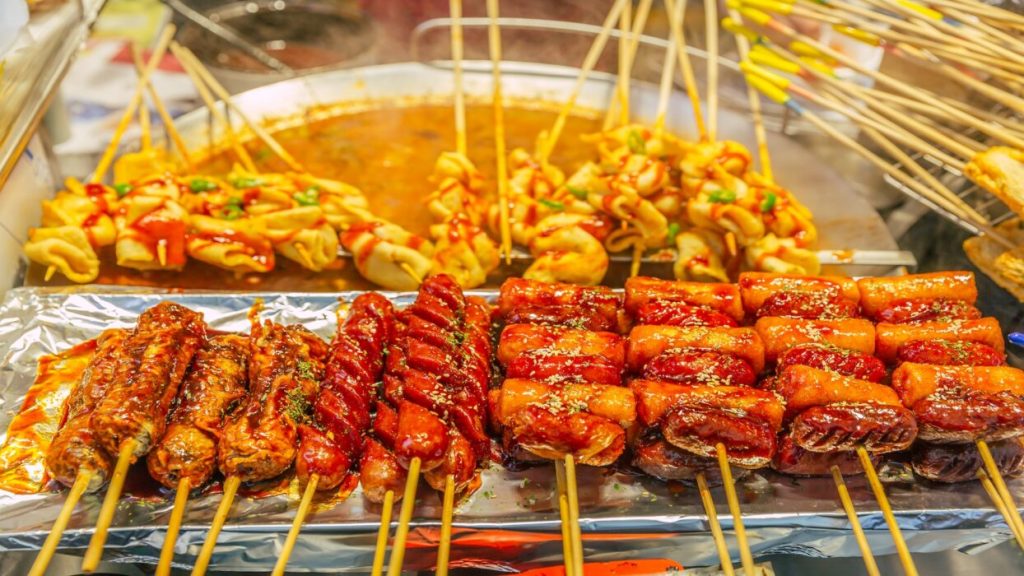
Korean Corn Dogs (K-Dogs): Contemporary Korean street food innovation featuring various coatings including potato cubes, rice puffs, cereal pieces, and traditional breadcrumbs while incorporating Korean-style fillings that create Instagram-worthy presentations with satisfying flavors.
Quality K-dogs require proper batter preparation, creative coating application, and optimal frying technique that creates visually appealing exterior while maintaining juicy interior and preventing coating separation during eating.
Popular varieties include mozzarella versions, rice cake combinations, and mixed fillings that demonstrate Korean street food creativity while maintaining accessibility and authentic Korean flavor elements.
Korean Fried Chicken (Chikin): Street food adaptations of Korea’s famous fried chicken culture featuring smaller portions, varied sauce options, and affordable pricing that makes premium Korean fried chicken accessible while maintaining quality standards and distinctive Korean preparation techniques.
Street food chicken preparation emphasizes double-frying techniques that create signature Korean fried chicken texture while offering various sauce options including traditional yangnyeom, garlic soy, and contemporary fusion flavors.
Seasonal Street Food Guide
Spring Street Foods (March-May)
Fresh Vegetable Preparations: Spring Seoul street food emphasizes fresh vegetables and lighter preparations that reflect seasonal change from heavy winter foods while utilizing spring vegetables that provide fresh flavors and nutritional renewal after winter preserved food consumption.
Vegetable Pancakes: Spring variations featuring fresh vegetables including wild vegetables, young greens, and seasonal specialties that provide fresh flavors while maintaining traditional pancake preparation techniques and satisfying texture.
Fresh Gimbap: Seasonal rice roll preparations featuring spring vegetables, lighter fillings, and fresh preparations that reflect seasonal dietary preferences for cleaner, lighter flavors after winter’s heavier foods.
Summer Street Foods (June-August)
Cooling Preparations: Summer Seoul street food adapts to hot, humid weather through cooling preparations, lighter cooking methods, and refreshing flavors that provide relief from Seoul’s challenging summer climate while maintaining nutritional value and satisfying flavors.
Cold Noodles: Street food adaptations of Korean cold noodle traditions including naengmyeon variations and other cooling noodle preparations that provide refreshing relief during Seoul’s hot summer months.
Shaved Ice (Bingsu): Contemporary Korean shaved ice preparations featuring traditional and fusion toppings that create cooling desserts while maintaining Korean flavor elements and traditional preparation techniques.
Autumn Street Foods (September-November)
Harvest Abundance: Autumn street food celebrates Korean agricultural harvest through seasonal ingredients, heartier preparations, and traditional autumn foods that provide comfort during temperature transitions while utilizing seasonal abundance.
Sweet Potato Preparations: Traditional Korean sweet potato street foods including roasted sweet potatoes, sweet potato-based snacks, and various preparations that utilize autumn harvest while providing warming comfort.
Chestnut Foods: Seasonal chestnut preparations including roasted chestnuts and chestnut-based snacks that celebrate autumn harvest while providing traditional Korean flavors and warming nutrition.
Winter Street Foods (December-February)
Warming Comfort Foods: Winter Seoul street food emphasizes warming preparations, hearty nutrition, and comfort foods that provide essential warmth and satisfaction during Seoul’s harsh winter conditions while maintaining traditional Korean winter food customs.
Hot Soups: Street food soup preparations including various hot soup options that provide warming nutrition while maintaining convenient street food format and traditional Korean soup flavors and preparation techniques.
Traditional Winter Sweets: Seasonal sweet preparations including winter-specific traditional Korean sweets that provide comfort and warmth while maintaining cultural connections to traditional Korean winter celebrations and customs.
Practical Seoul Street Food Navigation
Payment and Ordering Systems
Cash vs. Card Systems: Seoul street food vendors typically accept both cash and card payments, though smaller operations may prefer cash while larger, established vendors usually accommodate various payment methods including mobile payment systems that reflect Seoul’s digital advancement.
Traditional market vendors often prefer cash payments while modern street food areas typically accept cards and mobile payments. Carrying both cash and cards ensures payment flexibility while supporting vendors’ preferred payment methods.
Language and Communication: Basic Korean phrases enhance street food experiences while many vendors in tourist areas have basic English capability or visual menus that facilitate ordering without extensive Korean language skills.
Essential phrases include ordering (“이거 주세요” – I’ll take this), quantity (“두 개” – two pieces), and payment (“얼마예요?” – how much?), while pointing and gesturing typically suffice for basic communication with patient vendors.
Food Safety and Quality Recognition
Vendor Selection Criteria: Quality street food vendors demonstrate freshness through high customer turnover, clean preparation areas, and proper food storage that ensures safety while maintaining authentic flavors and traditional preparation standards.
Reliable indicators include local customer presence, clean cooking equipment, fresh ingredient appearance, and vendors who prepare food to order rather than keeping prepared items for extended periods without temperature control.
Peak Time Strategy: Visiting during peak hours (lunch: 12:00-2:00 PM, dinner: 6:00-8:00 PM) ensures freshest food turnover while providing authentic atmosphere, though crowds may require patience for ordering and eating.
Off-peak visiting (mid-afternoon, late evening) provides more comfortable experiences with shorter waits while maintaining food quality from vendors with steady customer flow throughout the day.
Cultural Etiquette and Social Customs
Eating Etiquette: Seoul street food culture emphasizes standing consumption, quick eating, and minimal lingering that respects vendor space while maintaining social harmony in crowded urban environment with limited space.
Proper etiquette includes disposing of waste in provided receptacles, not blocking vendor areas during eating, and maintaining cleanliness that demonstrates respect for vendors and other customers sharing street food spaces.
Vendor Relationships: Regular customers often develop friendly relationships with vendors through consistent patronage, respectful interaction, and appreciation for food quality that creates community connections despite urban anonymity.
Showing appreciation through Korean phrases (“맛있어요” – delicious), repeat visits, and respectful behavior builds positive vendor relationships while contributing to authentic cultural exchange experiences.
Budget Planning and Cost Management
Price Ranges: Seoul street food prices typically range from 1,000-8,000 won per item depending on preparation complexity, ingredient quality, and vendor location, with most traditional items falling in 2,000-4,000 won range that provides exceptional value.
Daily Budget Recommendations:
- Light Street Food Sampling: 15,000-25,000 won per person
- Substantial Street Food Meals: 25,000-40,000 won per person
- Comprehensive District Exploration: 40,000-60,000 won per person
Cost-Saving Strategies: Combination purchases from single vendors often provide better value, while lunch hours may offer set combinations at reduced prices compared to individual item purchases during peak dinner periods.
Health and Safety Considerations
Food Safety Guidelines
Vendor Assessment: Safe street food consumption requires evaluating vendor cleanliness, food storage practices, and preparation hygiene that ensure safety while maintaining authentic street food experiences and traditional flavor quality.
Reliable safety indicators include proper refrigeration for ingredients requiring cold storage, clean cooking surfaces, and vendors who maintain personal hygiene standards appropriate for food preparation and service.
Peak Hours for Freshness: Busy periods ensure rapid food turnover that maintains freshness while minimizing food safety risks associated with extended holding times, though crowds require patience for ordering and service.
Dietary Accommodations
Vegetarian Options: Seoul street food includes numerous vegetarian options including vegetable preparations, sweet items, and traditional Korean vegetarian dishes that provide satisfying alternatives while maintaining authentic Korean flavors.
Common vegetarian street foods include vegetable pancakes, sweet preparations like hotteok, vegetable gimbap, and various traditional Korean snacks that naturally exclude meat while providing complete street food experiences.
Allergy Considerations: Korean street food commonly includes ingredients that may trigger allergies including wheat, soy, sesame, and various traditional Korean ingredients that require careful inquiry and vendor communication for individuals with specific dietary restrictions.
Street food preparation often involves shared cooking surfaces and preparation areas that may create cross-contamination concerns for individuals with severe allergies requiring careful vendor selection and clear communication about dietary needs.
Advanced Seoul Street Food Exploration
Hidden Neighborhood Gems
Residential District Street Food: Seoul’s residential neighborhoods often feature authentic street food vendors serving local communities with traditional preparations, reasonable prices, and authentic atmosphere away from tourist areas.
These neighborhood vendors typically maintain traditional recipes, serve regular local customers, and provide genuine cultural experiences while offering superior value compared to tourist-oriented street food areas.
University Area Discoveries: Areas around Seoul’s universities feature innovative, affordable street food that serves student populations while creating experimental atmosphere where traditional Korean flavors merge with contemporary creativity and international influences.
University street food often pushes creative boundaries while maintaining affordability and authenticity that appeals to young Korean demographics familiar with traditional flavors but interested in contemporary presentations.
Seasonal Festival Foods
Traditional Festival Integration: Seoul’s seasonal festivals often feature specialized street food that celebrates traditional Korean customs, seasonal ingredients, and cultural heritage while providing unique food experiences unavailable during regular periods.
Festival street food typically includes traditional preparations that connect contemporary Seoul with Korean cultural heritage while providing educational opportunities about Korean traditional food culture and seasonal customs.
Modern Festival Adaptations: Contemporary Seoul festivals create street food experiences that blend traditional Korean preparations with international influences while maintaining cultural authenticity and providing accessible cultural education through food participation.
Expert-Level Vendor Recognition
Multi-Generational Vendors: Seoul’s most authentic street food often comes from vendors representing multi-generational family businesses that maintain traditional recipes while adapting to contemporary urban conditions and changing customer preferences.
These established vendors typically display traditional preparation methods, maintain consistent quality standards, and serve mixed demographics including both local regulars and knowledgeable visitors seeking authentic experiences.
Regional Specialty Vendors: Some Seoul street food vendors specialize in regional Korean preparations that represent different provinces’ traditional foods while providing cultural education about Korea’s regional diversity through accessible street food format.
Regional specialty vendors often maintain traditional preparation techniques specific to their home regions while adapting to Seoul’s urban context and diverse customer base seeking authentic regional Korean flavors.
STELLA’S LOCAL SECRET The “Local Regular Strategy” Identify street food vendors by observing local customer patterns – authentic vendors typically serve regular Korean customers who order confidently without consulting menus while engaging in familiar conversation with vendors. Follow local customers’ ordering choices for authentic selections while observing proper etiquette that demonstrates cultural respect and enhances your street food experience.
Frequently Asked Questions
Q: How much should I budget for a day of Seoul street food exploration? Plan 25,000-40,000 won per person for substantial street food exploration including multiple districts and various food types. Light sampling requires 15,000-25,000 won, while comprehensive exploration with premium items may need 50,000+ won. Most individual items cost 2,000-5,000 won.
Q: Is Seoul street food safe for international visitors? Seoul street food is generally very safe due to strict Korean food safety standards and high vendor turnover ensuring freshness. Choose vendors with many local customers, visible cleanliness, and proper food storage. Peak hours ensure freshest food turnover and optimal safety.
Q: Do I need Korean language skills to enjoy street food? Basic Korean helps but isn’t essential. Many vendors in tourist areas speak basic English, and pointing/gesturing works effectively. Learn simple phrases like “이거 주세요” (I’ll take this) and “얼마예요?” (how much?) for smoother interactions.
Q: What’s the best time of day for street food exploration? Peak hours (lunch 12:00-2:00 PM, dinner 6:00-8:00 PM) offer freshest food and most authentic atmosphere but with crowds. Early evening (5:00-6:00 PM) provides good balance of freshness and comfort. Late-night (9:00 PM-12:00 AM) offers unique atmosphere in areas like Hongdae.
Q: Which district is best for first-time Seoul street food experiences? Myeongdong offers the most beginner-friendly experience with tourist-friendly vendors, diverse options, and easy navigation. However, mix tourist areas with authentic neighborhoods like university districts or traditional markets for comprehensive experiences.
Q: Can vegetarians find good Seoul street food options? Yes, many options exist including vegetable pancakes, sweet items like hotteok, vegetable gimbap, and traditional Korean vegetarian preparations. However, be aware that many savory items may contain fish-based seasonings or meat products, so inquiry is recommended.
Q: How do I identify authentic vendors versus tourist-oriented ones? Authentic vendors typically serve many local Korean customers, display Korean-only signage, prepare food to order, and maintain traditional preparation methods. Tourist-oriented vendors often have English menus, pre-prepared foods, and focus on Instagram-worthy presentations over traditional authenticity.
Q: What payment methods are accepted at street food vendors? Most vendors accept both cash and card payments, with many now accepting mobile payments like Samsung Pay or KakaoPay. Smaller traditional vendors may prefer cash. Carrying both cash and card ensures maximum flexibility across different vendor types.
Q: Are there seasonal street foods I should know about? Yes, seasonal specialties include winter warming foods (hotteok, roasted sweet potatoes), summer cooling items (bingsu, cold noodles), spring fresh vegetable preparations, and autumn harvest items (chestnuts, sweet potatoes). Seasonal timing enhances authenticity and optimal flavors.
Q: How do I handle eating street food while exploring Seoul? Most street food is designed for standing consumption. Find designated eating areas or spaces that don’t block pedestrian traffic. Dispose of waste properly in provided receptacles. Some vendors provide small plastic stools for seating during busy periods.
Savoring Seoul’s Street Food Soul
You now possess comprehensive knowledge to navigate Seoul’s street food culture with understanding of what makes this urban food ecosystem globally renowned while representing authentic Korean flavors, traditional preparation wisdom, and contemporary cultural innovation accessible to diverse populations through affordable, convenient formats.
You’ve learned exactly which neighborhoods offer different street food experiences that reflect local character, what essential dishes represent authentic Korean street food culture while providing satisfying nutrition and cultural education, how to navigate ordering systems and payment methods while demonstrating cultural respect, and when to visit different areas for optimal experiences that balance authenticity with comfort.
You understand Seoul street food’s cultural importance as preservation of traditional Korean recipes adapted for modern urban life, demonstration of Korean hospitality and community building through shared food experiences, and example of how traditional cuisine evolves while maintaining cultural identity and accessibility across economic levels.
Most importantly, you understand that Seoul street food represents far more than convenient outdoor snacking. It preserves living Korean culinary traditions while serving essential urban functions including community building, cultural education, economic accessibility, and social interaction that strengthens Seoul’s urban fabric while connecting contemporary residents with Korean cultural heritage.
Walking through Seoul’s street food districts means participating in daily Korean urban life where vendors continue family traditions while adapting to contemporary tastes, where traditional recipes survive through accessible pricing and authentic preparation, where community forms around shared food experiences that transcend language and cultural barriers.
Your thoughtful engagement with Seoul street food culture supports traditional knowledge preservation while contributing to vendor livelihoods and cultural exchange that benefits both Korean communities and international visitors seeking authentic cultural experiences through food participation.
The streets of Seoul await your exploration through authentic neighborhood gems, seasonal specialties, traditional preparations, and contemporary innovations. Korean street food vendors continue maintaining traditional recipes while adapting to modern urban rhythms. Community continues forming around shared food experiences that welcome respectful participation from diverse backgrounds. Your Seoul street food adventure is about to begin.