
Understanding Korea’s Mountain Monasteries
Have you ever wanted to understand the unique Korean Buddhist tradition of mountain monasteries where monks have practiced meditation, preserved Buddhist teachings, and lived in harmony with nature for over 1,500 years? Where UNESCO recognizes not just beautiful temple buildings but an entire living tradition of mountain Buddhism that continues today exactly as it has for centuries? Where you can visit seven extraordinary monasteries representing the pinnacle of Korean Buddhist architecture, philosophy, and spiritual practice – and even stay overnight experiencing monastic life through temple stay programs? Where the boundaries between architecture and nature, between sacred and secular, between past and present dissolve into continuous spiritual tradition that remains vibrantly alive rather than becoming mere historical curiosity? Korean sansa (산사/山寺, literally “mountain temple”) offer exactly this experience – but only if you understand what makes Korean mountain Buddhism distinctive, why Korean Buddhists chose remote mountain locations rather than urban centers, how temple architecture expresses Buddhist philosophy and supports spiritual practice, and why these seven particular monasteries earned UNESCO World Heritage designation representing Korean Buddhist culture at its finest.
For Western visitors especially, Korean mountain monasteries present fascinating questions because they differ significantly from both Western monasticism and other Asian Buddhist traditions. They aren’t merely meditation retreats – they’re complete self-sustaining communities that have maintained continuous practice for centuries. They aren’t tourist attractions – they’re active religious sites where hundreds of monks still live, study, and practice exactly as their predecessors did generations ago. They aren’t hidden away from the world – they welcome visitors, offer temple stay programs, and serve as centers for Buddhist education and cultural preservation. Understanding sansa requires grasping how Korean Buddhism developed its distinctive mountain tradition, how this tradition shaped temple architecture and daily practices, and why mountains hold such profound significance in Korean Buddhist philosophy.
Most visitors approach Korean mountain temples as beautiful architectural sites in spectacular natural settings, enjoying the peaceful atmosphere and photographing elegant traditional buildings without understanding the sophisticated Buddhist philosophy these spaces embody. They walk through temple gates, main halls, and courtyards without knowing how every architectural element – from gate position to building orientation to decorative details – expresses specific Buddhist teachings and creates environment supporting spiritual awakening. They visit during brief day trips without experiencing the daily rhythms of temple life that reveal how Korean Buddhist monasticism actually functions as living spiritual tradition.
I understand that superficial engagement completely. My first mountain temple visit (Bulguksa in Gyeongju) was tourist pilgrimage photographing famous buildings without any genuine understanding of what made this place spiritually significant beyond being “old Buddhist temple.” The buildings seemed generically Asian religious architecture rather than embodying specific Korean Buddhist philosophy and practice traditions.
That’s why this comprehensive guide exists. I’m going to share everything you need to transform mountain temple visiting from pleasant architectural tourism into meaningful encounters with Korean Buddhist culture and living spiritual tradition. You’ll learn exactly what sansa are, why Korean Buddhism developed this distinctive mountain tradition, what monks actually do in these remote monasteries, and how temple architecture creates environments supporting Buddhist practice. You’ll understand the seven UNESCO-designated monasteries’ individual histories and characteristics, how to visit them respectfully, and how temple stay programs allow deeper engagement with Korean Buddhist culture. You’ll gain insight into why these ancient monasteries remain vibrant spiritual communities rather than becoming museum pieces, and why their continuing vitality matters for preserving Korean Buddhist tradition.
By the end of this guide, you’ll know how to visit Korean mountain monasteries with understanding that transforms elegant buildings into evidence of sophisticated spiritual philosophy, beautiful natural settings into deliberately chosen practice environments, and simple temple rituals into living connection with 1,500 years of continuous Buddhist tradition. You’ll appreciate why UNESCO designated these seven monasteries as representing “the essence and tradition of Korean mountain monasteries” despite Korea having thousands of Buddhist temples. You’ll understand what makes Korean mountain Buddhism unique even among Asian Buddhist traditions. Most importantly, you’ll grasp why these remote mountain monasteries continue attracting both dedicated practitioners and curious visitors seeking authentic spiritual experience in our secular modern age.
Understanding Sansa: What They Are and Why They Matter
Defining Sansa: Korean Mountain Monasteries
To understand sansa, Western visitors must first recognize that these institutions combine multiple functions that don’t fit neatly into familiar religious categories. A Korean mountain monastery simultaneously functions as:
Active Monastic Community: Unlike many historical religious sites that have become museums, sansa remain fully functioning monasteries where ordained Buddhist monks and nuns live in religious community, following strict monastic rules (율/vinaya), practicing meditation, studying Buddhist texts, and maintaining daily ritual schedules exactly as monastics have done for centuries. These aren’t historical reenactments but genuine continuing practice.
Meditation and Practice Centers: Sansa serve as environments specifically designed and located to support intensive Buddhist practice including meditation (참선/chamson or 선/seon, Korean Zen), sutra study, ritual chanting, and various contemplative practices aimed at achieving enlightenment. The remote mountain locations, architectural designs, and daily schedules all serve this primary spiritual purpose.
Buddhist Universities: Major sansa function as educational institutions where monks study Buddhist philosophy, Sanskrit and Classical Chinese texts, meditation techniques, ritual procedures, temple administration, and other knowledge required for Buddhist clergy. Some sansa maintain centuries-old educational traditions training generations of Korean Buddhist leaders.
Cultural Repositories: Sansa preserve Korean Buddhist culture including architecture, art, ritual music, ceremonial practices, medicinal knowledge, vegetarian cuisine traditions, and philosophical texts. They function as living museums maintaining cultural knowledge that might otherwise disappear in modernizing Korea.
Pilgrimage Destinations: For Korean Buddhists and increasingly international visitors, sansa serve as pilgrimage sites where laypeople can make spiritual journeys, participate in ceremonies, receive teachings, and temporarily escape worldly concerns experiencing monastic life through temple stay programs.
Nature Sanctuaries: The extensive forests surrounding sansa, often protected for centuries, serve as both spiritual environments and ecological preserves maintaining biodiversity and natural landscapes increasingly rare in densely developed Korea.
To give Western readers approximate comparison: imagine combining a Catholic monastery (with its emphasis on structured communal religious life), a Zen meditation center (with intensive contemplative practice), Oxford University’s theological college (with serious Buddhist philosophical study), and a spiritual retreat center (welcoming visitors for temporary immersion) – all situated in protected mountain wilderness specifically chosen for its conducive spiritual qualities. This imperfect analogy begins suggesting sansa’s multifaceted character, though Korean mountain monasteries remain distinctively Korean institutions without precise Western equivalents.
Why Mountains? The Buddhist and Korean Context
Understanding why Korean Buddhism developed its distinctive mountain tradition requires knowing both Buddhist philosophical principles and specific Korean historical circumstances:
Buddhist Philosophy of Mountain Practice:
Buddhism, originating in ancient India, has always valued retreat from worldly distractions for intensive practice. The Buddha himself achieved enlightenment after years of ascetic practice in wilderness, and Buddhist texts frequently reference mountains as ideal locations for meditation and spiritual cultivation. Mountains represent:
- Physical Separation: Distance from cities, villages, and worldly concerns reduces distractions and temptations that hinder spiritual practice.
- Natural Beauty: Mountain landscapes inspire contemplation and provide living examples of Buddhist teachings about impermanence (changing seasons), emptiness (vast open spaces), and interconnection (ecological relationships).
- Symbolic Height: Mountains’ elevation suggests spiritual ascent from worldly realm toward enlightenment, with the physical journey up mountain paths mirroring interior spiritual journey.
- Ascetic Challenge: Mountain living’s physical demands – cold, limited food, isolation – support ascetic practices that Buddhist tradition values for spiritual development.
Korean Historical Circumstances:
Korean Buddhism’s mountain orientation also reflects specific historical factors:
Joseon Dynasty Suppression (1392-1910): When Neo-Confucianism became Joseon Dynasty state ideology, Buddhism faced severe suppression. Buddhist temples were banned from cities, monks’ social status was degraded, temple lands were confiscated, and Buddhism was pushed to society’s margins. This persecution forced Korean Buddhism to retreat into mountains where temples could survive beyond governmental control and Confucian censure. What began as forced exile became defining characteristic of Korean Buddhism.
Geomantic Principles (풍수/pungsu): Korean geomancy, which influenced both Buddhist and secular site selection, identified mountains as locations with powerful natural energy (기/qi or gi in Korean) conducive to spiritual practice. Temple founders carefully selected sites with auspicious geomantic qualities including protective mountain ridges, flowing water, and favorable orientations.
Korean Nature Philosophy: Traditional Korean culture has always deeply valued nature and natural landscapes, viewing mountains as sacred spaces connecting human and divine realms. This indigenous nature spirituality merged with Buddhist philosophy creating distinctively Korean approach to mountain monasticism that emphasizes harmony between religious practice and natural environment.
Practical Considerations: Mountains provided fresh water, timber for buildings, wild foods supplementing cultivation, and natural protection from bandits and armies during Korea’s frequent wars and invasions. These practical advantages reinforced philosophical and spiritual reasons for mountain locations.
Korean Buddhism vs. Other Buddhist Traditions
Understanding Korean mountain monasteries requires recognizing distinctive characteristics of Korean Buddhism that differ from other Asian Buddhist traditions:
Seon (선/禪, Korean Zen) Emphasis: Korean Buddhism emphasizes Seon meditation practice (equivalent to Japanese Zen or Chinese Chan) more than doctrinal study or ritual elaboration. While Korean temples maintain ritual practices and textual study, meditation remains central to monastic life in ways that distinguish Korean from some other Mahayana Buddhist traditions. This meditation focus influenced temple architecture and daily schedules prioritizing practice over display.
Jogye Order Dominance: Most Korean Buddhist temples belong to the Jogye Order (조계종/曹溪宗), which unified Korean Buddhism in modern era around Seon practice while maintaining some ritual and textual traditions from other schools. This relative uniformity contrasts with Japanese Buddhism’s multiple sects maintaining completely separate temple hierarchies and doctrinal systems.
Integration of Practices: Unlike some Buddhist traditions that separate meditation practice, ritual ceremonies, Pure Land devotions, and textual study into different schools or practices, Korean Buddhism integrates these various approaches within single monastic community. Individual monks may emphasize different practices according to their inclinations and teachers’ guidance, but most Korean monasteries maintain all these practices simultaneously.
Lay Participation: Korean mountain monasteries welcome lay Buddhist visitors more actively than some other Buddhist traditions’ monasteries. The temple stay programs, which now welcome international visitors, emerge from Korean Buddhist tradition of lay people temporarily joining monastic communities for intensive practice periods, creating fluid boundary between monastics and laypeople unusual in some other Buddhist cultures.
Vegetarian Cuisine: Korean Buddhist temple food (사찰 음식/sachal eumsik) follows strict vegetarian principles but has developed distinctive Korean characteristics using fermentation, specific vegetables, and preparation methods that create unique culinary tradition recognized as both spiritually significant and gastronomically sophisticated.
Ceremonial Aesthetics: Korean Buddhist ceremonies combine chanting, instrumental music (particularly large drums, bells, and gongs), elaborate ritual movements, and visual splendor creating multisensory religious experiences that engage participants emotionally and physically beyond purely intellectual or contemplative dimensions.
How Sansa Function: Monastic Life and Practice
Understanding sansa requires knowing how they actually operate as living monastic communities:
Monastic Population: Major sansa house anywhere from 50 to 200+ resident monks and nuns (Korean Buddhism maintains separate male and female monasteries), creating substantial communities living according to Buddhist monastic rules and schedules.
Daily Schedule: Monastic life follows strict daily schedules with wake-up around 3:00-3:30 AM for pre-dawn meditation and chanting, followed by breakfast, work periods, study time, afternoon meditation, evening chanting, and early sleep around 9:00-10:00 PM. This schedule continues identically every day year-round, creating disciplined structure supporting sustained practice.
Meditation Practice: Multiple daily meditation sessions totaling 4-6+ hours constitute monastic life’s core. Monks practice Seon meditation (Korean Zen) sitting in formal posture, working with koans (화두/hwadu) or practicing “just sitting” meditation, developing concentration and insight that Buddhist tradition teaches leads to enlightenment.
Work Practice: All monks participate in temple work including cooking, cleaning, farming, maintaining buildings, and other necessary tasks. This work practice (일상 수행/ilsang suhaeng) is considered spiritual practice as important as formal meditation, teaching mindfulness in activity and preventing monastics from becoming disconnected from practical realities.
Ritual Ceremonies: Daily morning and evening services include chanting sutras, making prostrations, and performing ritual offerings. These ceremonies maintain Buddhist teachings, honor Buddha and bodhisattvas, and create communal spiritual practice binding the monastic community.
Study: Monks study Buddhist scriptures (particularly Korean, Chinese, and Sanskrit texts), Buddhist philosophy, meditation techniques, and temple administration. Senior monks teach junior monks, maintaining educational lineages passing knowledge across generations.
Seasonal Retreats: Korean Buddhism observes intensive retreat periods (안거/ango) during summer and winter when monks stay within temple grounds intensifying meditation practice, sometimes maintaining complete silence for weeks or months.
Rank Hierarchy: Monastic communities follow hierarchical structures based on ordination seniority and spiritual achievement, with senior monks holding authority and junior monks showing respect through formal behaviors including ritual bows, serving meals, and deferring in conversations.
Temple Stay Programs: Experiencing Monastic Life
Understanding temple stay (템플스테이/templestay) programs helps visitors appreciate how sansa remain accessible while maintaining religious character:
Program Origins: Temple stay programs emerged from traditional Korean Buddhist practice of laypeople joining monasteries for temporary intensive practice. After Korea hosted 2002 FIFA World Cup, temples systematized these informal arrangements into structured programs making Korean Buddhism accessible to international visitors while generating revenue supporting temples.
Program Types:
- Experience Programs (체험형): Brief 1-2 day introductions to temple life including meditation, ceremony attendance, temple tour, vegetarian meals, and basic Buddhist teachings. These accommodate tourists with limited time and no prior Buddhist knowledge.
- Practice Programs (휴식형): Extended 2-7+ day programs for participants wanting deeper engagement, including more intensive meditation practice, extended silence periods, private teachings with monks, and minimal structured activities allowing personal contemplation.
Typical Schedule: Experience programs typically include: evening arrival and orientation, 4:00 AM wake-up, pre-dawn chanting service, meditation session, communal breakfast, temple tour or teaching session, lunch, free time or additional practice, evening service, meditation, and sleep around 9:00 PM. The schedule compresses actual monastic life into brief accessible format.
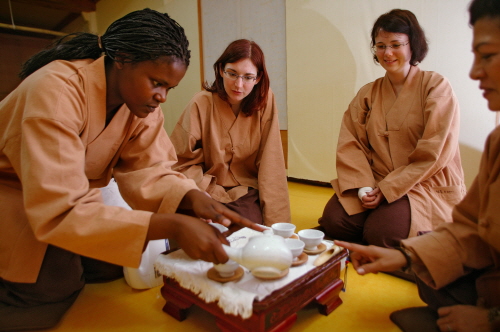
Participant Expectations: Temple stay requires following monastic rules including: modest dress (provided temple clothes), vegetarian diet, no alcohol or smoking, maintaining quiet particularly near monks’ residences, participating in scheduled activities, and showing respect through formal behaviors including bows and removing shoes indoors.
Cultural Exchange: Temple stay provides rare opportunity for cross-cultural exchange where international visitors experience authentic Korean religious practice while monks encounter different cultures and perspectives, creating mutual learning that benefits both sides.
Accessibility: Programs accommodate participants regardless of religious background, with no requirement to be Buddhist or accept Buddhist beliefs. However, respectful engagement with practices is expected even for those participating from cultural curiosity rather than religious interest.
Personal Story: My Three-Day Temple Stay
I participated in three-day practice-oriented temple stay at Haeinsa (one of the seven UNESCO sansa), hoping to experience authentic Korean Buddhist practice beyond tourist visiting. The first night, lying on hard floor mat in unheated room during late autumn, I questioned whether I had capacity for this experience. The 3:30 AM wake-up bell came too soon.
But walking to pre-dawn chanting service under stars, seeing the main hall illuminated with lanterns, hearing the drums, bells, and gongs announcing morning service – these created profound sensory experience beyond anything I’d encountered at temples during tourist visits. The monks’ chanting in Sanskrit and Korean, though I understood few words, carried emotional and spiritual power that transcended language.
The meditation periods were extraordinarily difficult – my legs cramped, my back ached, my mind raced with thoughts rather than achieving any meditative calm. But the monk leading our group said something that helped: “Don’t judge your meditation as good or bad. Just sit. Every moment of sitting, even difficult painful sitting, is practice. You are already doing it correctly by being here.”
The three days taught me that temple stay isn’t about achieving spiritual experiences or leaving transformed but about encountering authentic practice tradition maintained across centuries. The monks weren’t performing for visitors – they were living their actual daily lives, and visitors were privileged to join briefly rather than watching from outside. This authenticity made the experience meaningful despite my meditation struggles and physical discomfort.
Pros of Understanding Sansa Culture
- Spiritual Depth: Understanding Korean Buddhist philosophy and monastic practice transforms temple visiting from aesthetic appreciation into encounter with profound spiritual tradition addressing universal human questions about suffering, impermanence, and liberation.
- Living Tradition: Unlike many UNESCO sites that are essentially museums, sansa remain fully functioning monasteries where visitors can observe and participate in actual continuing religious practice rather than merely viewing historical artifacts.
- Cross-Cultural Learning: Korean Buddhism offers alternative perspectives on religion, monasticism, and spiritual practice that challenge Western assumptions and expand understanding of human religious diversity.
- Architectural Appreciation: Learning how temple architecture expresses Buddhist philosophy and supports spiritual practice adds intellectual dimension to aesthetic appreciation of beautiful buildings and natural settings.
- Practical Application: Buddhist meditation techniques, mindfulness practices, and philosophical teachings can provide practical tools for managing stress, cultivating awareness, and living more consciously regardless of religious beliefs.
Cons of Sansa Complexity
- Intellectual Demands: Full appreciation requires understanding Buddhist philosophy, Korean religious history, temple architecture, and monastic practices – substantial knowledge base that casual tourists typically lack and that even dedicated study may not provide without experiencing practice directly.
- Language Barriers: Most temples conduct ceremonies and teachings in Korean, with limited English translation. While some temples provide English materials and bilingual staff for temple stay programs, linguistic barriers can limit depth of understanding and participation.
- Physical Challenges: Temple life involves early rising, hard floors, simple food, physical exertion, and sometimes uncomfortable temperatures. Visitors with health issues or limited physical capacity may find temple stay challenging or impossible.
- Cultural Distance: Korean temple etiquette including ritual bows, removing shoes, maintaining silence, and showing deference to monks may feel alien to Western visitors unfamiliar with Asian religious cultures, creating anxiety about committing unintentional disrespect.
STELLA’S LOCAL SECRET
The “Buddhist Philosophy Pre-Visit Reading”
Before visiting sansa or participating in temple stay, spend 2-3 hours reading basic Buddhist philosophy introductions focusing on: Four Noble Truths (suffering exists, it has causes, it can end, there’s a path to end it), Eightfold Path (right understanding, intention, speech, action, livelihood, effort, mindfulness, concentration), and basic meditation principles. Wikipedia articles on “Buddhism,” “Korean Buddhism,” and “Zen” provide sufficient background.
Why this matters: With basic Buddhist understanding, you’ll recognize that temple architecture, daily schedules, meditation practices, vegetarian food, and monastic rules all serve specific spiritual purposes rather than being arbitrary traditions. The entire temple becomes coherent expression of Buddhist path toward enlightenment rather than collection of exotic customs.
Reading focus: Understand Buddhism’s core question: How can human beings overcome suffering and achieve lasting peace despite life’s inevitable difficulties? Understanding this central concern makes everything about monastic life coherent – the meditation is training mind to see reality clearly, the ritual develops devotion and community, the work practice prevents attachment to meditation accomplishments, the mountain location reduces distractions. Every element serves liberation from suffering.
The Seven UNESCO World Heritage Sansa
Why These Seven Monasteries?
Korea has approximately 900 Buddhist temples and many maintain mountain locations and centuries-old histories, but UNESCO’s selection of these seven specific monasteries reflects multiple criteria:
Historical Continuity: Each has maintained continuous monastic community and practice tradition for centuries (some over 1,000 years), demonstrating remarkable cultural continuity despite wars, persecutions, and modernization.
Architectural Excellence: Each preserves or has well-restored buildings demonstrating finest Korean Buddhist architecture, showing evolution of temple building styles across different periods while maintaining distinctive Korean characteristics.
Living Communities: Each remains fully functioning monastery with substantial resident monastic populations maintaining daily practice, study, and ritual schedules, representing sansa as living religious tradition rather than historical monuments.
Geographic Distribution: The seven are distributed across different provinces, representing Korean mountain monasticism’s national scope rather than single regional phenomenon.
Doctrinal Traditions: Together they represent major Korean Buddhist lineages, practices, and philosophical approaches that shaped Korean Buddhist culture.
Natural Integration: Each demonstrates exceptional integration with mountain landscapes, embodying Korean Buddhist ideals about harmony between human religious activity and natural environment.
1. Tongdosa (통도사) – Temple of Passage to Enlightenment
Location: Yangsan, South Gyeongsang Province
Founded: 646 CE
Significance: One of Three Jewel Temples representing Buddha
Tongdosa holds unique status as one of Korea’s Three Jewel Temples (삼보사찰/sambosachal), specifically representing the Buddha jewel because it houses relics tradition claims came from Shakyamuni Buddha’s body after cremation. The temple’s name means “Temple of Passage to Enlightenment,” indicating its founders’ aspiration that visitors would gain spiritual awakening.
The temple’s most distinctive feature is its main Dharma Hall (대웅전/Daeungjeon) which, uniquely among Korean Buddhist temples, contains no Buddha statues because the actual Buddha relics enshrined behind the hall make images unnecessary – visitors worship the actual Buddha’s remains rather than representations. This unusual architectural characteristic reflects profound Buddhist philosophy about images versus reality.
Tongdosa’s massive size and scope make it more complete monastic city than single temple, with over 30 buildings including multiple worship halls, meditation centers, museums, educational facilities, and residential quarters for its 150+ resident monks. The complex nestles in valley between mountain peaks, with buildings arranged following geomantic principles and practical considerations about drainage, sunlight, and protection from wind.
Visiting highlights:
- Unique main hall without Buddha images, explained through Buddhist relic philosophy
- Extensive complex allowing extended exploration of varied temple architecture
- Active monastic community visible throughout grounds during daily activities
- Beautiful mountain setting with hiking trails to scenic viewpoints
- Temple stay program offering immersive experience
Visiting challenges:
- Large size means thorough visiting requires 2-3 hours minimum
- Complexity can feel overwhelming without guidance about which areas hold greatest significance
- Popularity brings crowds during weekends and Buddhist holidays
- Limited English interpretation requires pre-visit research for full understanding
2. Buseoksa (부석사) – Floating Rock Temple
Location: Yeongju, North Gyeongsang Province
Founded: 676 CE
Significance: Exemplar of Korean Buddhist architecture and philosophical depth
Buseoksa’s name (“Floating Rock Temple”) references legend about the temple’s founding monk, Uisang, who returned from studying in Tang China bringing Buddhist teachings. When constructing the temple, a large rock supposedly floated up and positioned itself under the main hall’s foundation, interpreted as miraculous sign of the site’s spiritual power. This floating rock (부석/buseok) gave the temple its name.
The temple’s architectural design is considered among Korean Buddhism’s finest achievements, particularly the Muryang Sugeon Hall (무량수전/Muryangsujeon), built in 1376, which demonstrates perfect proportions, elegant structural details, and sophisticated integration with the mountainside location. The building exemplifies Korean Buddhist architecture at its philosophical and aesthetic peak, expressing Buddhist principles through physical form.
Buseoksa occupies spectacular location on mountain slope overlooking distant valleys and mountain ranges, creating panoramic views that inspire contemplation while demonstrating geomantic principles about auspicious temple sites. The approach path gradually ascends through forest, creating transition from worldly to sacred space that mirrors interior spiritual journey from ignorance to enlightenment.
Visiting highlights:
- Muryang Sugeon Hall architectural masterpiece demonstrating finest Korean Buddhist building principles
- Spectacular mountain views inspiring contemplation
- Relatively peaceful atmosphere despite UNESCO status, less crowded than some other major temples
- Beautiful seasonal changes (spring flowers, autumn foliage, winter snow)
- Temple stay program available
Visiting challenges:
- Remote location in Yeongju requires dedicated travel planning
- Steep approach path with many stairs challenges visitors with limited mobility
- Limited facilities and English information compared to more touristy temples
- Small temple size means relatively brief visiting time unless combining with extensive meditation or hiking
3. Beopjusa (법주사) – Residence of Dharma Temple
Location: Boeun, North Chungcheong Province
Founded: 553 CE (Silla Dynasty)
Significance: Houses Korea’s tallest bronze Buddha statue and represents Mahayana Buddhism’s Maitreya (Future Buddha) tradition
Beopjusa means “Residence of Dharma,” indicating founders’ intention that Buddhist teachings would permanently dwell at this location. The temple complex centers on its most distinctive feature: a massive 33-meter-tall bronze Maitreya Buddha statue (미륵대불/Mireukdaebul) completed in 1964 (though based on historical precedents) that dominates the site visually and theologically.
The Maitreya focus reflects Mahayana Buddhist belief in the Future Buddha who will appear when current Buddha’s teachings have been forgotten, bringing renewed enlightenment to humanity. This eschatological dimension adds hopeful forward-looking element to Buddhist practice that complements focus on achieving personal enlightenment.
Beopjusa also houses Palsangjeon (팔상전), a rare five-story wooden pagoda dating to 1624, demonstrating traditional Korean pagoda architecture at exceptional scale. The structure combines religious symbolism (depicting eight key scenes from Buddha’s life) with architectural achievement, standing as testimony to Korean Buddhist builders’ skills.
Visiting highlights:
- Massive Maitreya Buddha statue creating powerful visual and spiritual impact
- Rare five-story wooden pagoda demonstrating traditional Korean Buddhist architecture
- Large active temple complex with substantial monastic community
- Beautiful Songnisan National Park setting with hiking opportunities
- Accessible location in central Korea makes visiting practical for Seoul-based tourists
Visiting challenges:
- Popularity brings substantial crowds, especially during peak seasons and Buddhist holidays
- Commercial development near temple entrance creates tourist atmosphere diminishing contemplative quality
- Large tour groups can dominate main worship areas during peak hours
- The modern giant Buddha statue, while impressive, strikes some visitors as less authentic than historical architecture
4. Magoksa (마곡사) – Valley Temple
Location: Gongju, South Chungcheong Province
Founded: 640 CE
Significance: Exemplifies harmonious integration with valley landscape
Magoksa occupies gentle valley following small stream, creating unusually intimate and approachable atmosphere compared to mountain temples positioned on steep slopes or dramatic peaks. The temple name references valley (곡/gok) location, and the architectural layout follows valley contours rather than imposing rigid geometric plan on natural landscape.
The temple’s integration with flowing water distinguishes it from most Korean mountain temples. Visitors cross multiple bridges over streams, with water sounds pervading the temple grounds creating continuous reminder of Buddhist teachings about impermanence (water constantly flowing), change (streams never identical from moment to moment), and the middle way (water flowing around obstacles rather than through rigid confrontation).
Magoksa represents “temple as garden” aesthetic where architecture and landscape blend seamlessly, creating contemplative environment that Buddhist tradition associates with ideal practice settings. The valley location also provided practical advantages including reliable water supply, relatively level building sites, and protection from wind while maintaining mountain temple’s general seclusion.
Visiting highlights:
- Beautiful intimate valley setting with stream integration unusual among mountain temples
- Relatively uncrowded despite UNESCO designation, maintaining peaceful contemplative atmosphere
- Well-preserved traditional buildings demonstrating various architectural periods
- Temple stay program offering quieter experience than larger more tourist-oriented temples
- Gongju location allows combining with city’s Baekje cultural heritage sites
Visiting challenges:
- Smaller scale means briefer visiting time than larger temple complexes
- Remote location requires dedicated travel planning
- Limited English information and tourist infrastructure
- Valley location can be humid during summer with limited air circulation
5. Seonamsa (선암사) – Zen Rock Temple
Location: Suncheon, South Jeolla Province
Founded: 9th century (unified Silla period)
Significance: Represents southern Korean Buddhist tradition and exceptional garden design
Seonamsa exemplifies southern Korean temple aesthetics emphasizing garden design, water features, and integration with lush subtropical vegetation different from northern temples’ colder mountain environments. The approach path crosses beautiful arched stone bridge (승선교/Seungseongyo, “Ascending Goodness Bridge”) spanning valley stream, creating dramatic entrance experience that temple founders designed to psychologically mark transition from mundane to sacred space.
The temple grounds demonstrate exceptional attention to garden design with carefully planned tree groupings, stone arrangements, water features, and sight lines creating continuously unfolding aesthetic experiences as visitors move through the complex. This refined aesthetic sophistication distinguishes southern Korean temples from northern temples’ more austere mountain character.
Seonamsa’s architecture shows distinctive southern Korean regional characteristics including broader eaves protecting against southern region’s heavier rainfall, different heating systems adapted to milder winters, and more elaborate decorative painting (단청/dancheong) common in southern temples. These regional variations demonstrate how Korean Buddhist architecture adapted to varied climatic and cultural conditions while maintaining core principles.
Visiting highlights:
- Exceptionally beautiful arched entrance bridge creating memorable arrival experience
- Refined garden design demonstrating aesthetic sophistication
- Lush vegetation and water features creating sensory-rich environment
- Representative of southern Korean temple aesthetics and regional variations
- Temple stay program available
Visiting challenges:
- Remote location in southwestern Korea requires extensive travel from Seoul or Busan
- Small scale means relatively brief visiting time
- Limited English interpretation
- Popularity with Korean tourists creates weekend crowds despite remote location
6. Daeheungsa (대흥사) – Great Rise Temple
Location: Haenam, South Jeolla Province
Significance: Southernmost UNESCO sansa, represents Korean Buddhism’s resilience
Daeheungsa occupies Korea’s southernmost mountain location, representing Buddhist tradition extending to peninsula’s extremities. The temple name means “Great Rise,” indicating founders’ aspiration for Buddhism’s flourishing at this location. Historical circumstance fulfilled this aspiration when Joseon Dynasty’s anti-Buddhist persecution pushed Buddhism to Korea’s edges, making Daeheungsa important refuge maintaining traditions during suppression.
The temple complex spreads across valley with multiple sub-temples and hermitages scattered throughout surrounding mountains, creating extensive monastic landscape rather than concentrated single complex. This dispersed layout allowed different practice emphases – intensive meditation hermitages, textual study centers, ritual practice temples – creating complete Buddhist education and practice system within single general location.
Daeheungsa preserved important Buddhist cultural heritage during Joseon Dynasty persecution, including texts, ritual objects, and monastic lineages that might otherwise have been destroyed. This preservation role made the temple historically crucial for Korean Buddhist cultural continuity beyond just its own monastic community.
Visiting highlights:
- Extensive complex with multiple sub-temples allowing extended exploration
- Beautiful Duryunsan mountain setting with hiking trails
- Important historical role in preserving Korean Buddhism during persecution
- Relatively uncrowded due to remote southern location
- Authentic monastic atmosphere with minimal commercial tourism development
Visiting challenges:
- Extremely remote location in far southwestern Korea requires dedicated journey
- Limited public transportation means personal vehicle nearly essential
- Dispersed layout means substantial walking and possibly multiple visits to see all areas
- Minimal English information and tourist facilities
7. Bongjeongsa (봉정사) – Phoenix Peak Temple
Location: Andong, North Gyeongsang Province
Founded: 672 CE
Significance: Contains Korea’s oldest surviving wooden building
Bongjeongsa’s claim to greatest significance rests on its Geungnakjeon Hall (극락전/Geungnakjeon, “Hall of Ultimate Bliss”), built in 1363, which represents Korea’s oldest surviving wooden building. This architectural treasure demonstrates medieval Korean building techniques, proportions, and structural principles that later constructions modified or lost, making Geungnakjeon invaluable historical document in physical form.
The hall’s remarkable 650+ year survival testifies to Korean builders’ sophisticated understanding of wood preservation, structural stability, and building maintenance. The building has survived wars, weather, decay, and changing architectural fashions precisely because succeeding generations recognized its value and invested resources in continuous preservation rather than replacement with newer structures.
Beyond Geungnakjeon, Bongjeongsa maintains beautiful mountain setting and well-preserved temple complex demonstrating various architectural periods and styles. The temple’s Andong location allows combining visits with other major cultural sites including Hahoe Village and Dosanseowon (both UNESCO World Heritage sites), creating comprehensive traditional culture touring opportunity.
Visiting highlights:
- Geungnakjeon Hall as Korea’s oldest wooden building and architectural treasure
- Beautiful mountain setting typical of Korean sansa
- Andong location allows efficient combination with multiple UNESCO sites
- Relatively accessible compared to remote temples in southwestern Korea
- Temple stay program available
Visiting challenges:
- Distance from Andong city center requires taxi or personal vehicle
- Modest scale means relatively brief visiting time focusing primarily on Geungnakjeon
- Popularity brings crowds during peak seasons
- The extreme historical importance of Geungnakjeon may raise expectations that modest exterior appearance doesn’t immediately satisfy
Pros of Visiting Multiple Sansa
- Comparative Understanding: Visiting 2-3 different sansa reveals both consistent principles underlying all Korean mountain monasteries and regional variations in architecture, practice emphasis, and aesthetic character.
- Deeper Appreciation: Multiple visits allow recognizing standard temple architectural elements (gate structures, main halls, bell pavilions, dormitories) and appreciating how different temples adapt these elements to specific sites and purposes.
- Seasonal Variation: Visiting temples during different seasons reveals how mountain monastery experience changes dramatically with weather, foliage, and seasonal ceremonies, enriching understanding beyond single-season visiting.
- Practice Comparison: Temple stay programs at different sansa allow comparing different teaching approaches, meditation styles, and monastic cultures, revealing diversity within Korean Buddhist tradition.
Cons of Multiple Sansa Tourism
- Geographic Spread: The seven UNESCO sansa are distributed across five provinces, making visiting all seven require extensive travel across Korea rather than concentrated touring.
- Visual Similarity: To untrained eyes, temple architecture appears similar, creating potential monotony despite historical and regional differences that experts recognize.
- Physical Demands: All seven occupy mountain locations requiring hiking, stairs, and physical exertion that can be exhausting when visiting multiple temples consecutively.
- Limited Differentiation: Without substantial Buddhist knowledge and Korean historical context, visitors may struggle to appreciate what distinguishes one temple from another beyond general “mountain monastery” characteristics.
STELLA’S LOCAL SECRET
The “Temple Stay Comparison Strategy”
Rather than day-visiting multiple sansa, participate in temple stay programs at two different temples representing contrasting characteristics – perhaps large active Tongdosa versus smaller intimate Magoksa, or northern Buseoksa versus southern Seonamsa. The overnight immersion reveals daily rhythms and living cultures that brief visits cannot access.
Why this works: Day visiting sees temples as architectural sites, but overnight staying experiences them as living communities with distinct personalities, teaching styles, and practice emphases. You’ll understand that Korean Buddhism isn’t monolithic but contains diversity of approaches within shared tradition.
Practical preparation: Book temple stays advance, particularly for popular temples and peak seasons. Budget 2-3 days per temple stay for meaningful experience. Allow rest days between stays to process experiences and recover from early waking and physical demands.
Educational value: The comparison reveals how different temples interpret Korean Buddhist tradition – one may emphasize intensive meditation, another may focus more on ritual ceremony, another may prioritize textual study. This diversity within tradition demonstrates Korean Buddhism’s vitality and continuing relevance rather than being frozen historical form.
Practical Planning for Sansa Visiting
Getting to Mountain Temples
Sansa accessibility varies but all require deliberate travel planning beyond casual sightseeing:
From Major Cities: Most sansa are located 1-3 hours from nearest major cities (Seoul, Busan, Daegu, Gwangju), requiring combinations of:
- Express/intercity buses to regional towns
- Local buses from towns to temple areas (often infrequent)
- Taxis for final approaches where public buses don’t reach temple entrances
- Personal vehicles for maximum flexibility
Temple Shuttle Buses: Some popular temples operate shuttle buses from nearby towns during peak seasons, but these are exceptions rather than standard. Most temples require visitors to arrange their own final-leg transportation.
Organized Tours: Some tour companies offer Buddhist temple tours visiting one or multiple sansa, handling all transportation and providing guides. These work well for visitors prioritizing efficiency over depth of individual temple engagement.
Temple Stay Transportation: Most temple stay programs include detailed transportation instructions and some offer shuttle services for program participants. When booking temple stay, inquire about transportation assistance.
Operating Hours and Admission
Visiting Hours: Temples generally open to visitors from sunrise to sunset (approximately 7:00 AM to 6:00 PM depending on season). However, as active monasteries, temples technically never “close” – monastic life continues 24 hours daily. Respectful visitors avoiding areas marked “monks only” can visit earlier or later than official hours.
Admission Fees: Modest entrance fees (typically 2,000-3,000 won for adults) support temple maintenance and forest preservation. These fees represent remarkable value given temples’ cultural significance and preservation costs.
Temple Stay Costs: Temple stay programs typically cost 50,000-80,000 won per person per night including accommodation, vegetarian meals, and program activities. This pricing provides access to authentic monastic experience at fraction of hotel costs while supporting temples financially.
Ceremony Attendance: Visitors can attend morning and evening ceremony services free with no advance arrangements required. Simply arrive at main worship hall before service begins (typically 4:00 AM morning, 6:00-7:00 PM evening), sit quietly in designated visitor areas, and maintain respectful silence and stillness during ceremonies.
What to Bring and Wear
Modest Clothing: Essential for temple visiting and mandatory for temple stay participation. Shoulders covered, shorts/skirts reaching knees, nothing tight or revealing. Temple stay programs provide traditional temple clothes (활동복/hwaaldongbok), but initial arrival requires personal modest clothing.
Comfortable Walking Shoes: All temples involve walking on paths, stairs, and uneven terrain. Shoes must be removed before entering buildings, so choose footwear that’s easy to remove and slip back on repeatedly.
Cold Weather Preparation: Temple buildings traditionally lack central heating, relying on ondol floor heating that may be minimal. Winter temple stay requires serious cold-weather clothing including thermal underwear, warm sleeping layers, and tolerance for cold indoor temperatures.
Minimal Luggage: Temple stay particularly requires packing light. Rooms are simple with limited storage, and visitors often carry belongings to different areas for activities. A small backpack or soft bag works better than hard luggage.
Personal Items: Temples provide basic bedding (floor mats and blankets) and toiletries (soap, towels), but bringing personal items increases comfort. Flashlight/headlamp essential for navigating dark temple grounds during predawn activities.
Temple Etiquette and Behavior
Bowing: Korean Buddhist etiquette includes formal bows showing respect to Buddha images, monks, and elder laypeople. Temple stay programs teach proper bow technique, but visitors should observe and imitate even during day visits.
Silence: Maintain quiet voices throughout temple grounds, particularly near meditation halls and monks’ residences. During temple stay, periods of complete silence may be required.
Footwear: Remove shoes before entering any building. Temples provide shoe storage near entrances. Wearing socks (not barefoot) is preferred for hygiene.
Photography: Rules vary by temple but generally prohibit photography inside worship halls, particularly during ceremonies. Always ask permission before photographing monks or Buddhist ceremonies.
Restricted Areas: Respect signs marking monks’ residences, meditation halls, and other private monastic areas off-limits to visitors.
Best Times to Visit
Season: Spring (April-May) and autumn (October-November) offer comfortable weather and spectacular natural beauty (spring flowers, autumn foliage). Summer provides lush greenery but involves heat and monsoon rains. Winter offers solitude and stark beauty but cold temperatures.
Buddhist Holidays: Major Korean Buddhist holidays (Buddha’s Birthday in April/May, Enlightenment Day in December) feature elaborate ceremonies and decorations but also bring substantial crowds. Visiting during normal periods provides more authentic daily monastic atmosphere.
Day of Week: Weekdays see fewer tourists than weekends. Tuesday-Thursday typically provide quietest conditions allowing contemplative temple experience.
Time of Day: Early morning (before 9:00 AM) and late afternoon (after 4:00 PM) avoid peak tour group crowds while offering beautiful light and opportunity to observe or join ceremony services.
Combining Multiple Temples
For dedicated cultural tourists or those with extended Korea stays, strategic routing allows visiting multiple sansa efficiently:
Southern Route: Tongdosa + Seonamsa + Daeheungsa (all southern Korea) requires multiple days but creates comprehensive southern temple experience
Central Route: Beopjusa + Magoksa (both central Korea) allows efficient two-temple touring
Northern Route: Buseoksa + Bongjeongsa (both northern Gyeongsang Province) can combine in single long day or two-day trip including overnight stay in Andong
Pros of Strategic Planning
- Enhanced Experience: Good planning maximizes time at temples during optimal conditions while minimizing wasted travel time and logistical frustrations.
- Cost-Effectiveness: Temple stay programs provide exceptional cultural value at modest cost, making sansa tourism remarkably economical compared to equivalent international cultural experiences.
- Flexibility: Understanding transportation options and temple schedules allows creating personalized itineraries matching individual interests and physical capabilities.
- Deeper Engagement: Advance research about Buddhism, Korean history, and specific temples transforms visits from tourist sightseeing into meaningful cultural and spiritual encounters.
Cons of Visit Planning
- Geographic Challenges: Remote mountain locations make sansa tourism logistically challenging, requiring substantial travel time and coordination compared to urban cultural sites.
- Physical Demands: Mountain locations mean climbing stairs, walking distances, and physical exertion that may challenge visitors with limited fitness or mobility issues.
- Language Barriers: Limited English at most temples requires Korean language ability or willingness to navigate with minimal verbal communication supplemented by observation and guidebook/app resources.
- Unpredictable Factors: Temple schedules, weather conditions, transportation availability, and other variables create uncertainties requiring flexible planning and acceptance of adjustments.
STELLA’S LOCAL SECRET
The “Extended Single Temple Strategy”
Rather than rushing to visit multiple temples superficially, dedicate 2-3 days to single temple through extended temple stay program or combining overnight stay with full day visiting before and after. This deep immersion at one place provides richer understanding than touring multiple temples briefly.
Why this works: Temple culture reveals itself gradually through daily rhythms, seasonal changes, and extended observation impossible during brief visits. Extended stay allows attending multiple ceremony services, observing monks’ daily activities, participating in different practice sessions, and developing personal relationship with place that transforms abstract cultural knowledge into embodied understanding.
Practical implementation: Choose temple matching your interests – large active community (Tongdosa) if you want to observe diverse monastic activities, smaller intimate setting (Magoksa) if you prefer quiet contemplation, architectural jewel (Buseoksa) if you’re interested in traditional Korean building techniques.
Educational depth: Extended single-temple stay allows exploring not just main tourist areas but discovering hidden corners, observing seasonal changes (if visiting during shoulder season where weather varies day to day), joining work practice sessions, and having conversations with monks and other visitors that brief stays don’t permit.
Frequently Asked Questions
Q: Do I need to be Buddhist to visit temples or do temple stay?
No. Temples welcome visitors of all religious backgrounds. Temple stay participants include Buddhists, people of other religions, and those with no religious affiliation. However, respectful engagement with practices is expected regardless of personal beliefs.
Q: How physically demanding is temple stay?
Moderately demanding. Early rising (3:30-4:00 AM), sitting meditation postures, frequent bowing, stairs, and minimal heating/cooling create physical challenges. However, programs accommodate various fitness levels and participants can modify activities as needed.
Q: Can I eat meat during temple stay?
No. All temple food is strictly vegetarian (actually vegan – no dairy or eggs). Bringing meat products to temples is prohibited. However, temple cuisine is surprisingly diverse and delicious despite restrictions.
Q: What if I can’t wake up at 3:30 AM for morning service?
While encouraged to participate fully, missing occasional activities is accepted. However, repeatedly skipping core activities defeats temple stay’s purpose. If early rising is impossible due to health conditions, consider day visits rather than overnight stays.
Q: Are temples safe for solo travelers, particularly women?
Yes. Temples are very safe environments with gender-separated sleeping arrangements for temple stay. Buddhist ethical precepts prohibit harm, theft, and sexual misconduct, making temples among Korea’s safest spaces.
Q: Can I bring children to temples or temple stay?
Some temples accept families with children for temple stay, but the early schedule, quiet requirements, and meditation practices challenge young children. Day visits work better for families than overnight stays unless children are particularly mature and interested.
Q: How do Korean Buddhist temples differ from Japanese temples?
Korean temples emphasize mountain locations and meditation practice more than most Japanese temples. Korean temple architecture is less elaborately decorated than many Japanese temples. Korean Buddhism unified around Jogye Order while Japanese Buddhism maintains separate sects with different temple affiliations.
Q: Can I learn meditation properly during brief temple stay?
Temple stay provides introduction to meditation techniques but mastery requires extended practice over months or years. Consider temple stay as beginning practice that continues at home rather than complete training accomplished during brief visit.
Q: Are temple stays expensive?
No. At 50,000-80,000 won (approximately $40-65 USD) per night including accommodation, meals, and activities, temple stay provides exceptional value compared to hotels while offering unique cultural and spiritual experience.
Q: Can foreigners become Buddhist monks in Korea?
Yes, though it requires serious commitment. Foreign monastics must learn Korean language, complete monastic training programs, receive ordination, and commit to long-term monastic life. Several Western monks have ordained in Korean Buddhism and serve as teachers bridging Korean and Western Buddhist communities.
Walking the Mountain Paths to Enlightenment
You now have comprehensive knowledge to visit Korean mountain monasteries with deep understanding of what makes sansa globally significant UNESCO World Heritage sites representing living spiritual tradition rather than merely historical monuments. You’ve learned exactly what sansa are – how they combine monastery, meditation center, university, and cultural repository into integrated communities maintaining continuous Buddhist practice for centuries.
You understand the Buddhist philosophy and Korean historical circumstances that created mountain monasticism’s distinctive character, the daily rhythms of monastic life that continue exactly as they have for generations, and how temple architecture expresses Buddhist teachings while creating environments supporting spiritual awakening. You know which seven UNESCO-designated monasteries to prioritize, how to access them despite challenging mountain locations, and what makes each historically and spiritually significant.
Most importantly, you understand that Korean mountain monasteries represent more than beautiful architecture in spectacular natural settings. They embody living spiritual tradition addressing universal human questions about suffering, impermanence, and liberation through practices refined across 1,500 years of continuous transmission. These ancient monasteries remain vibrantly alive precisely because they serve continuing spiritual needs rather than existing merely as museums preserving dead past.
The seven UNESCO sansa await in Korea’s mountains. Temple bells still sound at dawn calling monks to morning practice as they have for centuries. Meditation halls still shelter practitioners sitting in silent contemplation seeking enlightenment. Mountain trails still wind upward through forests toward temples that continue offering refuge from worldly chaos and opportunity for spiritual cultivation. Your encounter with Korean Buddhist mountain tradition is about to begin.