
Understanding Korea’s Scholar Academies
Have you ever wanted to understand the unique Korean educational institutions that combined university, monastery, shrine, and philosophical retreat into single integrated complex serving both intellectual and spiritual purposes? Where UNESCO recognizes not just beautiful architecture but an entire educational philosophy that shaped Korean intellectual culture for centuries? Where you can visit nine perfectly preserved academies scattered across Korea’s most scenic mountain valleys and riverside locations, each representing the pinnacle of Neo-Confucian educational ideals? Where the boundaries between study, meditation, nature contemplation, and ancestor worship dissolve into comprehensive educational experience designed to cultivate moral character as much as scholarly knowledge? Korean seowon (서원/書院, literally “hall of learning”) offer exactly this experience – but only if you understand what seowon are, why they differ fundamentally from both modern schools and Western educational traditions, how they functioned in Joseon Dynasty society, and why these nine particular academies earned UNESCO World Heritage designation despite Korea having hundreds of historical seowon.
For Western visitors especially, seowon present conceptual challenges because they don’t fit easily into familiar educational categories. They weren’t universities in the modern sense – they enrolled only a handful of elite students at a time. They weren’t monasteries – the scholars married, owned property, and engaged in worldly affairs. They weren’t just schools – they served as shrines honoring deceased great scholars and as centers for philosophical research and political activity. Understanding seowon requires grasping how Joseon Dynasty Neo-Confucianism conceptualized education as total life cultivation combining intellectual study, moral development, ritual practice, nature appreciation, and community service into integrated program for creating ideal scholar-officials who would govern society according to Confucian principles.
Most visitors approach seowon as pleasant traditional architecture in beautiful natural settings, enjoying the peaceful atmosphere and photographing elegant wooden buildings without understanding the sophisticated educational philosophy these spaces embodied. They walk through lecture halls, dormitories, and shrine buildings without knowing how daily schedules, curriculum, teaching methods, and even architectural design all expressed Neo-Confucian theories about proper learning and character development. They visit multiple seowon without recognizing the subtle architectural and philosophical variations that distinguish different scholarly lineages and regional traditions.
I understand that superficial engagement completely. My first seowon visit (Dosanseowon in Andong) was pleasant day trip photographing beautiful traditional buildings in spectacular mountain-river setting without any genuine understanding of what seowon were or why this particular academy mattered beyond “old Confucian school.” The buildings seemed generically traditional Korean rather than embodying specific educational philosophy.
That’s why this comprehensive guide exists. I’m going to share everything you need to transform seowon visiting from pleasant traditional architecture tourism into meaningful encounters with Korean intellectual history and Neo-Confucian educational philosophy. You’ll learn exactly what seowon were, how they differed from other educational institutions, what students studied and how they lived, and why these nine particular academies represent the best examples of Korean Neo-Confucian educational tradition. You’ll understand the architectural principles connecting building design to educational philosophy, the selection of natural settings supporting contemplative learning, and the continuing influence of seowon culture on contemporary Korean educational values and practices.
By the end of this guide, you’ll know how to visit Korean seowon with understanding that transforms elegant buildings into evidence of sophisticated educational philosophy, beautiful natural settings into deliberately selected learning environments, and simple lecture halls into spaces where generations of Korea’s finest minds studied, debated, and developed the Neo-Confucian thought that governed their society. You’ll appreciate why UNESCO designated these nine seowon as representing “exceptional testimony to Korean Neo-Confucian culture” despite hundreds of other historical seowon existing across Korea. You’ll understand what makes Korean seowon unique even among East Asian Confucian educational traditions. Most importantly, you’ll grasp why these centuries-old educational institutions still speak to contemporary concerns about holistic education, the relationship between learning and natural environment, and the cultivation of both intellectual excellence and moral character.
Understanding Seowon: What They Were and Why They Mattered
Defining Seowon: A Unique Educational Institution
To understand seowon, Western visitors must first recognize that these institutions combined multiple functions that modern Western culture typically separates into different institutional types. A seowon simultaneously functioned as:
Private Academy: Unlike state-run schools (hyanggyo/향교), seowon were private educational institutions established by prominent scholars or local elites, maintaining independence from government control while still receiving some state support and recognition. This private character allowed seowon to develop distinctive scholarly traditions and philosophical approaches rather than following standardized state curriculum.
Philosophical Research Center: Seowon served as bases for serious Neo-Confucian philosophical study where mature scholars conducted research, wrote treatises, and engaged in scholarly debates advancing Confucian thought. They weren’t merely places to teach established knowledge but centers for creating new philosophical insights.
Ancestor Shrine: Every seowon included shrine buildings (사당/sadang) dedicated to the memory of great Confucian scholars, typically the academy’s founder or other renowned teachers. Students participated in regular ceremonies honoring these deceased scholars, creating direct lineage connection between living students and revered masters from previous generations.
Elite Social Network Hub: Seowon functioned as gathering places for local elite families, providing venues for important social, political, and cultural activities beyond formal education. Graduates formed lifelong networks that shaped regional and national politics.
Moral Cultivation Center: Perhaps most importantly, seowon emphasized moral and character development (수신/修身, susin) as much as or more than purely intellectual learning. The entire educational program aimed to create scholar-officials (선비/seonbi) who combined erudition with exemplary personal virtue.
To give Western readers a rough comparison: imagine combining Oxford University’s college system (small residential learning communities), a Catholic monastery (emphasis on contemplation and spiritual development), a philosophical academy like Plato’s Academy (advanced philosophical research and debate), and an ancestor shrine maintaining genealogical and ritual connections – all in beautiful natural settings specifically selected to support contemplative study. This imperfect analogy begins to suggest seowon’s multifaceted character, though seowon remain distinctively Korean institutions without precise Western equivalents.
Neo-Confucianism: The Philosophical Foundation
To understand seowon, you must understand Neo-Confucianism (성리학/性理學, seongnihak, literally “learning of nature and principle”), the philosophical system that these academies existed to study and propagate. Neo-Confucianism emerged in Song Dynasty China (960-1279 CE) as a revival and reinterpretation of classical Confucianism incorporating metaphysical concepts from Buddhism and Daoism while maintaining Confucian focus on social ethics, political philosophy, and moral cultivation.
Core Neo-Confucian Concepts:
Li (理/이, i in Korean): “Principle” or “pattern” – the fundamental organizing principles that govern all existence. Neo-Confucians believed that understanding these principles through study and contemplation allowed one to comprehend the nature of reality and human morality. Every existing thing has li that makes it what it is, and studying these principles in natural phenomena, classical texts, and human relationships leads to wisdom.
Qi (氣/기, gi in Korean): “Vital energy” or “material force” – the dynamic material substance from which all things are composed. Li provides the pattern or principle, while qi provides the material substance. Together they constitute all existence including physical objects, living beings, and human nature.
Human Nature (性/성, seong): Neo-Confucians engaged in intense debates about whether human nature is fundamentally good or contains both good and bad elements, whether all people share identical nature or have different natures, and how moral cultivation can develop the good elements of human nature. These weren’t abstract philosophical puzzles but crucial questions for educational theory – if human nature is fundamentally good, education should help people realize their inherent goodness; if nature contains bad elements, education must suppress or transform them.
Moral Cultivation (修身/수신, susin): The central goal of Neo-Confucian education was cultivating moral character through study, reflection, practice, and self-discipline. Neo-Confucians believed that anyone, through dedicated effort, could achieve sagehood – the perfected state where one’s actions naturally accord with principle and morality. Education existed primarily to facilitate this moral transformation.
Investigation of Things (格物致知/격물치지, gyeongmul-chiji): The Neo-Confucian method for understanding principle involved carefully investigating things (natural phenomena, historical events, classical texts, human relationships) to comprehend their underlying principles. This investigation wasn’t merely intellectual but required moral development and contemplative practice. Seowon provided ideal environments for this investigation combining book learning, nature contemplation, and moral practice.
Korean Neo-Confucianism developed distinctive characteristics, particularly through the work of two great scholars: Yi Hwang (Toegye, 퇴계 이황, 1501-1570) and Yi I (Yulgok, 율곡 이이, 1536-1584), who established different interpretations of Neo-Confucian philosophy that shaped Korean intellectual culture for centuries. Their philosophical differences led to the development of different scholarly schools and seowon lineages, making Korean seowon sites for ongoing philosophical debates and development rather than merely teaching fixed doctrine.
How Seowon Functioned: Daily Life and Curriculum
Understanding seowon requires knowing how they actually operated as educational institutions:
Student Population: Seowon typically enrolled only 10-30 students at a time, creating intimate learning communities where teachers knew students individually and could provide personalized instruction. This small scale reflected Neo-Confucian educational ideals emphasizing close master-disciple relationships rather than mass education.
Admission: Students were not children but typically young men (seowon did not admit women) from elite families who had already completed basic education at local schools and demonstrated both scholarly aptitude and moral character. Admission often required recommendations from respected scholars and sometimes examinations. The elite nature of seowon meant they educated only a tiny fraction of the population but this elite wielded enormous social and political influence.
Curriculum: The core curriculum centered on the Confucian classics (Four Books and Five Classics), Chinese history and philosophy, poetry and literary composition, and calligraphy. Students memorized vast amounts of classical texts, wrote essays interpreting these texts, and engaged in philosophical debates about meaning and application. The curriculum wasn’t technical or practical but aimed to cultivate broad humanistic learning and moral wisdom.
Teaching Methods: Rather than lectures where teachers presented information to passive students, seowon emphasized discussion, debate, and self-directed study. Teachers posed questions, students presented interpretations, and extended debates explored nuances and disagreements. This Socratic-style approach (though developed independently from Greek tradition) reflected Neo-Confucian beliefs that understanding must be actively constructed by learners rather than merely transmitted by teachers.
Daily Schedule: Students rose early for morning studies, participated in group readings and discussions, engaged in individual contemplation and composition, and attended regular ceremonies honoring past scholars. The schedule balanced intensive study with rest, reflection, and physical activity. Nature walks and mountain climbing weren’t recreation but essential elements of education allowing students to contemplate principle in natural phenomena.
Residence: Students lived at seowon in simple dormitories for months or years, creating total immersion environments where formal study, informal discussions, shared meals, and daily life all contributed to educational experience. This residential character distinguished seowon from schools where students attended classes then returned home.
Duration: Unlike modern schools with fixed terms and graduation, seowon education had flexible duration. Students might study for months, years, or decades depending on their goals, family circumstances, and scholarly progress. Some scholars remained loosely affiliated with seowon throughout their lives, returning periodically for advanced study or philosophical discussions.
Social and Political Role: Beyond education, seowon functioned as centers for local elite social networks and political organization. They provided venues for discussing local affairs, organizing community projects, and coordinating political activities. During factional conflicts that dominated late Joseon politics, seowon often became bases for particular political factions, giving them importance beyond purely educational functions.
Why Seowon Mattered to Joseon Society
Seowon played crucial roles in Joseon Dynasty (1392-1910) culture and society:
Elite Education: Seowon educated the scholar-official class (양반/yangban) who governed Joseon society. Success in state examinations (과거/gwageo) required mastery of Neo-Confucian texts and philosophy, making seowon education essential for political and social advancement. Though seowon educated small numbers, their graduates wielded disproportionate influence.
Philosophical Development: Korean Neo-Confucianism developed distinctive characteristics through debates and research conducted at seowon. These weren’t merely places to learn established philosophy but centers where Korean scholars made original contributions to East Asian intellectual traditions.
Regional Identity: Major seowon became symbols of regional pride and cultural achievement. Local elites invested enormous resources establishing and maintaining seowon as demonstrations of their communities’ commitment to learning and Confucian values. Competition between regions to establish prestigious seowon drove the proliferation of these institutions.
Political Organization: Seowon provided institutional bases for political factions (붕당/bungdang) that characterized late Joseon politics. Scholars affiliated with particular seowon and their lineages formed political networks that competed for power and influence. While this politicization eventually created problems, it demonstrated seowon’s importance extending far beyond education.
Cultural Preservation: Seowon preserved and transmitted Neo-Confucian culture, classical texts, ritual practices, and scholarly traditions across generations. They functioned as cultural repositories ensuring continuity despite political changes and social disruptions.
Social Legitimacy: For local elite families, association with prestigious seowon provided cultural legitimacy and social capital. Families donated land and money to seowon, sent their sons to study there, and participated in seowon ceremonies and activities as ways of demonstrating their commitment to Confucian values and maintaining elite status.
The Decline and Legacy of Seowon
The seowon system flourished during mid-Joseon period (16th-17th centuries) but faced increasing problems in late Joseon:
Excessive Proliferation: By late 18th century, Korea had over 600 seowon, many established more for political or status reasons than genuine educational purposes. This proliferation created tax burden (seowon lands were often tax-exempt) and enabled political corruption.
Political Factionalism: Seowon became centers for factional conflicts that paralyzed Joseon politics, with scholars more concerned about factional advantage than philosophical inquiry or good governance.
Abolition: In 1871, Regent Daewongun drastically reduced seowon numbers, abolishing over 600 and allowing only 47 to remain. This reform ended seowon’s dominance of elite education though some continued operating with reduced influence.
Modern Education: After 1910, Japanese colonial government and later modern educational reforms replaced seowon with modern schools following Western models. The few surviving seowon became historical sites rather than active educational institutions.
Despite their decline as functioning schools, seowon left lasting legacies:
Educational Values: Korean emphasis on education, respect for teachers, belief in study as path to moral improvement, and integration of moral with intellectual education all reflect seowon-era values still influencing contemporary Korean education.
Architectural Tradition: Seowon architectural principles about integration with nature, creation of contemplative spaces, and balance between simplicity and refinement influenced later Korean architecture including modern buildings.
Scholarly Culture: The ideal of the scholar (선비/seonbi) combining erudition, moral integrity, and public service remains powerful in Korean culture, with contemporary intellectuals and public figures still measured against these Neo-Confucian ideals.
Personal Story: Understanding Through Quiet Contemplation
During my visit to Dosanseowon (perhaps Korea’s most famous seowon, founded by Yi Hwang), I arrived very early morning before tourist groups. Sitting quietly in the main lecture hall (강당/gangdang), I tried to imagine generations of students sitting in this exact space over centuries, reading the same classical texts I’d studied in translation, debating the same philosophical questions about human nature and moral cultivation that still resonate today.
An elderly local scholar who visits Dosanseowon regularly for personal study noticed my contemplative attention and approached. In excellent English (he had studied philosophy at Western university before returning to dedicate himself to Neo-Confucian texts), he explained: “Most visitors see beautiful traditional buildings in pretty mountain settings. They miss that seowon were designed as total environments for transforming human beings from ordinary people into morally perfected sages. Every architectural element, every aspect of daily schedule, every relationship between teacher and student, even the selection of this particular mountain valley with its views and sounds and seasonal changes – all served the educational goal of moral transformation. The seowon is not a school building. It is a spiritual technology for creating better human beings.”
His words revealed that appreciating seowon requires seeing beyond architecture to understand the philosophical vision that shaped every aspect of these institutions. The buildings matter less than the educational philosophy they embodied and the human transformations they facilitated.
Pros of Understanding Seowon Philosophy
- Intellectual Depth: Understanding Neo-Confucian philosophy and seowon educational methods provides profound insights into Korean intellectual history and traditional values still influencing contemporary culture.
- Educational Reflection: Seowon philosophy raises important questions about educational purposes, methods, and relationships between intellectual and moral development that remain relevant to contemporary educational debates worldwide.
- Cultural Context: Understanding seowon’s role in Joseon society explains many aspects of Korean culture including respect for education, teacher-student relationships, integration of moral and intellectual development, and ideal of scholar-official combining learning with public service.
- Architectural Appreciation: Learning how buildings and natural settings expressed educational philosophy transforms simple appreciation of beautiful architecture into understanding of sophisticated design serving specific pedagogical purposes.
- Cross-Cultural Understanding: Comparing seowon with Western educational traditions reveals both universal educational concerns and distinctive cultural approaches, enriching understanding of both Korean and Western educational histories.
Cons of Seowon Complexity
- Intellectual Demands: Full appreciation requires understanding Neo-Confucian philosophy, Joseon social history, classical Chinese texts, and Korean intellectual traditions – substantial knowledge base that casual tourists typically lack and that even dedicated study may not provide without reading classical sources in original languages.
- Limited English Resources: Most detailed information about seowon philosophy and specific academies exists only in Korean or classical Chinese, making access difficult for international visitors who must rely on limited English translations and tourist materials.
- Conceptual Distance: For Western visitors, Neo-Confucian concepts and seowon educational methods may seem alien or difficult to relate to familiar educational experiences, creating barriers to genuine understanding and appreciation.
- Visual Similarity: To untrained eyes, seowon architecture appears similar to other traditional Korean buildings, making it difficult to recognize distinctive features and design principles without expert guidance.
STELLA’S LOCAL SECRET
The “Philosophical Context Pre-Visit Reading”
Before visiting seowon, spend 1-2 hours reading basic introductions to Neo-Confucianism and Korean intellectual history. Wikipedia articles on “Neo-Confucianism,” “Yi Hwang (Toegye),” and “Yi I (Yulgok)” provide sufficient background. This preparation transforms seowon visiting from viewing pleasant traditional buildings into encountering spaces where profound philosophical traditions developed.
Reading focus: Understand basic Neo-Confucian concepts (principle/li, vital force/qi, human nature, moral cultivation) and the central question Neo-Confucians debated: how can human beings perfect themselves morally through study and self-cultivation? Understanding this central concern makes seowon’s entire educational program coherent rather than appearing as random collection of rituals and practices.
Why this matters: With philosophical background, you’ll recognize that every seowon element – the quiet natural setting, the simple architecture, the emphasis on classical texts, the teacher-student relationships, the shrine honoring past scholars, even the daily schedule – all served the single goal of creating conditions for moral transformation. The seowon is philosophy made physical.
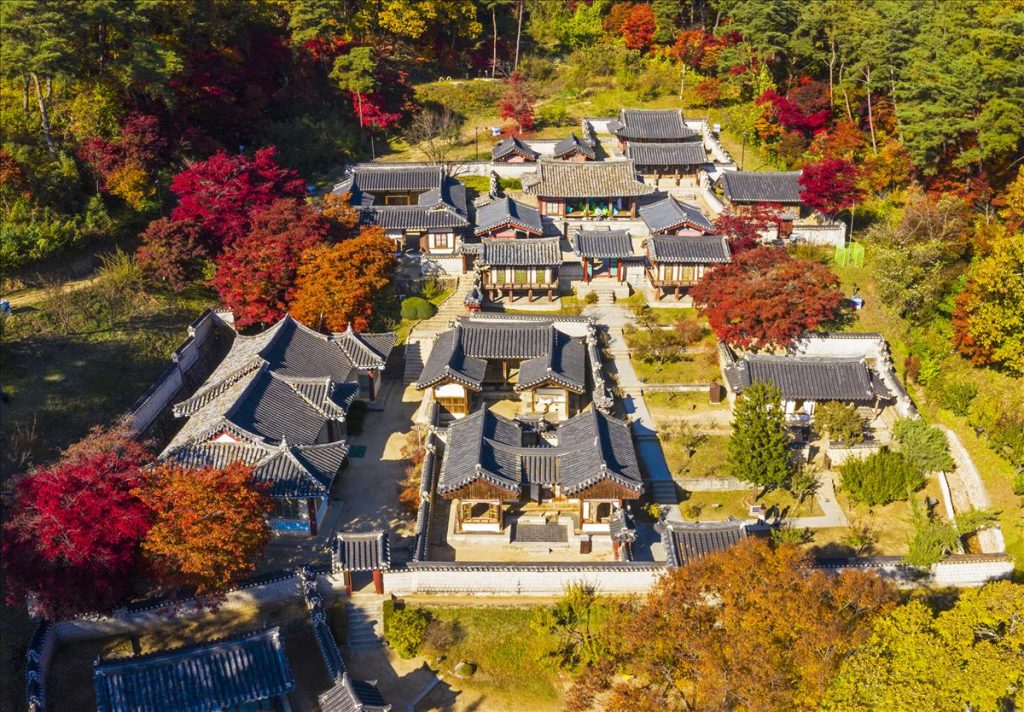
The Nine UNESCO World Heritage Seowon
Why These Nine Seowon?
Korea originally had over 600 seowon during Joseon Dynasty, with approximately 300 surviving in some form today. UNESCO’s selection of these nine specific seowon reflects multiple criteria:
Historical Significance: Each represents important periods, scholars, or philosophical traditions in Korean Neo-Confucian development.
Architectural Integrity: Each preserves original or well-restored buildings and layouts demonstrating seowon architectural principles.
Environmental Context: Each maintains the relationship between buildings and natural settings that was essential to seowon educational philosophy.
Geographic Distribution: The nine are distributed across different regions, representing seowon tradition’s national scope rather than single regional phenomenon.
Scholarly Lineages: Together they represent major Neo-Confucian scholarly lineages and philosophical schools that shaped Korean intellectual history.
1. Sosuseowon (소수서원) – The First and Most Influential
Location: Yeongju, North Gyeongsang Province
Founded: 1543 (Korea’s first seowon)
Significance: Established the seowon model that hundreds of later academies followed
Sosuseowon holds unique importance as Korea’s first seowon, established by scholar Ju Se-bung to honor Confucian scholar An Hyang who had introduced Neo-Confucianism to Korea centuries earlier. King Myeongjong granted it the name “Sosu” (紹修, meaning “cultivating inherited traditions”) and official recognition in 1550, establishing precedent for royal patronage and official status that later seowon sought.
The academy’s design established architectural conventions that later seowon followed: entrance gate, outer courtyard with lecture hall, inner courtyard with shrine, student dormitories on sides, and location in scenic valley with mountain backdrop and stream flowing nearby. This spatial organization reflected Neo-Confucian hierarchies (outer/public versus inner/sacred spaces) and educational philosophy (integration with nature for contemplative learning).
Visiting highlights:
- Korea’s oldest surviving seowon buildings demonstrating original architectural principles
- Beautiful integration with valley, stream, and mountains
- Museum explaining seowon history and educational practices
- Quiet, less touristy atmosphere compared to more famous sites
Visiting challenges:
- Remote location in Yeongju requires significant travel from major cities
- Limited English interpretation requiring pre-visit research for full understanding
- Small size means relatively brief visit (1-2 hours) unless combining with nearby attractions
2. Namgyeseowon (남계서원) – Honoring Jeong Yeo-chang
Location: Hamyang, South Gyeongsang Province
Founded: 1552
Significance: Honors Jeong Yeo-chang (일두 정여창), one of the Five Great Scholars of Joseon
Namgyeseowon demonstrates how seowon functioned as shrines honoring great scholars while also serving as educational institutions. Jeong Yeo-chang (1450-1504) was renowned for moral integrity and scholarship but was executed during political purge in 1504, making him martyr to Confucian principles. The seowon’s establishment honored his legacy and provided place where later scholars could study following his example.
The academy’s location in Hamyang’s beautiful Jiri Mountain area reflects geomantic and philosophical principles about learning environments. The buildings nestle in valley with mountain views and stream sounds creating naturally contemplative atmosphere supporting focused study. The architectural layout balances openness (allowing engagement with natural beauty) and enclosure (creating protected space for concentrated learning).
Visiting highlights:
- Beautiful Jiri Mountain setting with spectacular natural scenery
- Well-preserved buildings showing typical seowon architectural elements
- Less crowded than more famous seowon allowing quiet contemplation
- Opportunity to combine with Jirisan National Park exploration
Visiting challenges:
- Remote mountain location requires dedicated trip planning
- Steep terrain and stairs make access challenging for visitors with mobility limitations
- Limited facilities and English information
3. Oksan Seowon (옥산서원) – Yi Eon-jeok’s Academy
Location: Gyeongju, North Gyeongsang Province
Founded: 1573
Significance: Honors scholar Yi Eon-jeok (회재 이언적, 1491-1553), important early Neo-Confucian thinker
Oksan Seowon occupies particularly beautiful location in valley with clear stream, lush forest, and dramatic rock formations creating scenic beauty that inspired countless paintings and poems. The academy’s environment exemplifies seowon principle that natural beauty supports learning by elevating spirit and providing living examples of principle manifested in nature.
Yi Eon-jeok, though less internationally famous than Yi Hwang or Yi I, made important contributions to Korean Neo-Confucianism and influenced later scholars. The seowon’s establishment demonstrated how even locally or regionally prominent scholars (rather than only nationally famous ones) could become focus for seowon honoring their legacy and continuing their intellectual traditions.
Visiting highlights:
- Exceptionally beautiful natural setting with stream, forest, and rock formations
- Gyeongju location allows combining with city’s many other historical attractions
- Well-maintained buildings and grounds
- Library collection of historical texts and artifacts (though viewing may be limited)
Visiting challenges:
- Moderate distance from central Gyeongju requires bus or taxi
- Valley location can be hot and humid during summer
- Popularity with Korean tourists creates weekend crowds
4. Dosanseowon (도산서원) – Yi Hwang’s Academy
Location: Andong, North Gyeongsang Province
Founded: 1574 (two years after Yi Hwang’s death)
Significance: Established by students to honor Yi Hwang (퇴계, Toegye, 1501-1570), one of Korea’s greatest Neo-Confucian philosophers
Dosanseowon is perhaps Korea’s most famous seowon, honoring Yi Hwang whose philosophical work established one of the two main schools of Korean Neo-Confucianism and influenced Japanese Neo-Confucian scholars. Yi Hwang’s scholarship emphasized moral cultivation through self-reflection and study of principle in natural phenomena and classical texts. His letters with other scholars conducting philosophical debates became classics of Korean Neo-Confucian literature.
The academy’s spectacular setting on bluff overlooking Nakdong River bend creates panoramic views of mountains, water, and changing seasons that embody Yi Hwang’s teachings about contemplating principle through nature observation. The architecture maintains elegant simplicity reflecting Neo-Confucian values of restraint and refinement over ostentation.
The seowon’s educational influence extended beyond Korea, with Japanese scholars visiting to study and later establishing similar institutions in Japan. This transnational influence demonstrates seowon tradition’s broader East Asian significance.
Visiting highlights:
- Korea’s most famous seowon with strongest association with renowned scholar
- Spectacular riverside and mountain setting creating memorable scenic experience
- Excellent museum and visitor facilities with English information
- Combination visit opportunity with nearby Hahoe Village (another UNESCO site)
Visiting challenges:
- Popularity creates significant crowds, especially during peak seasons
- Distance from major cities (though Andong is regional transportation hub)
- Brief visiting time may feel insufficient to absorb the site’s significance
5. Piramseowon (필암서원) – Kim In-hu’s Academy
Location: Jangseong, South Jeolla Province
Founded: 1590
Significance: Honors scholar Kim In-hu (하서 김인후, 1510-1560), important figure in Honam region Neo-Confucianism
Piramseowon represents seowon tradition in Jeolla Province (Honam region), demonstrating that Neo-Confucian academies flourished across Korea rather than concentrating only in Gyeongsang region. Kim In-hu was renowned for refusing government positions despite his scholarship, choosing instead to dedicate himself to teaching and writing, embodying the Neo-Confucian ideal of the scholar who maintains integrity by avoiding corrupt politics.
The academy’s architecture shows regional variations in seowon design while maintaining fundamental principles. The buildings demonstrate how local materials, climate adaptations, and regional aesthetic preferences created distinctive character while serving identical educational functions as seowon in other regions.
Visiting highlights:
- Representative of southern Korean seowon tradition with regional architectural characteristics
- Beautiful rural setting in Jangseong’s countryside
- Less internationally famous means smaller crowds and more authentic atmosphere
- Combination visit opportunity with nearby Jeolla Province cultural sites
Visiting challenges:
- Remote location in southwestern Korea requires extensive travel from Seoul or Busan
- Limited English information and tourist infrastructure
- Small size means relatively brief visiting time
6. Dodongseowon (도동서원) – Kim Gwoeng-pil’s Academy
Location: Daegu Metropolitan City
Founded: 1568
Significance: Honors scholar Kim Gwoeng-pil (한훤당 김굉필, 1454-1504), early Neo-Confucian martyr
Dodongseowon honors Kim Gwoeng-pil, who like Jeong Yeo-chang (honored at Namgyeseowon) was executed in 1504 political purge, making him martyr to Confucian principles. His execution for maintaining philosophical and political principles despite persecution established him as exemplar of scholarly integrity and moral courage that seowon education aimed to cultivate.
The academy’s urban location within modern Daegu demonstrates how seowon have adapted to contemporary contexts, maintaining historical and cultural significance despite surrounding urbanization. This juxtaposition of ancient academy and modern city creates interesting tensions between preservation and development.
Visiting highlights:
- Daegu location provides easy access compared to remote rural seowon
- Urban context creates interesting contrast highlighting seowon persistence across centuries
- Combination visit opportunity with Daegu’s other historical and contemporary attractions
- Good museum and interpretive facilities
Visiting challenges:
- Urban surroundings and modern development reduce the contemplative natural atmosphere essential to historical seowon experience
- Smaller and less architecturally complete than major seowon
- Traffic noise and urban visual intrusions diminish historical immersion
7. Byeongsanseowon (병산서원) – Ryu Seong-ryong’s Academy
Location: Andong, North Gyeongsang Province
Founded: 1613
Significance: Honors scholar-official Ryu Seong-ryong (서애 류성룡, 1542-1607), prime minister during Japanese invasions
Byeongsanseowon honors Ryu Seong-ryong, who served as prime minister during devastating Japanese invasions (1592-1598) and wrote famous account Jingbirok (징비록, “Book of Corrections”) documenting the war and advocating military reforms. Unlike most seowon honorees who were primarily scholars, Ryu successfully combined scholarship with high government service, demonstrating the Neo-Confucian ideal of scholar-official serving society.
The academy’s architecture is considered among Korea’s finest traditional buildings, particularly the Mandaeru pavilion (만대루) whose elegant proportions and sophisticated structural details demonstrate the highest achievements of Joseon Dynasty wooden architecture. The building’s open design with spectacular views of river and mountains creates pavilion serving as contemplative space where scholars could meditate while observing nature.
Visiting highlights:
- Exceptional architectural beauty, particularly Mandaeru pavilion
- Spectacular riverside setting with mountain backdrop
- Near Hahoe Village (UNESCO World Heritage) allowing combined visit
- Well-maintained buildings and grounds with good visitor facilities
Visiting challenges:
- Popularity creates crowds during peak seasons
- Distance from major cities requires dedicated travel planning
- Brief visiting time may feel insufficient given the site’s architectural and historical richness
8. Museongseowon (무성서원) – Choe Chi-won’s Academy
Location: Jeongeup, North Jeolla Province
Founded: 1615 (though associated with earlier academy from 12th century)
Significance: Honors Choi Chi-won (고운 최치원, 857-?), renowned Silla Dynasty scholar and earliest Korean Neo-Confucian influence
Museongseowon uniquely honors Choi Chi-won, who lived centuries before Joseon Dynasty and predated Neo-Confucianism’s introduction to Korea but was retroactively recognized as early influence on Korean Confucian thought. This historical reach backward demonstrates how Joseon Neo-Confucians constructed intellectual lineages connecting their traditions to respected ancient scholars legitimizing their philosophy through historical continuity.
The academy’s location in Jeongeup reflects seowon tradition’s geographic spread and the desire of provincial elites across Korea to establish institutions demonstrating their regions’ cultural sophistication and commitment to Confucian learning.
Visiting highlights:
- Unique honoring of ancient Silla Dynasty scholar rather than Joseon-era figure
- Representative of seowon tradition in southwestern Korea
- Quiet rural setting with authentic non-touristy atmosphere
- Combination visit opportunity with other North Jeolla cultural sites
Visiting challenges:
- Remote location in Jeongeup requires extensive travel from major cities
- Limited English information and tourist facilities
- Lesser international fame means fewer resources for foreign visitors
9. Dosan Seodang (도산서당) at Dosanseowon
Note: This refers to the small study hall (서당/seodang) at Dosanseowon where Yi Hwang personally taught before the larger seowon was established. It’s included separately in UNESCO designation because it represents the origins of seowon tradition in private study halls where individual scholars taught small groups before institutionalization into larger academy complexes.
Pros of Visiting Multiple Seowon
- Comparative Understanding: Visiting 2-3 different seowon reveals both consistent principles underlying all academies and subtle variations in architecture, setting, and philosophical emphasis that distinguished different scholarly traditions.
- Architectural Education: Multiple visits allow recognizing standard seowon architectural elements (entrance gate, lecture hall, shrine, dormitories, etc.) and appreciating how different academies adapted these elements to specific sites and purposes.
- Regional Context: Seowon in different regions demonstrate how Neo-Confucian educational tradition spread across Korea while adapting to regional conditions, materials, and aesthetic preferences.
- Historical Narrative: Visiting seowon honoring different scholars and periods creates chronological narrative of Korean Neo-Confucian development that single-site visiting cannot provide.
Cons of Multiple Seowon Tourism
- Geographic Spread: The nine UNESCO seowon are distributed across five different provinces, making visiting all nine require extensive travel across Korea rather than concentrated touring.
- Visual Similarity: To untrained eyes, seowon architecture appears similar, creating potential monotony despite philosophical and historical differences that experts recognize.
- Remote Locations: Most seowon occupy remote rural locations chosen for natural beauty and quiet contemplation but creating access challenges for tourists relying on public transportation.
- Limited Differentiation: Without substantial background knowledge about honored scholars, philosophical traditions, and architectural details, visitors may struggle to appreciate what distinguishes one seowon from another beyond general “traditional Korean architecture in beautiful nature.”
STELLA’S LOCAL SECRET
The “Scholar Lineage Focus Strategy”
Rather than attempting to visit all nine UNESCO seowon, focus on academies representing single scholarly lineage or philosophical school. For example, visit both Dosanseowon (Yi Hwang) and Byeongsanseowon (Ryu Seong-ryong, Yi Hwang’s student) to understand master-disciple relationships and how philosophical traditions transmitted across generations through specific teacher-student lineages.
Why this works: Understanding that one scholar studied with another and carried forward their teacher’s philosophy with modifications creates narrative coherence connecting multiple seowon. You’ll recognize how Korean Neo-Confucianism developed through networks of scholars influencing each other rather than isolated individuals working independently.
Research approach: Before visiting, read about relationships between scholars – who studied with whom, who disagreed with whom about which philosophical questions, how different schools developed competing interpretations. This social and intellectual network understanding transforms seowon from isolated sites into nodes in interconnected scholarly community.
Educational value: The lineage focus reveals that seowon weren’t just buildings but institutions within living intellectual traditions transmitted through personal relationships between teachers and students across multiple generations. The physical academies preserved these relationships in architectural form while living scholars carried traditions forward through their teaching and writing.
Practical Planning for Seowon Visiting
Getting to Seowon Sites
Seowon accessibility varies dramatically depending on location:
Urban Seowon (Dodongseowon in Daegu):
Direct public transportation via subway and local buses makes this seowon easily accessible for tourists based in Daegu or traveling through the city.
Town-Based Seowon (Sosuseowon, Dosanseowon, Byeongsanseowon):
Located in or near small towns (Yeongju, Andong) that have bus connections from major cities, though reaching actual seowon sites from town centers may require taxis or local buses with infrequent schedules.
Remote Rural Seowon (Namgyeseowon, Piramseowon, Museongseowon):
Require personal vehicles or prearranged taxis as public transportation is limited or non-existent to remote valley and countryside locations.
Organized Tours:
Some tour companies offer cultural heritage tours visiting multiple seowon, handling all transportation and providing guides. These work well for visitors prioritizing efficiency over depth of individual site engagement.
Operating Hours and Admission
Seowon typically operate year-round with daylight hours:
- Opening: 9:00 AM
- Closing: 5:00-6:00 PM (depending on season)
Admission costs are minimal:
- Adults: 1,000-2,000 won
- Students/Seniors: 500-1,000 won
- Children: Free or minimal fee
These low fees reflect Korean cultural policy making heritage accessible rather than treating seowon as premium tourist attractions.
What to Bring and Wear
Respectful Clothing:
While seowon don’t enforce strict dress codes, modest clothing shows respect for these historically sacred educational spaces. Shoulders covered and shorts/skirts reaching knees represent appropriate respect.
Comfortable Walking Shoes:
Seowon sites include unpaved paths, stairs, and occasional uneven terrain. Most visiting requires moderate walking.
Weather Protection:
Seowon are outdoor sites with limited climate control. Summer requires sun protection and light clothing. Winter requires warm layers as buildings lack heating. Rain gear necessary during uncertain weather.
Best Times to Visit
Season:
Spring (April-May) and autumn (October-November) offer comfortable weather and beautiful natural settings with spring flowers or autumn foliage. Summer is hot and humid but provides lush green landscapes. Winter offers solitude and stark beauty but cold temperatures.
Day of Week:
Weekdays see fewer tourists than weekends. Tuesday-Thursday typically provide quietest conditions for contemplative visiting.
Time of Day:
Morning visits (9:00-11:00 AM) provide cool temperatures during summer, best light for photography, and smallest crowds before midday tour groups arrive.
Combining Multiple Seowon
For dedicated cultural tourists or extended Korea trips, strategic routing allows visiting multiple seowon efficiently:
Andong Route: Dosanseowon + Byeongsanseowon + Hahoe Village (all near Andong) creates comprehensive cultural day
Gyeongsang Route: Sosuseowon (Yeongju) + Oksan Seowon (Gyeongju) + other Gyeongju UNESCO sites creates 2-3 day cultural tour
Jeolla Route: Piramseowon + Museongseowon (both southwestern Korea) creates less-touristed authentic cultural experience
Each route requires personal vehicle or complex public transportation coordination.
Pros of Strategic Planning
- Efficiency: Good planning maximizes cultural experience while minimizing wasted travel time between distant sites.
- Cost-Effectiveness: Low admission fees and reasonable transportation costs make seowon visiting economical compared to many international cultural tourism experiences.
- Comprehensive Understanding: Visiting multiple seowon representing different regions, scholars, and periods creates deeper understanding than single-site tourism.
- Natural Beauty: Seowon locations in scenic valleys, riverside areas, and mountain settings provide exceptional natural environment appreciation alongside cultural education.
Cons of Visit Planning
- Geographic Challenges: The nine UNESCO seowon’s distribution across five provinces makes comprehensive visiting require extensive travel across Korea rather than concentrated touring.
- Time Consumption: Each seowon deserves 1-2 hours careful visiting, with travel time between remote sites consuming additional hours, making comprehensive seowon tourism require multiple days or selective visiting.
- Limited Infrastructure: Remote rural seowon have minimal tourist facilities, limited English signage, and sometimes no nearby food or accommodation options requiring careful advance planning.
- Transportation Complexity: Public transportation to remote seowon ranges from challenging to impossible, requiring personal vehicles or expensive taxi usage for tourists without cars.
STELLA’S LOCAL SECRET
The “Academic Semester Timing Avoidance”
Visit seowon during July-August (summer vacation) or January-February (winter vacation) when Korean student groups that constitute substantial portion of seowon visitors are not on organized educational trips. This timing provides quieter atmosphere allowing contemplative experience more aligned with historical seowon character than crowded school group visiting.
Why this works: Korean schools frequently organize educational trips to seowon as part of history and culture curriculum. During academic semesters (March-June and September-December), weekday seowon visiting often means encountering large student groups that dominate spaces and create noise inconsistent with contemplative atmosphere. School vacation periods reduce this issue substantially.
Weather trade-offs: Summer and winter vacation periods mean hot/humid or cold weather respectively. However, the enhanced ability to experience seowon quietly and contemplate the educational philosophy these spaces embodied outweighs weather discomfort for culturally serious visitors.
Educational benefit: The reduced crowds allow extended time in specific locations – sitting quietly in lecture halls, walking meditatively around courtyards, contemplating views from pavilions – creating embodied understanding of how seowon environments supported contemplative learning that rushed touring never achieves.
Frequently Asked Questions
Q: How many seowon should I visit to understand the tradition?
Two seowon representing different regions and scholars provide sufficient understanding for most visitors. Recommended: Dosanseowon (most famous, excellent facilities, beautiful setting) plus one other based on your Korea itinerary.
Q: Can I visit seowon without understanding Neo-Confucianism?
Yes, the beautiful architecture and natural settings remain impressive without philosophical knowledge. However, understanding basic Neo-Confucian concepts dramatically enhances appreciation and transforms seowon from “pretty old buildings” into meaningful encounters with Korean intellectual tradition.
Q: Are there English tours or guides at seowon?
Major seowon (particularly Dosanseowon) have basic English signage and information. English-speaking guides are rare. Audio guides or mobile apps providing English content exist at some sites but aren’t universally available.
Q: How do seowon differ from Japanese Confucian schools or Chinese academies?
Korean seowon emphasized small-scale intensive education, integration with nature, combination of education with ancestral shrine functions, and role in local elite social networks more than Chinese or Japanese Confucian educational institutions, creating distinctive Korean character within broader East Asian Confucian educational traditions.
Q: Are seowon suitable for children?
Older children interested in history will find seowon educational. Young children may enjoy the natural settings and traditional architecture but will likely find the philosophical and historical content boring. The quiet contemplative atmosphere expected at seowon makes them challenging for very young children requiring active engagement.
Q: Can I attend classes or educational programs at seowon?
Some seowon offer traditional culture programs including calligraphy, tea ceremony, or lectures on Neo-Confucianism during special events or by arrangement. However, seowon no longer function as active educational institutions in their original sense but serve primarily as historical sites and occasional special event venues.
Q: What’s the connection between seowon and modern Korean education?
Contemporary Korean educational values including intense focus on academic achievement, respect for teachers, belief in education as path to social mobility and moral development, and integration of moral with intellectual education all reflect seowon-era Confucian educational ideals adapted to modern contexts.
Q: Why did Daewongun abolish most seowon in 1871?
Excessive proliferation (over 600 seowon), tax evasion (seowon lands were often tax-exempt), political corruption (seowon became factional power bases), and the need for government revenue during national crisis led to dramatic reduction allowing only 47 seowon to remain.
Q: Can I stay overnight at seowon?
Some seowon offer temple stay-style traditional accommodation programs allowing overnight stays experiencing daily schedules, meditation, and traditional culture. However, these programs are limited and require advance booking.
Q: How do seowon compare to Buddhist temples?
Seowon and temples both occupy beautiful natural settings and served educational functions, but seowon emphasized Confucian philosophy, classical text study, and training scholar-officials while temples focused on Buddhist meditation, ritual, and monastic life. The architectural forms, educational methods, and daily practices differed substantially despite some surface similarities.
Walking in Scholars’ Footsteps
You now have comprehensive knowledge to visit Korean seowon with deep understanding of what makes these Neo-Confucian academies globally significant UNESCO World Heritage sites. You’ve learned exactly what seowon were – unique educational institutions combining private academy, philosophical research center, ancestral shrine, and moral cultivation center into integrated complexes serving the goal of creating scholar-officials combining erudition with exemplary virtue.
You understand the Neo-Confucian philosophy that seowon existed to study and propagate, the educational methods and daily practices that distinguished these academies, and why they mattered profoundly to Joseon Dynasty society and culture. You know which nine UNESCO seowon to prioritize, how to access them despite sometimes challenging locations, and what makes each one historically or architecturally significant.
Most importantly, you understand that seowon represent more than beautiful traditional buildings in scenic natural settings. They embody sophisticated educational philosophy asserting that genuine learning requires integration of intellectual study, moral cultivation, nature contemplation, ritual practice, and community service into holistic program for human transformation. These centuries-old academies still speak to contemporary concerns about education’s purposes, the relationship between intellect and character, learning and natural environment, and the cultivation of fully developed human beings rather than merely technically skilled workers.
The nine UNESCO seowon await in valleys and riversides across Korea. Stone steps still lead to lecture halls where generations of scholars studied classical texts and debated philosophical questions that remain meaningful today. Mountain views and stream sounds still provide the natural beauty that seowon founders believed essential for contemplative learning. Shrines still honor the great scholars whose wisdom these academies were established to preserve and transmit. Your encounter with Korean Neo-Confucian educational tradition is about to begin.